
A cutting board can look great on the counter and still be the wrong board for how you actually cook. That is usually the real question behind what is best wooden cutting board – not just which wood sounds premium, but which one holds up, treats your knives well, fits your kitchen, and feels right to use every day.
If you have been comparing maple, walnut, teak, edge grain, end grain, thick boards, thin boards, and every opinion under the sun, the short answer is this: for most home kitchens, hard maple is the best all-around wooden cutting board material. It is durable, food-safe, reasonably hard without being harsh on knives, and trusted for serious kitchen use. But that is not the whole story, because the best board also depends on whether you want a workhorse prep surface, a serving piece, a heavy butcher block feel, or a custom size that fits your space exactly.
What is best wooden cutting board for most kitchens?
For everyday home use, hard maple is usually the safest bet. It has the balance most people need: enough density to resist deep gouges, enough give to avoid beating up knife edges, and a clean, classic look that works in almost any kitchen.
Maple also has a long track record in butcher blocks and prep surfaces for a reason. It wears evenly, takes finish well, and does not feel oily or overly porous. If someone wants one board that can handle vegetables, herbs, fruit, sandwiches, and regular meal prep without a lot of fuss, maple is hard to beat.
Walnut is another strong choice, especially if appearance matters just as much as performance. It is a little softer than maple, which can be gentler on knives, and it has a richer, darker color that many homeowners prefer. The trade-off is that walnut may show scratches differently and often comes at a higher price.
Teak gets attention because it handles moisture well and has a distinct warm tone. That said, teak contains more silica than maple or walnut, which can be a concern for people who are very particular about knife edge retention. It is still a solid option, but not always the first recommendation for cooks who chop constantly with high-end knives.
The wood matters, but construction matters too
When people ask what is best wooden cutting board, they are often focused on species alone. In practice, the way the board is built matters almost as much as the wood itself.
Edge grain
Edge grain boards are made with long strips of wood joined so the edges face up. They are durable, attractive, and typically more affordable than end grain boards. For many households, an edge grain maple or walnut board is the sweet spot between performance, price, and everyday practicality.
They are also easier to keep as a general-use board. If you want something sturdy without going full butcher-block style, edge grain is a very sensible choice.
End grain
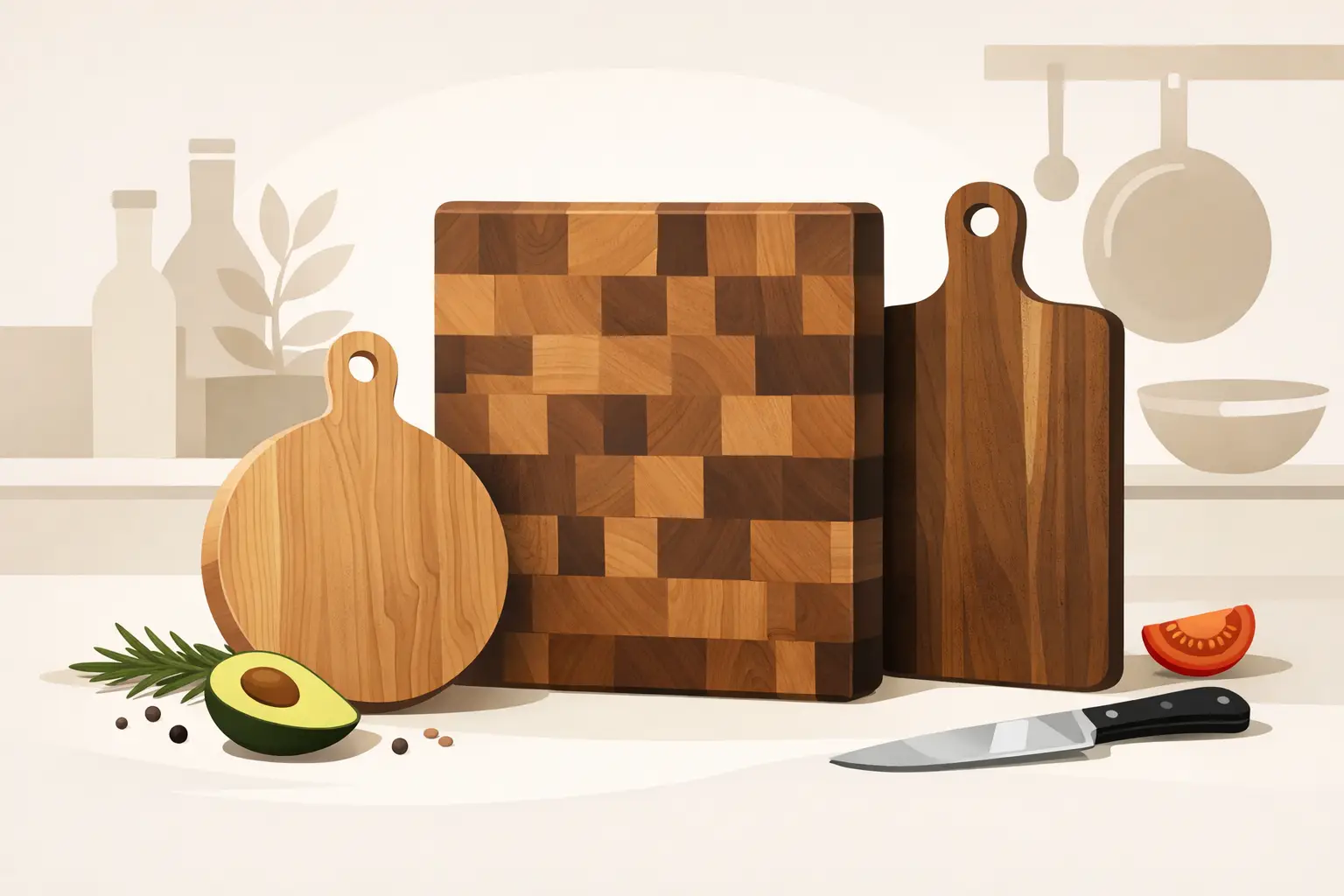
End grain boards are built so the wood fibers face upward. This creates the checkerboard look many people associate with premium butcher blocks. A good end grain board can be exceptionally gentle on knives because the blade slips between wood fibers rather than cutting across them.
These boards are usually thicker, heavier, and more expensive. They also require consistent care. If you cook often, love the feel of a substantial prep surface, and want a board that makes a statement on the counter, end grain can absolutely be worth it.
Face grain
Face grain boards show off broad wood surfaces and can be very attractive, especially for serving. For heavy chopping, though, they are usually not the top pick. They tend to show knife marks more readily and are often better suited for presentation than hard daily prep.
Size changes what “best” really means
A lot of frustration with cutting boards has nothing to do with wood quality. It comes from buying the wrong size.
A board that is too small makes prep messy fast. Ingredients slide off, juices run onto the counter, and you end up using more effort than necessary. A board that is too large for your sink or storage space can become annoying enough that you stop using it.
For many home cooks, a medium to large board gives the best experience. You want enough room to chop onions on one side while keeping herbs or sliced produce on the other. If the board lives on the countertop full time, a thicker custom piece can work beautifully as both a prep station and a visual anchor in the kitchen.
That is where handmade wood products really stand apart from mass-produced options. Standard retail sizes do not work for every kitchen, island, or coffee station. A board built to the dimensions you actually need often ends up being the one you use the most.
The best wood depends on how you cook
If you cook a few nights a week and want a dependable all-purpose board, go with maple. If you care about a deeper, furniture-grade look and want something that feels a little more distinctive, walnut is an excellent option. If moisture resistance is high on your list and you like the look of teak, that can work too, with the understanding that knife-focused cooks may prefer maple or walnut.
If you break down large cuts of meat, make big holiday meals, or prep for a family regularly, thickness and board weight matter more. A substantial board that stays planted on the counter makes prep easier and safer. In that case, an end grain or heavy edge grain board may be the better investment.
If the board will double as a serving piece for bread, charcuterie, or table presentation, appearance may matter more than pure chopping performance. Walnut often shines here because it brings warmth and contrast that feel at home both in the kitchen and on the dining table.
What to avoid when choosing a wooden cutting board
Very soft woods can wear out too quickly. Extremely hard woods may be less forgiving on knives. Open-pore woods or poorly finished boards can be harder to maintain and less stable over time.
You also want to be careful with bargain boards that look thick and impressive but are made with weak joinery or inconsistent drying. A cutting board is only as good as the way it was built. Wood movement is real. If the lumber was not properly selected, glued, and finished, the board can warp, crack, or separate long before it should.
That is why craftsmanship matters. A well-made board should feel solid, sit flat, have smooth edges, and show attention to grain selection and finish work. You can tell when a piece was built by people who understand wood, not just by a factory trying to hit a price point.
Care is part of the answer
Even the best wooden cutting board needs basic maintenance. Wood is a natural material, and that is part of why people love it. It has warmth, character, and a better feel than plastic. But it also needs reasonable care.
Wash it by hand. Do not soak it. Dry it after cleaning. Oil it when the surface starts to look dry or chalky. If one side gets wet often, try to use and store it in a way that keeps moisture exposure more balanced.
A quality board that gets regular oiling can serve a kitchen for years. In many cases, it can look better with age, picking up a patina that mass-market boards never quite develop.
So, what is best wooden cutting board if you want one great choice?
If you want the clearest recommendation, choose a hard maple board from a maker who builds with care. It is the most dependable all-around answer for performance, longevity, and everyday use. If your kitchen style leans warmer or more upscale and you do not mind paying more, walnut is a close second and a beautiful one.
If you want the best experience rather than just the best species, focus on three things together: quality hardwood, sound construction, and the right size for your kitchen. That combination matters more than chasing trends or buying the most expensive board you can find.
At Tooill Cabinets, that is how we look at wood products in general – not as one-size-fits-all pieces, but as surfaces that should match the way people really live, cook, and gather at home.
The best wooden cutting board is the one you reach for every day because it feels solid, fits your space, and keeps doing its job year after year.