
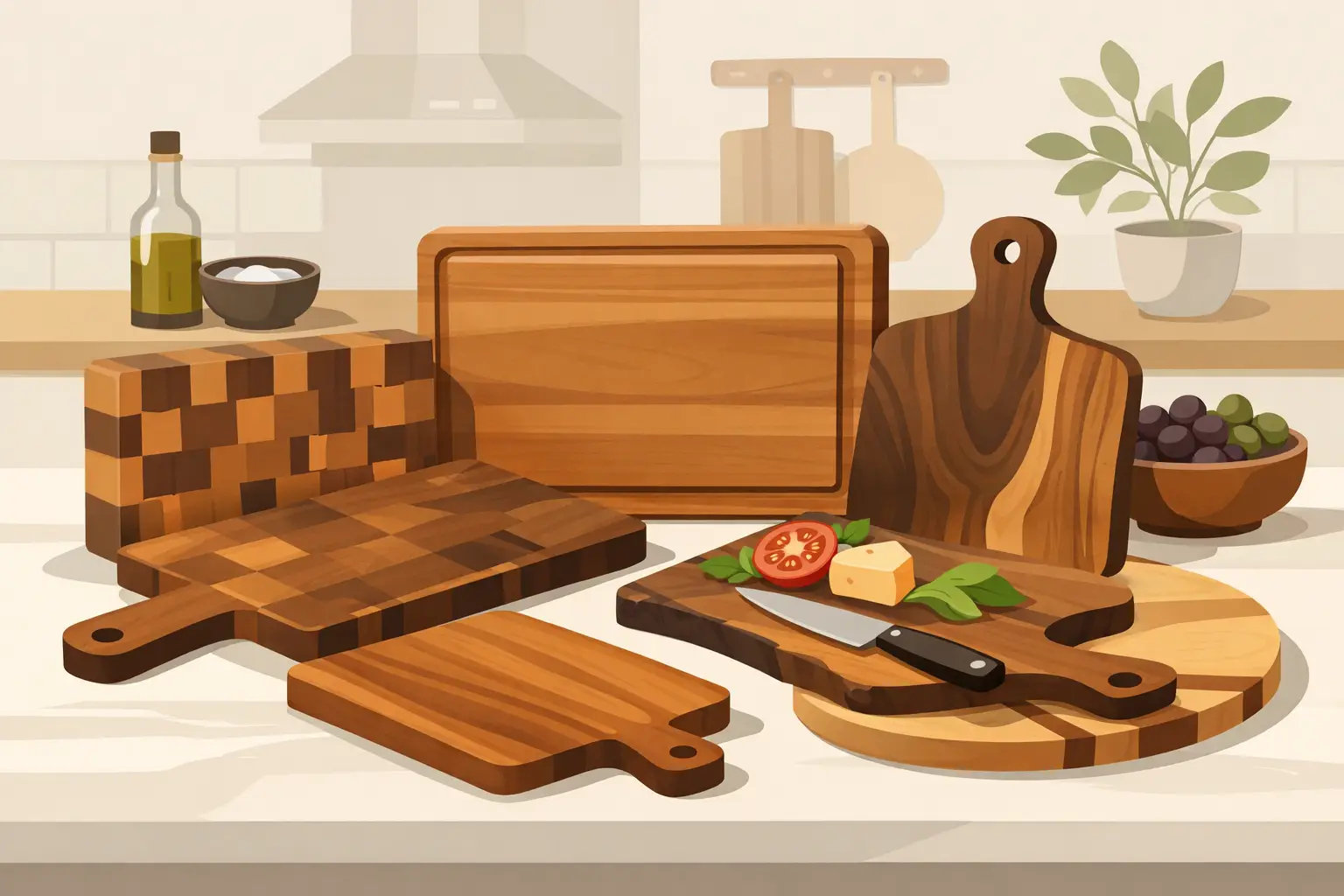
A cutting board gets touched almost every day, which is exactly why the details matter. If you are shopping for the best custom wood cutting boards, you are not just picking a prep surface. You are choosing the size, wood, grain, thickness, and finish that will live on your counter, handle your knives, and hold up to real use.
That is where custom stands apart from off-the-shelf boards. A store-bought board might be close enough on size or color, but close enough is usually how people end up with a board that slides around, crowds the counter, or looks out of place next to the rest of the kitchen. A well-made custom board solves that before it becomes a daily annoyance.
What makes the best custom wood cutting boards better
The short answer is fit, material, and workmanship. The longer answer is that a good custom board is built around how you cook and how your kitchen works.
Size is usually the first reason people go custom. Some want a compact board that fits beside the sink in a smaller kitchen. Others need a larger prep surface for busy family cooking, meal prep, or serving. Gift buyers often want a board sized for presentation as much as function. Custom sizing lets you match the board to the space instead of settling for whatever a retailer decided to stock.
Wood selection matters just as much. Hardwoods like maple, walnut, and cherry are popular for a reason. They offer a balance of durability, appearance, and knife friendliness that works well in home kitchens. Maple is often the practical favorite because it is tough, consistent, and clean-looking. Walnut brings a deeper, richer color that many homeowners love in modern or warmer-toned kitchens. Cherry starts lighter and develops a richer tone over time, which gives it a character many people want in a handmade piece.
Then there is the build itself. A custom board should feel solid, flat, and properly finished. Corners should be clean. Glue lines should be tight. The surface should be smooth without feeling overprocessed. These are the small signs that separate a handcrafted board from a mass-produced one made to hit a price point.
Best custom wood cutting boards by use
The best board for one kitchen is not always the best for another. That depends on how you plan to use it.
Everyday prep boards
For daily chopping, slicing, and meal prep, most homeowners do best with a medium to large rectangular board in a durable hardwood. This is the board that stays in rotation all week. It needs enough room for vegetables, proteins, and herbs without being so big that it becomes awkward to wash or move.
In many kitchens, a board around 12 by 18 inches to 16 by 24 inches works well. Thicker boards feel more substantial and tend to stay put better, but weight is the trade-off. If you want something easy to carry to the sink, a slightly thinner board may make more sense.
Statement boards for serving and display
Some boards do double duty. They work for prep, then move straight to the table for bread, cheese, charcuterie, or casual serving. For that kind of use, appearance matters as much as function. Walnut and cherry often stand out here because of their warmth and visual depth.
A custom board also gives you control over the profile and overall look. You may want a more furniture-like feel, slightly softened edges, or a shape that complements your countertop or table. That is hard to find in a standard product.
Gift-worthy personalized boards
Custom wood cutting boards are strong gift options because they feel personal without being disposable. Wedding gifts, housewarming gifts, anniversary gifts, and holiday gifts all make sense here. Personalization can be as simple as selecting a specific wood species and dimensions, or it can include engraved details if that fits the style of the piece.
The important part is not overdoing it. A good gift board should still be useful. If the design becomes too decorative to chop on, it stops being a cutting board and starts being wall art.
Edge grain vs end grain
One of the biggest buying decisions comes down to grain construction. Both can be excellent, but they serve slightly different priorities.
Edge grain boards
Edge grain boards are built by joining long strips of wood with the edges facing up. They are popular because they are durable, attractive, and often more budget-friendly than end grain construction. They also tend to show off the natural lengthwise character of the wood in a clean, straightforward way.
For many homeowners, edge grain is the best balance of price, durability, and everyday practicality. It performs well, looks sharp on the counter, and works for both prep and presentation.
End grain boards
End grain boards are made with the wood fibers facing up, which creates the classic butcher block look. They are often favored for serious chopping because the fibers can be gentler on knife edges. They also have a distinctive visual pattern that many buyers love.
The trade-off is cost and weight. End grain boards usually take more labor and material, and they are often thicker and heavier. If you want a board that lives in one spot and handles heavy prep work beautifully, end grain may be worth it. If you want something easier to move and maintain, edge grain may be the better fit.
How to judge quality before you buy
If you are comparing the best custom wood cutting boards, photos alone should not make the decision. Pay attention to how the board is described and how the maker communicates.
Look for solid hardwood construction rather than mystery wood or vague wording. Look for clear information on dimensions, thickness, finish, and care. If the board is custom, the maker should be able to explain sizing options and help you think through what will work best for your space.
Finish matters too. A food-safe oil and wax finish is common and works well, but what matters most is that the finish is appropriate for kitchen use and easy to refresh over time. A cutting board should be built to be maintained, not treated like a disposable kitchen accessory.
It also helps to ask how the board is packaged and shipped, especially if you are ordering a larger or heavier piece. Good craftsmanship does not stop at the shop door. Protective packaging matters if you want the board to arrive in the same condition it left.
Why custom sizing changes the experience
This is the part many buyers underestimate until they have lived with the right board. A custom board can be sized to fit a specific prep zone, cover part of a counter, sit neatly on an island, or coordinate with an existing butcher block or wood surface.
That precision makes the kitchen feel more intentional. Instead of working around a board that is almost right, you get one that feels made for the room because it was. For homeowners already investing in cabinets, countertops, shelving, or wood accents, that consistency goes a long way.
Tooill Cabinets builds custom wood products with that exact mindset – made for real homes, real dimensions, and real daily use. That same approach is what makes a cutting board feel less like an add-on and more like part of the kitchen.
Caring for the best custom wood cutting boards
A quality wood board is durable, but it is not maintenance-free. The good news is that care is simple.
Wash it by hand with mild soap and warm water, then dry it promptly. Do not soak it. Do not put it in the dishwasher. Reapply board oil or a food-safe conditioner as needed, especially if the wood starts to look dry or faded. If the surface picks up knife marks over time, that is normal. A handmade wood board is meant to be used, and with proper care it can keep looking good for years.
Humidity and storage matter too. Standing water, direct heat, and extreme dryness are hard on wood. If you keep the board clean, dry, and conditioned, it will age far better than cheaper alternatives.
The right board is the one built for your kitchen
The best custom wood cutting boards are not necessarily the most expensive, the thickest, or the most heavily personalized. They are the ones built from the right hardwood, sized for the way you cook, and finished with care by someone who understands how wood performs over time.
When a cutting board is made well, you notice it in small ways every day. It feels steady under your hands. It looks right on the counter. It keeps earning its place in the kitchen instead of getting shoved into a cabinet. If you are going custom, that is the standard worth aiming for.