
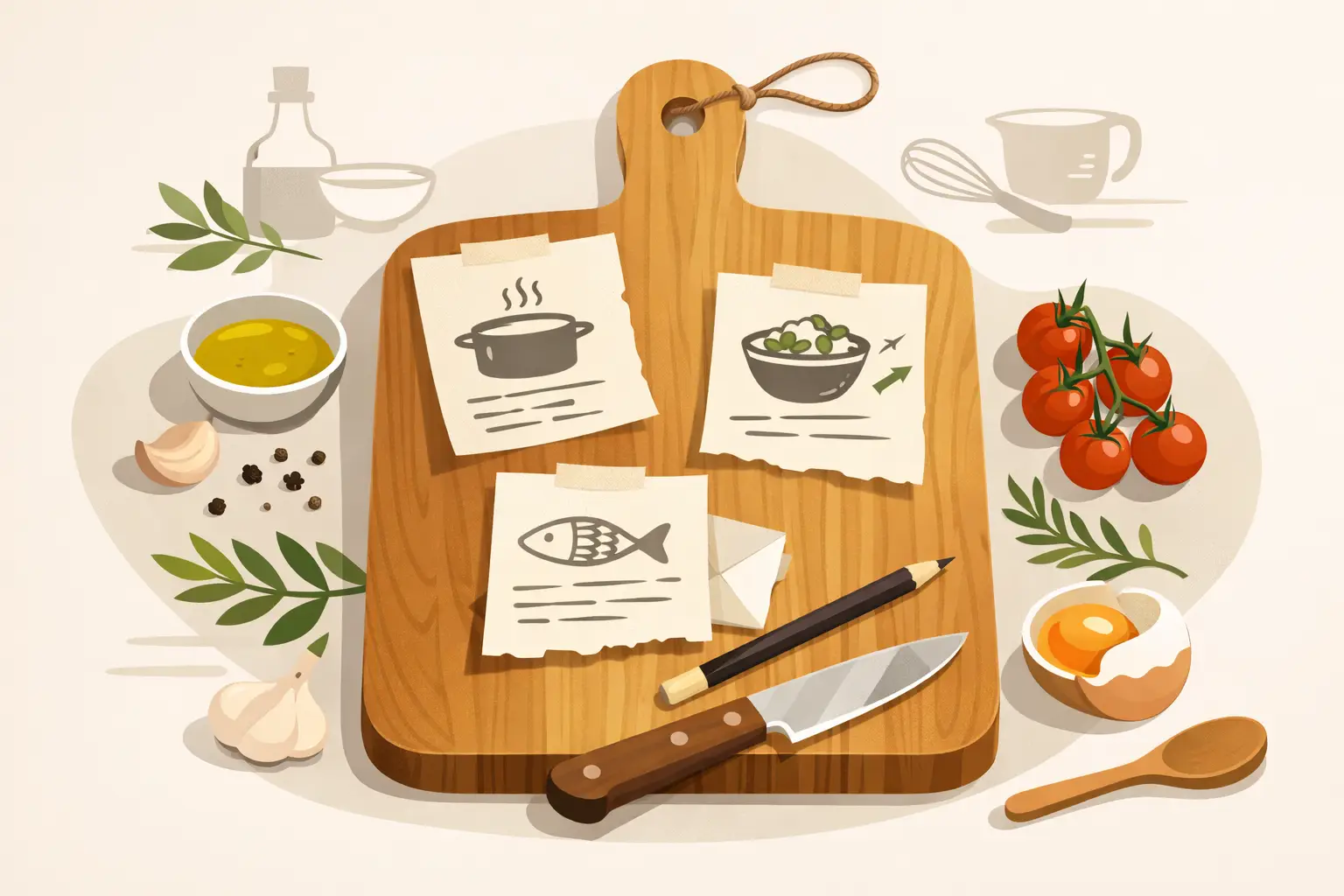
A stained index card in your mom’s recipe box is easy to overlook until you realize the handwriting matters as much as the recipe. That is exactly why a cutting board with handwritten recipe engraving has become such a meaningful gift. It takes something that usually stays tucked in a drawer and gives it a place in the kitchen where it can be seen, used, and remembered.
For a lot of families, this kind of board is not just decor. It is part gift, part heirloom, and part everyday kitchen piece. When it is made well, it feels personal without being delicate, and practical without losing the emotional reason you bought it in the first place.
Why a cutting board with handwritten recipe means more
Most personalized gifts stop at adding a name or date. A handwritten recipe is different because it carries the actual shape of a person on the page. The loops, spacing, corrections, and little quirks are what make it hit home. Even simple instructions for cookies, biscuits, or meatloaf can feel deeply personal when they appear in the original handwriting.
That is what makes these boards popular for Mother’s Day, weddings, anniversaries, memorial gifts, and housewarmings. People are not only preserving a recipe. They are preserving the hand that wrote it.
There is also a practical reason this format works so well. A cutting board is already at home in the kitchen. Unlike a framed print that may end up on a shelf or in a hallway, a recipe board belongs in the room where that memory was made in the first place.
Choosing the right board for a handwritten recipe
The board itself matters just as much as the engraving. If the wood looks cheap or the shape feels generic, the finished piece can miss the mark. A handwritten recipe deserves a surface with some character and enough quality to last.
Hardwood is usually the right place to start. Maple, walnut, and cherry are strong choices because they engrave cleanly and hold up well over time. Maple gives a lighter, classic look and tends to make engraved text easy to read. Walnut brings a richer, darker appearance that feels a little more dramatic. Cherry sits somewhere in the middle and gains warmth as it ages.
Size matters too. A smaller board can work for a short recipe card or a few lines from a signature dish, but a longer recipe with ingredients and instructions often needs more room. Cramming handwriting onto a board that is too small makes it harder to read and takes away from the natural look of the script.
Shape is another detail people underestimate. Traditional rectangles are popular because they give the most usable engraving area. Paddle boards have a strong gift look and display well on a counter. If the board will mostly be hung or leaned up as a keepsake, a serving-board profile can be a great fit. If it will be used regularly, a thicker, sturdier cutting board shape usually makes more sense.
What makes the engraving look good
The best handwritten recipe boards start with a clear source image. That sounds obvious, but it is where many custom orders succeed or fail. Faded cards, shadows in phone photos, folded paper, and low-resolution scans can all affect the final engraving.
Ideally, the recipe image should be flat, well lit, and easy to read. If there are stains, crossed-out lines, or marks from years of kitchen use, those can be a good thing. They often add character. Still, there is a balance. Some wear tells a story. Too much visual noise can make the engraved result muddy.
Not every recipe card needs to be copied word for word either. Sometimes the best result comes from keeping the signature, title, and a few key lines in the original handwriting while simplifying the layout. It depends on the board size, the handwriting style, and whether the buyer wants a display piece or something they will actually set out and use.
That is where custom craftsmanship matters. A skilled maker can help decide whether the full recipe should be engraved or whether a cleaner edit will produce a stronger final piece. It is not about changing the meaning. It is about making sure the piece reads well on wood.
Display piece, working board, or both?
This is one of the biggest buying questions, and the honest answer is that it depends on your priorities.
If the handwritten recipe is the main event, many customers treat the board as a keepsake first and a working kitchen piece second. They may use the back lightly for serving bread, cheese, or fruit while preserving the engraved side for display. That approach keeps the engraving crisp and helps protect the sentimental side of the board.
If you want a fully functional everyday board, that is possible too, but it helps to go in with realistic expectations. Any wood cutting board that sees regular knife work will develop marks over time. That is normal. The wood can still be durable and beautiful, but heavy daily use will wear differently than a board that is mostly displayed.
For many people, the best middle ground is a reversible board. One side features the engraved handwritten recipe, and the other is left plain for light prep or serving. That gives you the emotional value and the practical value without forcing the piece into one role.
When this gift works best
A cutting board with handwritten recipe engraving works because it covers a lot of occasions without feeling generic. For weddings, it can feature a grandmother’s recipe that connects generations. For anniversaries, it can preserve the dish a couple always makes together. For memorial gifts, it can be a comforting reminder of someone whose cooking shaped the family.
It also works well as a closing gift, holiday gift, or housewarming present for homeowners who care about natural materials and meaningful details in their kitchen. A lot of personalized gifts feel temporary. A solid wood board feels built to stay.
That matters to buyers who are already investing in better kitchens, real wood surfaces, and pieces that are meant to last. The appeal is not only sentiment. It is the fact that the gift has substance.
What to ask before ordering
Before you order, think through how the board will be used and what matters most to the recipient. Do they love to display beautiful kitchen pieces, or are they more likely to put the board straight to work? Do you want the full recipe included, or is the handwriting itself the main priority?
It is also smart to ask what customization options are available. Wood species, board dimensions, handle style, thickness, engraving placement, and finish all affect the final result. A made-to-order shop can usually guide you toward the right combination based on the recipe image and the look you want.
Proofing is worth paying attention to as well. Because handwritten recipes are so personal, buyers usually want to see how the layout will appear before production starts. That extra step can make a big difference, especially if the original card is hard to read or the engraving area needs to be adjusted.
At Tooill Cabinets, that custom-first mindset is a big part of what makes handmade wood pieces stand out. The goal is not to force a sentimental project into a one-size-fits-all template. It is to build something that looks right, feels substantial, and reflects the memory behind it.
A few trade-offs worth knowing
There is no perfect choice for every buyer, and that is worth saying plainly. Lighter woods can make engraved handwriting easier to read, but darker woods often feel richer and more formal. Larger boards give the recipe more room, but they can be heavier and less convenient to store. A decorative finish may look great on display, while a working board needs a food-safe treatment that supports actual kitchen use.
Price can vary quite a bit too. A custom hardwood board with handwritten engraving will cost more than a mass-produced personalized gift. That is the trade-off for real material, custom sizing, and hand-built production. For buyers who want something meaningful and durable, it is usually money spent in the right place.
The key is being honest about what you are buying. If you want the cheapest possible personalized item, there are faster options. If you want a piece with real craftsmanship and a family story built into it, a custom wood board is hard to beat.
A handwritten recipe already carries history. Putting it on solid wood gives that history a place to live in the kitchen instead of a box. When the board is made with care, it does more than preserve a recipe. It keeps a familiar hand close by, right where people gather.