
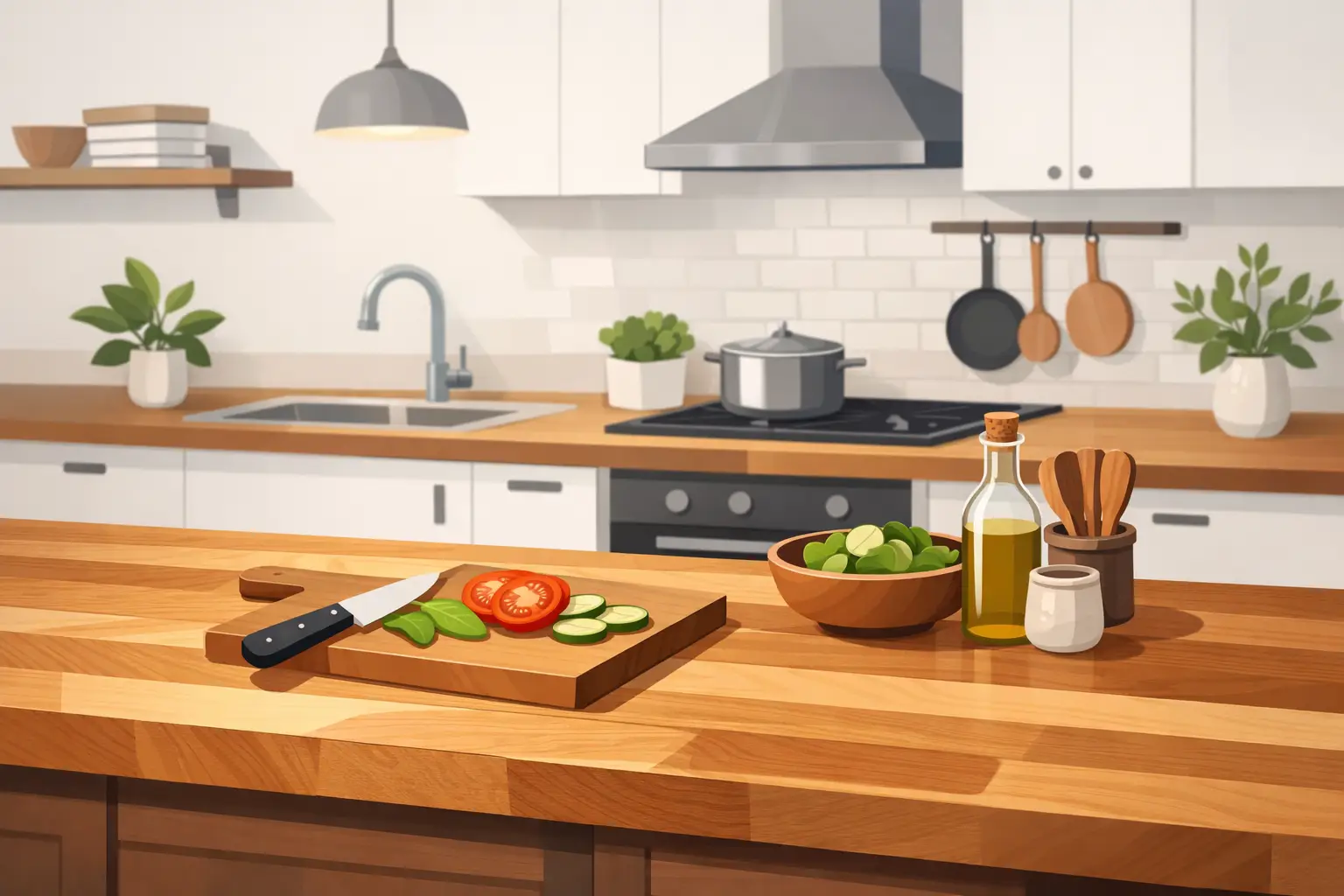
A butcher block countertop changes the feel of a kitchen the moment it is installed. Where stone can feel cool and manufactured, real wood brings warmth, grain, and a surface that looks better because it is lived with. This butcher block countertop review looks past the showroom appeal to answer the practical questions homeowners ask before they order: Does it hold up? How much care does it need? And is custom-made wood worth the investment?
The honest answer is that butcher block is an excellent countertop for the right household. It is durable, repairable, and highly personal. It also asks for regular care and realistic expectations. If you want a countertop that stays untouched by daily life, wood may frustrate you. If you appreciate natural materials and want a surface that can be renewed instead of replaced, it is hard to beat.
What a Butcher Block Countertop Does Better Than Most Materials
Solid wood has a presence that laminate, quartz, and factory-made panels cannot copy. Every board carries its own grain pattern, mineral streaks, and color variation. A properly built butcher block top turns a kitchen island, desk, laundry room, coffee bar, or dining surface into a true focal point without making the room feel overly formal.
Customization is another major advantage. Many stock countertops come in a short list of widths and lengths, leaving homeowners to trim the top, fill a gap, or redesign the cabinet layout around the material. A made-to-order top can be built to your actual measurements, including overhang, thickness, edge profile, cutouts, and finish preference. That matters on a long island, an older home with uneven walls, or any project where standard sizing creates compromises.
Wood is also forgiving in a way stone is not. It will dent if something heavy drops on it, but it will not crack like a brittle slab. Light scratches, water marks, and many stains can often be sanded out and refinished. Years from now, a tired-looking butcher block can be renewed rather than torn out.
Butcher Block Countertop Review: The Trade-Offs to Know
The beauty of wood comes with responsibility. Butcher block is not a maintenance-free surface, particularly when it is used near a sink or as an active food-prep area. Water left standing around a faucet, dishwasher seam, or sink cutout can work into the wood over time. Heat from a hot pan can mark the finish. Sharp knives can leave cuts if the countertop is used as a cutting board.
None of that means a wood top is delicate. It means the finish and the owner’s habits need to match the job. A countertop used mainly for seating, serving, and general kitchen work can be finished for strong moisture and stain resistance. A surface intended for direct food preparation needs a food-safe oil-and-wax routine and more frequent attention.
Humidity is another consideration. Wood expands and contracts as seasons change. A well-built top is acclimated, sanded, and finished with movement in mind, but it still needs proper installation. Fastening methods should allow the wood to move naturally. Screwing a large top down too tightly through every cabinet rail can create stress and lead to warping or splitting.
For most homeowners, the biggest adjustment is accepting that wood develops character. A small dent from a holiday dinner or a faint mark near the sink may feel alarming at first. Over time, those signs often become part of the surface’s appeal. If that is not the look you want, consider using butcher block on an island, bar, or table rather than every countertop in the kitchen.
Choosing the Right Wood Species
Species affects the color, grain, hardness, and overall personality of the countertop. There is no single best choice. The right one depends on the design of the room, how the top will be used, and whether you prefer a calm, uniform look or more natural variation.
Maple is a classic choice for butcher block. It has a light, clean appearance and a tight grain that works well in bright kitchens, modern spaces, and traditional homes alike. Hard maple is dense enough for everyday use while keeping the surface visually refined.
Walnut brings a richer, darker tone with bold grain movement. It is a favorite for islands, bar tops, and statement pieces because it creates immediate contrast against white, cream, or light-painted cabinets. Walnut is slightly softer than hard maple, so it may show dents a little sooner in high-impact areas, but many homeowners love the patina it develops.
Oak has pronounced grain and a classic American character. It can be an excellent fit for rustic, farmhouse, and craftsman-inspired kitchens. Cherry begins with a warm reddish-brown tone and deepens beautifully with age and light exposure. Both make handsome countertops when their distinctive grain matches the rest of the room.
The construction style matters, too. Edge-grain tops show long, linear boards across the surface and are popular for countertops because they are stable and visually clean. End-grain butcher block shows the ends of many small wood pieces, creating the familiar checkerboard look. It is beautiful and highly functional for chopping blocks, though it is usually more labor-intensive and may be less practical for a large countertop installation.
Finish Determines How You Live With the Surface
A finish is not just a color choice. It determines maintenance, water resistance, repairability, and whether you can prepare food directly on the wood.
For a countertop around a sink or cooktop, a durable film finish offers strong protection from routine spills and cleaning. It is a practical option for families who want the warmth of wood with less frequent maintenance. Use a cutting board for food prep, wipe spills promptly, and avoid harsh cleaners or abrasive pads that can dull the surface.
For a dedicated chopping surface or a countertop where direct food prep is a priority, food-safe mineral oil and a protective wax are traditional choices. This finish does not create a hard barrier on top of the wood. Instead, it nourishes the fibers and can be refreshed as needed. It requires more regular reapplication, especially during the first months, but touch-ups are straightforward and local repairs blend naturally.
A custom order gives you the chance to make this decision before the top is built. Explain how you plan to use the surface, where the sink will be located, and whether you want a natural matte look or a more protected finish. Good craftsmanship is not only about the lumber. It is about building and finishing the top for its actual job.
What to Expect From Cost and Installation
Butcher block pricing varies with species, thickness, dimensions, construction, cutouts, finish, and shipping requirements. A small standard top may be an accessible upgrade, while a thick walnut island with a waterfall edge, sink opening, and custom details is closer to a piece of fine furniture.
The lowest price is not always the best value. A countertop must be flat, properly glued, carefully sanded, and packed to survive transit. It also needs clear communication before production begins, especially with custom measurements. Ordering from a shop that builds wood surfaces every day can prevent costly issues that appear when a cabinet project is treated like a simple lumber purchase.
Before ordering, measure cabinets more than once and confirm the desired overhang. Account for walls that are not square, appliances that need clearance, and sink or cooktop specifications. If you are unsure, a template can be worthwhile for complicated layouts. Installation should include support where needed and hardware that allows seasonal wood movement.
Tooill Cabinets builds handcrafted butcher block surfaces to fit the project rather than asking the project to fit a limited shelf size. That custom approach is particularly valuable for islands, desks, utility rooms, and spaces where a few inches make the difference between an awkward fit and a finished look.
Who Should Choose Butcher Block?
Butcher block makes sense for homeowners who want real material, not a printed imitation. It is especially strong for kitchen islands, breakfast bars, laundry folding counters, workstations, dining tables, and coffee stations. It can also work beautifully as a full kitchen countertop when the owner is comfortable with basic care and selects a finish suited to moisture exposure.
It may not be the best choice for someone who wants to leave wet dishes, dripping towels, and hot cookware directly on every surface without a second thought. In that case, combining materials can be a smart solution. Use stone or another low-maintenance surface around the sink and range, then use butcher block where people gather and where its warmth can do the most work.
The best wood countertop is not one that stays frozen in time. It is one built to your measurements, finished for your routine, and cared for enough to keep telling the story of the home around it.