
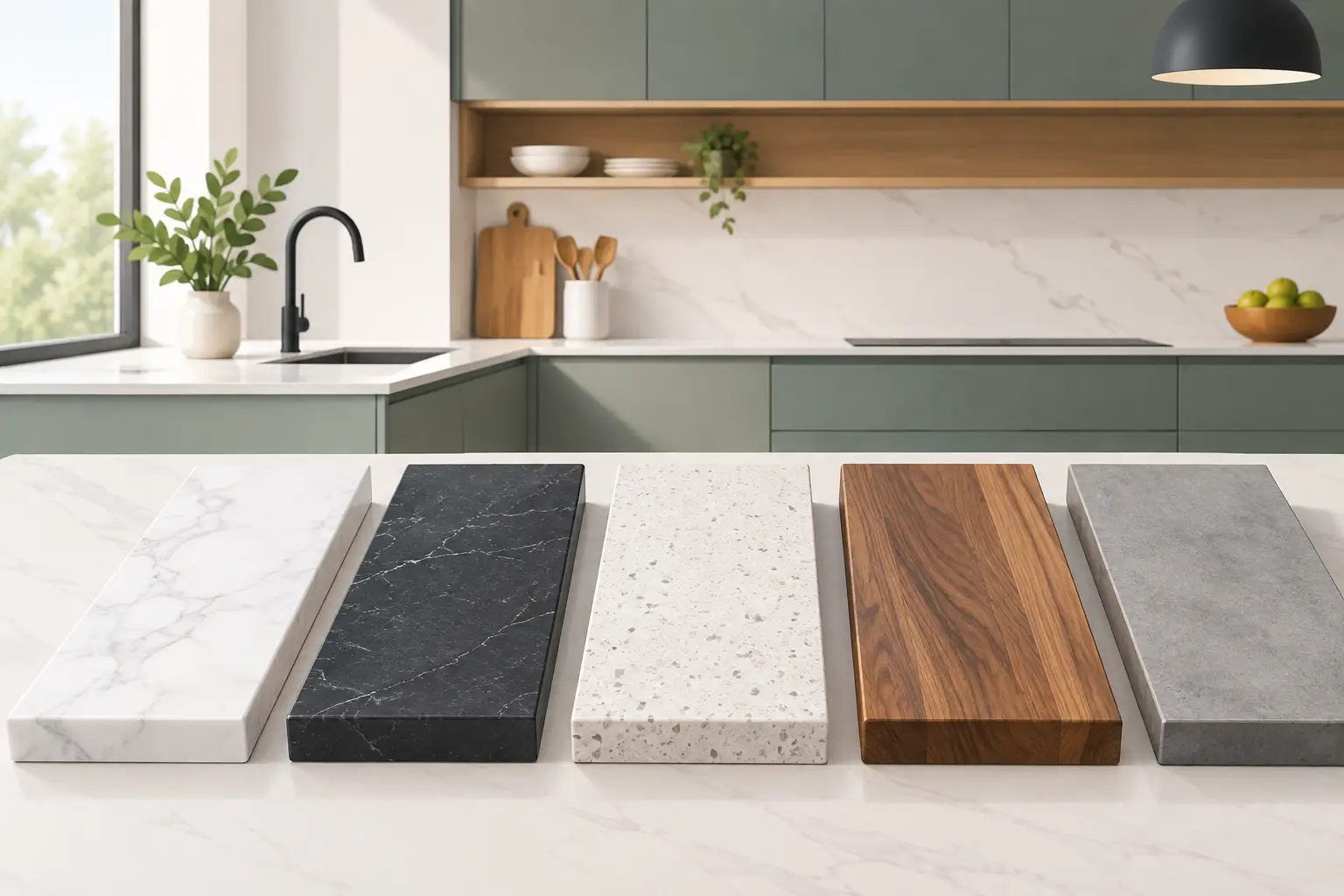
A countertop can look perfect in a showroom and still be the wrong choice for the way you cook, clean, gather, and live at home. This countertop materials comparison looks beyond the first impression, weighing the real trade-offs between wood, quartz, granite, laminate, and concrete. The best material is not the one with the most polished sales pitch. It is the one that fits your kitchen habits, budget, and vision for the room.
For some homeowners, that means a low-maintenance surface that handles rushed weekday dinners. For others, it means a solid wood island top with warmth, character, and a size made specifically for the space. Start with how you use the countertop, then choose the material that can meet that job well.
Countertop Materials Comparison: What Matters Most
Before comparing materials, decide which compromises you are comfortable making. Every countertop has them. A surface may resist stains beautifully but feel cold and manufactured. Another may be repairable and full of natural character but need occasional maintenance.
Think about heat, moisture, knife work, cleaning habits, and the amount of visual warmth you want in the room. Also consider where the countertop will go. A busy perimeter counter beside a range needs something different from a kitchen island, coffee bar, laundry room, desk surface, or dining table.
Custom sizing matters, too. A material that is available only in standard slabs or prefabricated dimensions can force you to change your design. Made-to-order wood tops are especially useful for islands, breakfast bars, and unusual wall-to-wall spans where a precise fit makes the finished project feel intentional.
Solid Wood and Butcher Block
Solid wood countertops bring something other materials cannot: natural grain, depth, and a surface that becomes more personal over time. Maple, walnut, oak, cherry, and other hardwoods each carry their own color and grain pattern. No two tops are exactly alike.
Wood is an excellent choice for islands, bar tops, dining surfaces, baking stations, and accent counters. It softens a kitchen filled with painted cabinets, stone, tile, and stainless steel. It can also be sanded and refinished when life leaves its mark. A scratch, water ring, or worn spot is not necessarily permanent damage.
The trade-off is care. Wood should be wiped dry after use, and it needs a suitable finish and periodic attention based on how the surface is used. Standing water is not wood’s friend, especially around sinks. A properly built and finished wood countertop is durable, but it rewards owners who treat it like real wood rather than a maintenance-free imitation.
For homeowners who want a custom fit, solid wood has another advantage: flexibility. Tooill Cabinets builds handcrafted wood surfaces to the measurements and specifications that make sense for the project, rather than asking a kitchen design to conform to an off-the-shelf size.
When wood makes the most sense
Choose wood when warmth, craftsmanship, and customization are priorities. It is particularly practical for a large island where you want a gathering place that does not feel like a cold slab. It also works well when you value a surface that can be renewed instead of replaced.
If your kitchen sees constant standing water, aggressive cleaners, or little interest in routine care, wood may be better as an island or secondary work surface than as the countertop surrounding the sink.
Quartz: Consistent and Low Maintenance
Quartz countertops are engineered from crushed stone and resin. Their biggest appeal is consistency. They come in a broad range of colors and patterns, including options that resemble marble or natural stone, without the variation found in a quarried slab.
Quartz is nonporous, so it generally resists staining and does not require the sealing schedule associated with many natural stones. It is a strong choice for families who want an easy-to-clean kitchen and a uniform, polished appearance.
The downside is that quartz is not invincible. High heat can damage the resin, so hot pans should not be placed directly on it. Edge chips can happen, and repairs may be noticeable depending on the color and pattern. Quartz also tends to be heavy and can be one of the more expensive installed options.
Quartz fits homeowners who want dependable performance with minimal upkeep. It is less ideal for someone looking for the one-of-a-kind character and tactile feel of a handcrafted natural material.
Granite: Natural Stone With Variation
Granite remains popular because it is natural, durable, and visually distinctive. Every slab has its own movement, mineral flecks, and color changes. When you find the right slab, it can make a kitchen feel substantial and permanent.
It handles heat better than many manufactured surfaces, though trivets are still a wise habit. Granite is also resistant to scratching under normal kitchen use. Its main maintenance need is sealing, which helps limit absorption and staining over time.
The challenge with granite is selection. A small sample tells only part of the story. The full slab may have more movement or color variation than expected, which can be a benefit or a dealbreaker depending on your design. Seams, cutouts, installation access, and slab layout all deserve attention before ordering.
Granite is a good fit when you appreciate natural variation and want a hard-working stone surface. If you prefer a calmer, more uniform look, quartz may be easier to predict.
Laminate: Budget-Friendly and Improved
Laminate has come a long way from the thin, glossy patterns many homeowners remember. Modern options can imitate wood, stone, concrete, and solid colors at a far lower price than most slab materials. It is lightweight, available in many styles, and often practical for rental properties, utility rooms, workshops, and budget-conscious renovations.
Its weak points are heat, deep cuts, and edge damage. A hot pan can scorch laminate, and once the surface is badly chipped or swollen from moisture, repair options are limited. Seams near sinks deserve careful attention because water can reach the substrate beneath.
Laminate can be the right decision when cost and quick installation matter most. It is not pretending to be a lifelong stone surface, but it can be a clean, useful choice for the right project.
Concrete: Custom Look, Specialized Care
Concrete countertops offer a handmade, architectural look with room for custom shapes, integral sinks, pigments, and distinctive edge profiles. They can suit modern, industrial, rustic, or highly individual kitchens.
However, concrete is not a carefree material. It needs quality fabrication, proper sealing, and realistic expectations about variation. Hairline cracks can occur, and staining or etching is possible if the finish is not maintained. It is also heavy and typically requires skilled installation.
Concrete works best for homeowners who actively want its handmade variation and are comfortable with a surface that develops character. If you want uniformity and easy care, it may feel like more responsibility than reward.
A Quick Look at Everyday Trade-Offs
| Material | Best for | Main advantage | Main consideration | | — | — | — | — | | Solid wood | Islands, bars, dining areas | Warmth, repairability, custom sizing | Needs sensible moisture care | | Quartz | Busy family kitchens | Low maintenance and consistent appearance | Heat sensitivity and higher cost | | Granite | Natural stone kitchens | Hard, heat-tolerant, unique slabs | Sealing and natural variation | | Laminate | Value-focused projects | Affordable and widely available | Vulnerable to heat and water damage | | Concrete | Custom statement designs | Handmade, architectural appearance | Sealing, weight, and possible variation |
Match the Surface to the Zone
Many of the best kitchens use more than one countertop material. There is no rule that says every surface needs to match. Pairing materials can make the room more useful and more interesting.
For example, quartz or granite around the sink and range can handle high-moisture, high-mess work, while a walnut or maple island top creates a warmer place to prep, serve, and sit. A wood counter in a pantry, coffee station, or laundry room can add character without carrying the full workload of the main kitchen perimeter.
This approach also lets you put your budget where it matters most. Instead of choosing one expensive material for every inch, invest in the surface that suits each area of the room.
Do Not Skip Thickness, Edges, and Support
Material selection is only part of the decision. Thickness changes the look and may affect cost, weight, and cabinet support. Edge details can make a countertop feel crisp and modern or softer and more traditional. Large overhangs for seating need proper support, especially with stone, concrete, or a thick solid wood slab.
For wood tops, ask how the piece is constructed, finished, and prepared for installation. For stone and quartz, confirm seam placement, cutout details, and who is responsible for final measurements. A beautiful material can still disappoint if the fabrication plan is rushed.
The right countertop should make daily life easier while giving the room a look you are proud to come home to. Choose the material that fits your real routines, then give yourself permission to choose the details that make the space feel like yours.