
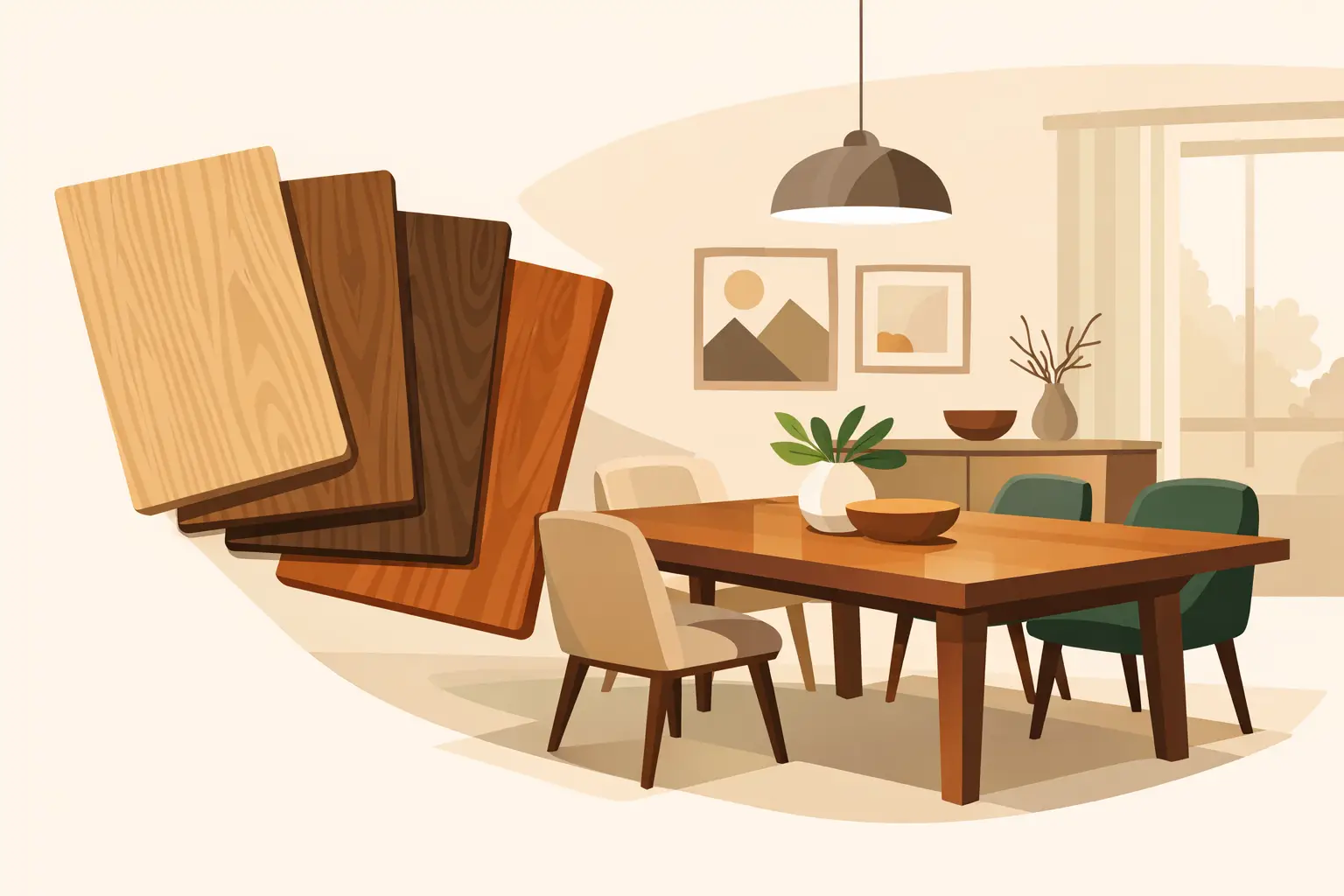
A dining table takes a different kind of beating than a coffee table. It sees hot serving dishes, dragged plates, homework, elbows, holiday meals, and the occasional glass of water left overnight. Choosing the best hardwoods for dining tables means looking beyond a pretty grain sample and considering how that wood will live in your home for years.
The right choice depends on the look you want, the amount of daily use the table will get, and whether you prefer a surface that stays crisp and uniform or one that gains character with every small mark. A well-built solid wood table can handle real life beautifully, but each species brings its own strengths.
What Makes a Hardwood Right for a Dining Table?
Hardness matters, but it is not the whole story. Woodworkers often use the Janka hardness rating to compare how well a species resists dents. That is useful when choosing between soft maple and hard maple, for example, but a dining table also needs stable lumber, dependable joinery, and a finish suited to the way your family uses the space.
Grain pattern matters just as much visually. Some homeowners want clean, quiet grain that works with a modern kitchen. Others want the bold cathedral patterns, knots, and color shifts that make a tabletop the focal point of the room. Natural color also changes over time. Cherry deepens, walnut can lighten slightly with sun exposure, and maple may warm to a richer honey tone.
Finally, solid wood moves with seasonal humidity. It expands and contracts across its width, which is normal. A properly made table allows for that movement through thoughtful construction rather than fighting it with rigid attachments. That is one reason custom craftsmanship makes a meaningful difference in a large wood surface.
Best Hardwoods for Dining Tables: Our Top Choices
White Oak: The dependable all-around choice
White oak is one of the strongest choices for a hardworking dining table. It has a firm feel, strong grain definition, and excellent durability for daily use. Its natural color ranges from light tan to medium brown, and it accepts stains well while still looking great under a clear finish.
For homes with kids, frequent entertaining, or a busy kitchen-dining area, white oak offers a practical balance of toughness and character. Its grain can help small dents and everyday wear blend in more naturally than they might on a smoother, more uniform wood.
White oak works especially well in farmhouse, transitional, Scandinavian, and modern spaces. A natural or light finish keeps it airy, while a medium stain can give it a more traditional look. It is not the least expensive option, but its durability and broad design appeal make it a solid long-term value.
Walnut: Rich color with a refined look
Walnut has a depth that is hard to imitate. Its heartwood ranges from chocolate brown to warmer purplish-brown tones, often with flowing grain and lighter sapwood accents. It gives a dining room an immediate sense of warmth and craftsmanship without needing a dark stain.
Walnut is moderately hard rather than ultra-hard, so it can show dents if it gets rough treatment. That does not make it fragile. It is still a strong, reliable furniture wood. It simply suits homeowners who appreciate a surface that will develop a natural patina instead of looking factory-perfect forever.
This species is an excellent match for mid-century, contemporary, and elevated traditional interiors. It also pairs beautifully with black metal, cream upholstery, brass fixtures, and light-colored cabinetry. Since walnut is often priced at a premium, it is a particularly good choice when the tabletop itself is meant to be the statement piece.
Hard Maple: Clean, bright, and built for use
Hard maple is a favorite for butcher block surfaces for good reason: it is dense, durable, and smooth. For dining tables, it offers a pale, clean appearance with fine grain that can feel at home in bright kitchens and simple modern rooms.
Its uniform look is a benefit for some buyers and a trade-off for others. Maple does not have the bold, open grain of oak or the dark drama of walnut. If you want a table with a quieter, more tailored look, it is an excellent option. If your goal is prominent grain movement and rustic variation, another species may be a better fit.
Hard maple is a smart pick for high-use tables, especially when finished with a protective furniture-grade topcoat. It can be stained, but maple may take stain unevenly without careful preparation. Many customers get the best result by letting its natural light color show through.
Cherry: Warm, classic, and full of character
Cherry is known for its smooth texture, gentle grain, and rich color development. Freshly finished cherry may start out light reddish-brown, then gradually deepen with exposure to natural light. That aging process is one of the reasons people choose it.
It is softer than white oak and hard maple, so it is better for a household comfortable with a lived-in finish. A few small dings will be more visible on cherry, but many owners feel those marks add to its old-world appeal. It is a wood that looks better when it is allowed to become part of the family routine.
Cherry fits classic American furniture, traditional dining rooms, and homes that need warmth without the darkness of walnut. A clear finish is often all it needs. Heavy stain can hide the natural color change that makes cherry special.
Red Oak: Familiar grain and practical value
Red oak is widely available, durable enough for everyday furniture, and usually more budget-friendly than walnut or white oak. Its unmistakable open grain gives it a classic solid-wood look, with colors ranging from pale tan to warm pinkish-brown.
The main consideration is style. Red oak has a more pronounced grain and a warmer undertone than white oak. That can be exactly right for a traditional home, a craftsman-inspired room, or a table intended to match existing oak cabinetry. For a cooler, more contemporary look, white oak is often the easier fit.
A well-finished red oak tabletop can provide years of dependable service. It is a sensible choice when you want real hardwood, visible grain, and a strong value without moving into a higher-priced species.
Species That Depend on Your Priorities
Ash, hickory, and mahogany can also make beautiful tables, but each calls for a specific design direction. Ash is light-colored with pronounced grain and good strength, making it a nice alternative to oak in modern or rustic spaces. Hickory is exceptionally hard and dramatic, with strong color variation that suits a bold, rustic table. Mahogany is stable and elegant, though it is generally chosen for its formal appearance rather than a casual farmhouse feel.
For a table with a more rustic look, character-grade lumber may include knots, mineral streaks, and natural color variation. Those details are not flaws when they are selected and finished intentionally. They are part of what makes a handmade wood top unlike a flat, uniform retail surface.
Do Not Choose by Hardness Alone
A harder wood can resist dents better, but no wood dining table is indestructible. A dropped cast-iron pan can damage almost any species. Conversely, a softer wood such as cherry can serve a family for decades when it is built well and maintained reasonably.
Finish is a major part of the equation. For a dining table, a durable protective finish helps guard against moisture, food spills, and normal wear. It should still be cleaned gently. Use a soft damp cloth for everyday messes, dry spills promptly, and avoid harsh cleaners or abrasive scrubbers that can dull the finish.
Placemats and trivets are worthwhile for hot cookware, especially on a table used for serving. Avoid leaving wet items in one spot for extended periods. These small habits do more for a table’s appearance than chasing the hardest possible wood species.
Match the Wood to the Way You Gather
If you need a table that can take daily family traffic, white oak or hard maple is hard to beat. If you are furnishing a room where the table should feel warm and tailored, walnut or cherry may be worth the added care and cost. If value and traditional grain are at the top of your list, red oak remains a dependable option.
At Tooill Cabinets, custom sizing gives homeowners another advantage: the wood can be chosen for the room, then built to fit the people gathering around it. A table should leave comfortable clearance for chairs and walkways, not force a beautiful species into the wrong dimensions.
The best table wood is the one you will enjoy using, not the one you will be afraid to touch. Choose a species that fits your home, expect honest wood to change gently over time, and give it the care that lets its craftsmanship show for generations.