
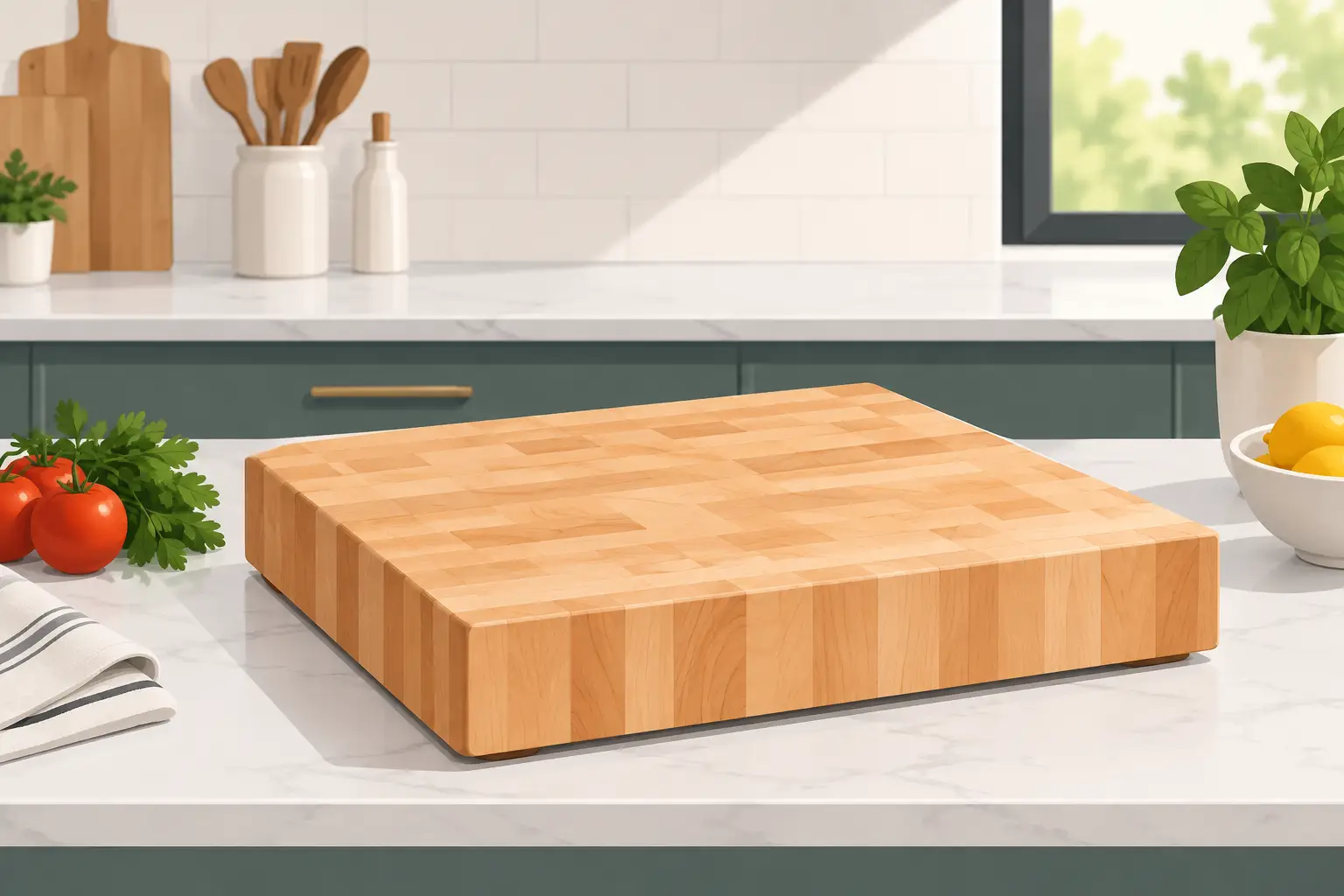
A maple countertop has to earn its place in a kitchen. It may serve as the landing zone for grocery bags, the surface where kids do homework, and the spot where dinner gets prepped every night. This maple butcher block review looks past the showroom appeal to explain how maple performs under real use, what care it needs, and when it is the right choice for a custom countertop or island top.
Why Maple Has a Strong Reputation
Hard maple, also called sugar maple, is one of the most trusted domestic hardwoods for work surfaces. It is dense, fine-grained, and naturally light in color, with a clean look that works equally well in traditional kitchens, modern spaces, and hardworking utility rooms. Its familiar use in bowling alleys, workbenches, and cutting boards is not an accident. Maple handles repeated use well.
For homeowners, maple’s biggest visual advantage is restraint. Compared with woods that have dramatic color swings or highly pronounced grain, maple feels calm and consistent. The grain is typically straight and close, although occasional mineral streaks, small knots, and natural color variation give solid wood its individual character. A clear finish lets that creamy blond tone show through, while stain can move maple toward a warmer or darker look.
That even appearance makes maple especially practical when a countertop needs to coordinate with painted cabinets, white tile, black hardware, or a wide range of flooring. It brings warmth without becoming the loudest element in the room.
Maple Butcher Block Review: The Day-to-Day Performance
A butcher block should look good, but a kitchen surface is judged by what happens after the first few months. Maple scores well on durability. It is hard enough to resist everyday dents better than softer species such as pine, alder, or poplar. It also has a smooth, closed grain, which helps create a polished surface that is comfortable for food prep, rolling dough, or simply leaning against while talking in the kitchen.
Still, hardwood is not a maintenance-free material. A cast-iron pan dropped on any wood countertop can leave a mark. Dragging ceramic planters, cutting directly on a finished counter, or letting water sit around a faucet will eventually show. Those are not defects unique to maple. They are the honest trade-off for choosing real wood instead of laminate, stone, or a synthetic top.
The good news is that wood is repairable. Light scratches can often be buffed or sanded, and a properly built solid maple top can be refinished years down the road. That long service life is one reason homeowners choose a made-to-order wood surface instead of a disposable alternative.
Hardness Is Helpful, Not Indestructible
Maple’s density makes it a smart option for busy kitchens and islands, but it also means cutting tools can leave marks if they are used directly on the countertop. A separate cutting board remains the best practice, especially if the top has a protective film finish.
If you want a true chopping surface, an oil-finished maple butcher block is the more practical route. The oil can be renewed in specific areas when the surface dries or gets scratched. A film finish is usually better for a countertop that sees spills, glasses, and general household use, but it is not intended to be cut on with knives.
Choosing the Right Construction
Not every maple butcher block is built the same way. Species matters, but construction, wood selection, glue-up quality, sanding, and finishing all affect how the finished piece looks and performs.
Edge-grain construction is a common choice for countertops. Boards are laminated side by side, creating long, linear grain patterns that suit most kitchens. It offers a balanced combination of strength, visual consistency, and value. Face-grain tops show wider boards and more visible grain movement, creating a more furniture-like appearance. End-grain construction, where the ends of wood fibers face upward, is prized for cutting blocks but is usually more expensive and less common for large countertops.
For a countertop, thickness changes both appearance and feel. A 1 1/2-inch maple top works well for many counters, desks, and tables. A thicker island top can create a stronger furniture-grade presence, particularly on a large base or in an open kitchen. The right choice depends on the scale of the room, overhang needs, cabinet support, and the look you want to achieve.
Custom sizing is where a handmade maple top can make a major difference. Standard retail lengths often force homeowners to accept seams, awkward filler pieces, or an overhang that does not quite fit. A made-to-order top can be built around your actual cabinet measurements, wall conditions, corner details, sink cutout plan, and preferred edge profile. Tooill Cabinets builds custom wood surfaces for buyers who need that fit rather than another compromise from a shelf.
Finish and Maintenance Matter More Than Most Buyers Expect
The finish determines much of the ownership experience. A natural food-safe oil finish gives maple a soft, touchable feel and keeps the wood easy to renew. It is a good fit for cutting boards and dedicated prep blocks, but it requires regular re-oiling. How often depends on use, indoor humidity, cleaning habits, and how dry the wood looks.
A polyurethane or conversion-varnish style protective finish creates a more sealed surface for countertops, bar tops, desks, and tables. It generally offers better resistance to everyday moisture and stains, with less routine maintenance. It also changes the relationship you have with the surface: you clean it rather than oil it, and you protect it from knife cuts and deep scratches.
Either finish benefits from sensible habits. Wipe spills promptly, especially near seams and sink areas. Use mild soap and a damp cloth instead of soaking the surface. Do not leave wet dish towels, potted plants, or appliance mats in one spot for days. Avoid harsh abrasives and strong cleaners that can dull or damage the finish.
Wood also expands and contracts as humidity changes. That movement is normal. A well-made installation allows the top to move seasonally instead of trapping it rigidly against cabinets or walls. Proper fastening and reasonable indoor humidity help keep a maple top looking its best for years.
What Maple Costs Compared With Other Woods
Maple usually sits in a sensible middle ground among premium domestic hardwoods. It often costs more than basic softwood options and may be less expensive than highly figured walnut or exotic species. Price rises with thickness, length, width, custom cutouts, edge details, finishing, and shipping requirements.
It is tempting to compare only price per square foot, but that misses the real value of a countertop. A low-priced top may need more trimming, extra finishing, or workarounds to fit your space. A custom-built maple top costs more upfront than a stock panel in many cases, yet it can save frustration when dimensions are unusual or the finished look matters.
For a smaller project, maple is also a strong choice for shelves, laundry-room counters, desk tops, and dining tables. Its neutral color keeps those pieces versatile if the room changes later.
When Maple Is the Best Choice, and When It Is Not
Choose maple if you want a light-toned, durable hardwood with a refined grain pattern and a long track record in working surfaces. It is particularly well suited to kitchens that need warmth without the darker visual weight of walnut, as well as spaces where a countertop will see daily use.
Consider another wood if dramatic grain and deep color are your top priorities. Walnut delivers more contrast and richness. White oak has more visible grain and a distinctly different character. If you want the lowest possible price or do not want to perform any wood care at all, a solid wood butcher block may not be the best material for the job.
The best maple butcher block is not simply the hardest or thickest one. It is the one built to the right dimensions, finished for the way you actually use it, and installed with room for natural movement. Measure carefully, be honest about your maintenance preferences, and choose a piece made for your home rather than one you have to force into it.