
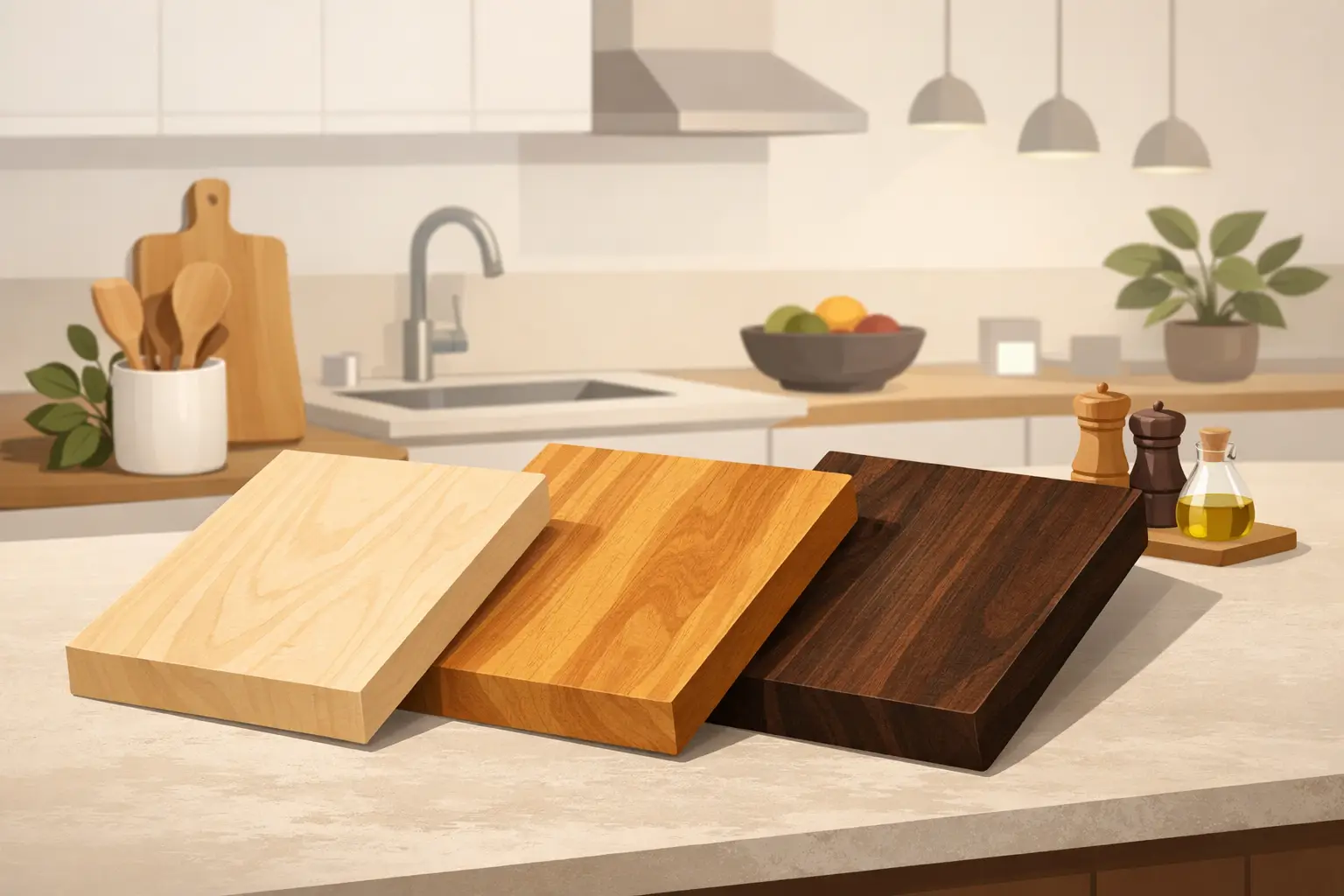
A wood countertop can look incredible on day one and still frustrate you a year later if you pick the wrong species for the way your kitchen actually gets used. That is why the best wood for kitchen countertops is not just about appearance. It comes down to hardness, grain, movement, maintenance, and whether you want a showpiece, a work surface, or both.
Some homeowners want the warm, classic look of maple. Others want walnut for the rich color, or oak for strong grain character. All of those can work. The right choice depends on how much traffic the counter gets, how often you cook, how much maintenance you are willing to do, and whether the top will be installed around a sink, on an island, or in a lower-use prep area.
What makes the best wood for kitchen countertops?
A good countertop wood needs to hold up to daily use without turning every small mark into a problem. That usually means a hardwood with decent stability and enough density to resist dents better than softer species. It also needs to finish well and look better with age, not worse.
Hardness matters, but it is not the whole story. A very hard wood can still be a poor choice if it moves too much with humidity or has a grain pattern that creates finishing issues. Likewise, a slightly softer wood can be an excellent countertop if it is stable, well-built, and properly sealed.
For most kitchens, the sweet spot is a hardwood species that balances durability, workable grain, and long-term visual appeal. That is why maple, walnut, white oak, and cherry come up so often in quality butcher block and wood countertop builds.
Maple is the standard for a reason
If you asked a lot of woodworkers to name the safest all-around answer, maple would be near the top every time. Hard maple, in particular, has earned its reputation through years of use in butcher blocks, worktops, and cutting surfaces.
Maple is durable, tight-grained, and relatively clean-looking. It has a light, natural color that fits a wide range of kitchens, from modern spaces to more traditional homes. It also tends to show less dramatic grain variation than oak or walnut, which appeals to homeowners who want a quieter look.
From a practical standpoint, maple handles wear well. It is not dent-proof, because no wood is, but it stands up to daily use better than many softer species. Its tight grain also makes it a strong option for food-prep-friendly surfaces when finished appropriately.
The trade-off is visual. Some people find maple a little plain compared with woods that have stronger character. It can also show stains if neglected, especially around sinks or areas where water sits too long. But if you want a dependable, proven countertop wood, maple is one of the best choices on the table.
Walnut brings depth and character
Walnut is often the wood people fall in love with first. The deep brown color, natural variation, and rich grain give it a furniture-grade look that instantly warms up a kitchen.
For islands, bar tops, and statement counters, walnut is hard to beat. It reads as custom right away. In homes where the countertop is part of the design focal point, walnut often feels more elevated than lighter woods.
It is not quite as hard as maple, so it can show dents and wear a little sooner in heavy-use kitchens. That does not make it a bad choice. It just means walnut works best for homeowners who understand that wood should develop some patina over time. Small marks, subtle wear, and a softening of the surface can actually add to the appeal.
If you want a countertop that looks handcrafted and lived-in in the best way, walnut is a strong contender. It is especially good when you want warmth and contrast against white cabinetry, painted lowers, or lighter backsplashes.
White oak is tough and full of texture
White oak has become increasingly popular for kitchen surfaces because it gives you a durable hardwood with a lot of visual presence. The grain is more pronounced than maple, and the color range works well in both natural and stained finishes.
It is a practical wood too. White oak is known for strength and decent moisture resistance, which helps explain why it has been used historically in demanding applications. In a kitchen, that can translate to a surface that feels solid and dependable.
The main consideration is style. Oak has more grain activity than maple, which some homeowners love and others do not. If you want a clean, uniform countertop, oak may feel too busy. If you want visible wood character that still performs well, it is a smart choice.
White oak is often a particularly good fit in kitchens that lean rustic, transitional, organic modern, or farmhouse without looking overly themed.
Cherry ages beautifully, but starts softer
Cherry is one of those woods that rewards patience. Freshly milled, it is lighter and warmer in tone. Over time, it deepens into a richer, more mature color that many homeowners find beautiful.
It machines and finishes well, and it has a refined appearance that works especially nicely in classic kitchens. Cherry can make a countertop feel custom and timeless without being flashy.
The downside is that it is softer than maple or white oak. If you are hard on your counters, cherry will show that life sooner. For some people, that is a dealbreaker. For others, it is part of the charm. It depends on whether you want a pristine look or a natural surface that records everyday use.
Cherry tends to be a better fit for lower-abuse counters, baking stations, coffee bars, or islands that do not take the full punishment of a busy prep zone.
Are there woods to avoid for kitchen countertops?
Yes. Softer woods like pine are usually not the best choice for kitchen countertops unless you are specifically after a distressed look and understand the maintenance involved. Pine dents easily, marks quickly, and generally requires more forgiveness from the homeowner.
Open-pored woods can also present challenges if the build quality or finish is not right. That does not mean they cannot work, but they require more attention to fabrication and sealing.
Exotic woods sometimes enter the conversation too. Some are very hard and visually striking, but cost, sourcing, movement, and finishing can complicate the project. For most homeowners, domestic hardwoods remain the most practical and reliable path.
The best wood depends on where the countertop goes
Not every kitchen countertop has the same job. A perimeter counter next to the sink needs different performance than a dry island top or a breakfast bar.
Around a sink, moisture resistance and maintenance habits matter more. If you know water tends to sit around the faucet or edge, that should influence both wood selection and finish choice. In heavy prep zones, hardness becomes more important. On an island, appearance might lead the decision because the top is more visible from every angle.
That is one reason custom work matters. A made-to-order top can be built around the actual use case, not just a generic category label.
Construction matters as much as species
Even the best wood for kitchen countertops can disappoint if the countertop is poorly made. Wood selection is only part of the equation. Glue-up quality, board layout, moisture control, sanding, edge treatment, and finish application all affect how the top performs in a real home.
A well-built butcher block or slab glue-up should be fabricated with attention to movement, consistency, and long-term stability. Grain orientation and board selection are not minor details. They influence how the top looks, how evenly it wears, and how it responds to seasonal changes.
This is where handcrafted production has a real advantage. When a countertop is built to order, the choices are more intentional. The species can match the kitchen, the dimensions can fit the space correctly, and the build can reflect how the customer actually plans to use it.
Finish and maintenance are part of the decision
Wood countertops are not maintenance-free, and any honest answer should say that clearly. But maintenance does not have to be difficult either.
If you want a lower-maintenance countertop surface, a durable protective finish is usually the better route. If you want a more traditional butcher block feel with a surface you can refresh over time, oil-based maintenance may appeal to you. Each option has trade-offs in appearance, repairability, and care.
The key is choosing a wood and finish combination that fits your expectations. A homeowner who wants a natural top that gains character may be thrilled with walnut or cherry. A homeowner who wants a harder-working family kitchen surface may be happier with maple or white oak.
At Tooill Cabinets, that is often the real conversation – not just what looks best in a photo, but what will still feel right after months of cooking, cleaning, and everyday use.
So what is the best wood for kitchen countertops?
For pure all-around practicality, hard maple is one of the strongest choices. It is durable, classic, and proven. If you want richer color and a more custom furniture look, walnut stands out. If you want durability with visible grain character, white oak makes a lot of sense. If you care most about warmth and aging beautifully over time, cherry deserves a look.
The best choice is the one that fits your kitchen, your style, and your habits. A wood countertop should not feel like a compromise. It should feel like it was built for your home from the start.
If you are choosing carefully, that is exactly what makes wood worth it.