
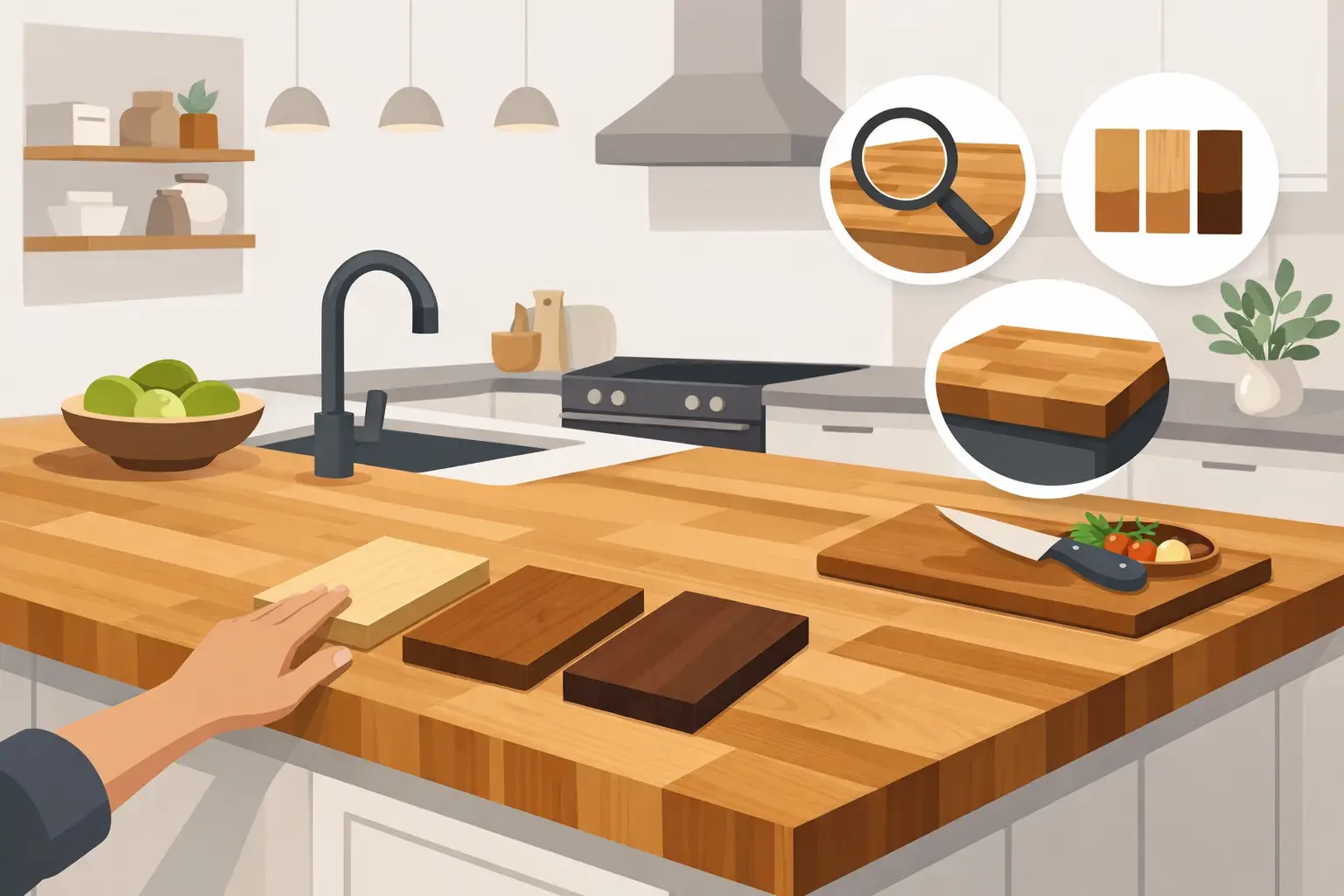
A kitchen island gets used hard. It catches grocery bags, homework, prep work, serving platters, and the random pile of mail that shows up by 5 p.m. That is exactly why a butcher block island top matters so much. If the surface is going to be the center of the room, it should look good, hold up well, and fit the way your kitchen actually works.
Why a butcher block island top works so well
There is a reason homeowners keep coming back to solid wood for island surfaces. A butcher block island top brings warmth into a room full of hard materials like tile, stone, steel, and painted cabinets. It softens the space without feeling delicate.
It is also practical in a way that photos do not always show. Wood is more forgiving than stone when you set down dishes or lean against the edge for long stretches. It can handle daily use, and if life leaves a mark, solid wood can often be cleaned up, re-oiled, or refinished instead of replaced. That is a big difference from surfaces that chip, crack, or look worn with no real path back.
The trade-off is simple. Wood asks for some care. If you want a completely hands-off material, wood may not be your first choice. But for many homeowners, that maintenance is worth it because the top ages with character instead of just wearing out.
What to decide before you order
The biggest mistake people make is picking the wood first and asking sizing questions later. Start with function. Your island might be a prep station, a breakfast spot, a serving area, or all three. That affects nearly every decision that comes after.
Think about overhang first. If you want seating, you need enough extension for knees and stools to fit comfortably. If the top is mainly for prep, you may want a tighter footprint with more walking space around the island. In a smaller kitchen, even an extra inch or two can change how the room moves.
Thickness matters too. A thicker top has more visual weight and tends to feel more furniture-like. A thinner top can look cleaner and lighter, especially in more modern kitchens. Neither is automatically better. It depends on your cabinet base, room size, and the look you are after.
Then there is edge style. A simple square edge feels clean and straightforward. Slightly eased edges are softer and more family-friendly. Decorative profiles can work well in traditional spaces, but they should match the rest of the kitchen instead of competing with it.
Best wood species for a butcher block island top
Wood choice is where style and performance meet. The right species depends on how you use the island and what kind of kitchen you are building.
Maple is a classic choice because it is hard, durable, and has a clean, even appearance. It fits a wide range of kitchens, from bright painted spaces to more transitional designs. If you want something dependable and versatile, maple is hard to argue with.
Walnut has a richer, darker tone and a more dramatic look. It brings instant warmth and contrast, especially in white or light-colored kitchens. It is often chosen more for its appearance than for a traditional work-surface feel, though it still performs well in everyday use. If you want the island to stand out, walnut usually does the job.
Oak offers strong grain character and a look that feels grounded and substantial. White oak in particular has become a favorite in kitchens that lean natural, modern, or organic. It has more visible texture than maple, which some homeowners love and others prefer to avoid.
Cherry deepens over time and develops a warm, lived-in color. It works beautifully in homes where a little aging is part of the appeal. The same goes for hickory if you want more movement and variation in the grain.
There is no universal best species. If you want a clean and classic workhorse, maple makes sense. If you want depth and a statement look, walnut is a strong contender. If grain and natural character are the priority, oak may be the better fit.
Custom sizing is where the difference shows
A good island top should not force you to redesign your kitchen around stock dimensions. This is where custom work earns its keep.
A made-to-order butcher block island top lets you match your base exactly, account for appliance clearances, and build in the overhang you actually need. It also helps when your space is older, slightly out of square, or designed around existing cabinetry that does not follow standard retail sizing.
That matters more than people expect. Even a beautiful top can feel wrong if the proportions are off. Too much overhang can look clumsy. Too little can make seating uncomfortable. A top that is just slightly undersized can leave the island looking unfinished.
Custom sizing also gives you more control over thickness, edge detail, and finishing approach. For homeowners trying to hit a specific design vision, that flexibility makes the final result feel intentional instead of close enough.
Finish choices change how the top lives in your home
One of the most important decisions is whether the island top will be used as a true food-prep surface or more as a work and gathering surface.
If you want a natural, food-safe feel, oil finishes are a common choice. They give the wood a more traditional butcher block character and are easy to refresh over time. The catch is that they need regular maintenance. If you skip that care, the surface can dry out or show wear faster.
If you want stronger day-to-day protection and lower upkeep, a sealed finish is often the better route. It helps defend against spills, stains, and general kitchen mess. For many households, especially busy family kitchens, that practicality matters more than having a classic cutting-surface treatment.
This is an area where honesty helps. A lot of people love the idea of an oil-finished top, but their real life is more aligned with a durable sealed surface. There is nothing wrong with choosing the finish that fits your habits.
How a butcher block island top changes the look of a kitchen
Wood brings balance. In an all-white kitchen, it adds warmth so the room does not feel flat or sterile. In a darker kitchen, it can keep the space from feeling heavy. In a mixed-material kitchen, it gives the eye a natural resting point.
A butcher block island top also works especially well when the perimeter counters are another material. That contrast can make the island feel more like a centerpiece and less like one continuous run of countertop. It is a smart move for homeowners who want visual interest without making the whole kitchen too busy.
If your cabinets already have strong grain or a bold paint color, choosing the right wood becomes more important. Sometimes a quieter species is the better call. Sometimes you want the island to stand apart. It depends on whether the island is meant to blend in or lead the room.
What to expect over time
Solid wood is real material, and real material moves. Seasonal humidity changes can affect wood, which is normal. Proper fabrication, finish, installation, and care all play a role in how well the top performs over the long haul.
The good news is that solid wood earns its place with age. Small marks do not always hurt the look. In many kitchens, they become part of it. And unlike many factory-made surfaces, a well-built wood top usually gives you options down the road. Light sanding, refinishing, and maintenance can extend its life in a meaningful way.
That is one reason homeowners looking for long-term value often choose handcrafted wood over mass-produced alternatives. The piece is not disposable. It is built to stay in the home and keep working.
Buying with confidence
If you are shopping for a butcher block island top, look beyond the photos. Ask how it is built, what species are available, what finish options make sense for your use, and whether the maker can build to your exact dimensions. Good craftsmanship shows up in the details, but good service matters too, especially with a custom piece.
At Tooill Cabinets, that custom approach is part of the value. Homeowners are not just choosing a wood top off a shelf. They are getting a handcrafted piece built for their kitchen, with sizing and finish decisions that support how they really live.
The best island tops are not the ones that simply match a trend. They are the ones that feel right every day – when you are making coffee, feeding the kids, hosting friends, or just standing at the center of the room thinking, yes, this was worth doing.