
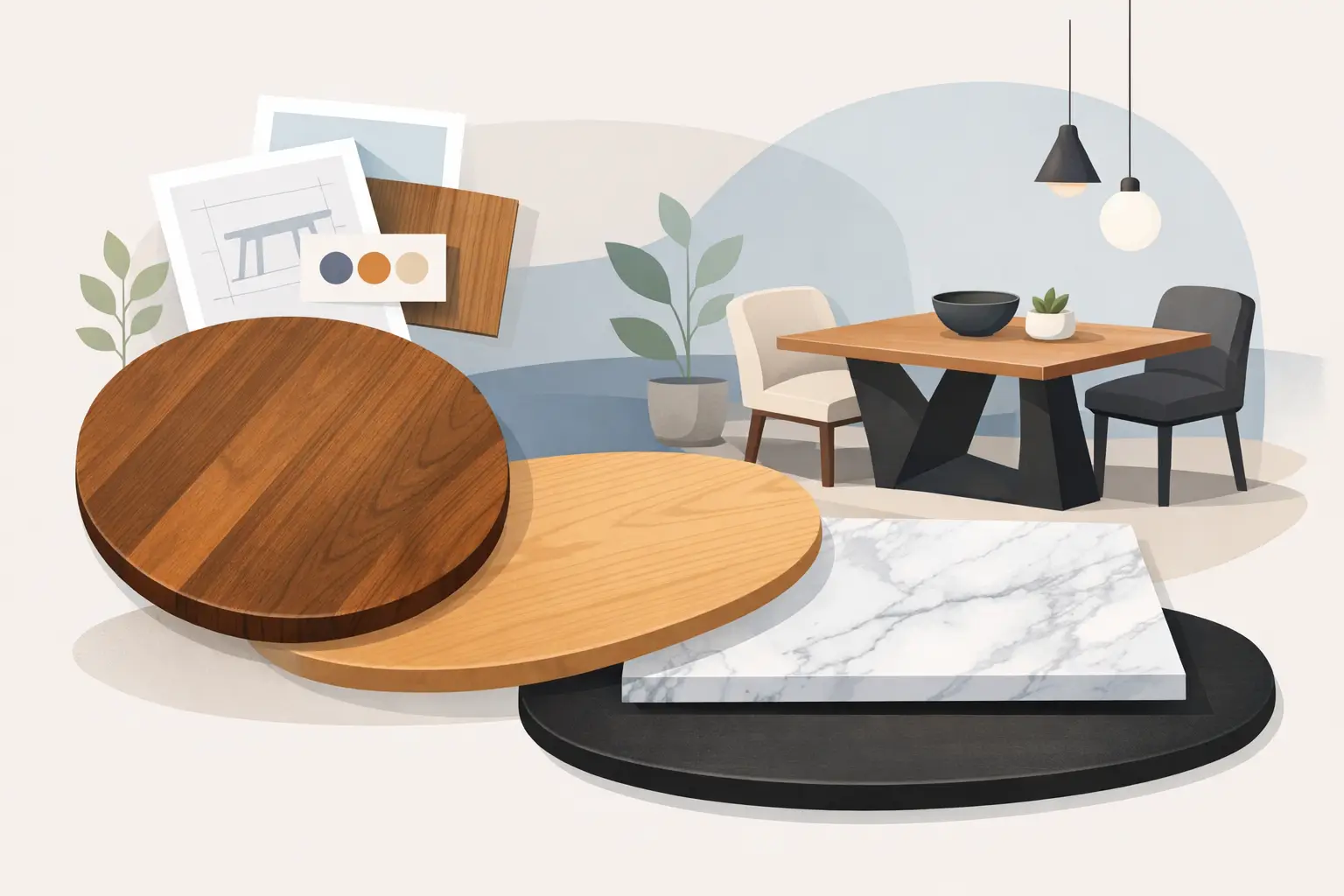
A dining table gets judged fast. Not when it shows up in the box, but six months later when it has handled weeknight dinners, homework, coffee mugs, holiday platters, and the occasional dropped fork. That is exactly why a custom dining table top makes sense for so many homeowners. You are not just picking a look. You are choosing the size, wood species, thickness, edge detail, and finish that will decide how the table lives in your home.
If you have spent time looking at ready-made tables, you have probably run into the same problem over and over. The size is close, but not quite right. The stain looks good online, but flat in person. The base works, but the top feels thin or cheap. A custom piece solves those compromises by starting with your room, your style, and the way you actually use the table.
Why a custom dining table top is worth it
The biggest advantage is fit. A dining room is not just about square footage. It is about traffic flow, chair spacing, and whether the table feels comfortable every day instead of only when the room is staged for photos. A custom top lets you build around the space you really have.
There is also a quality difference you can feel. Solid wood has weight, texture, and character that mass-produced surfaces often try to imitate but rarely match. Grain variation, natural color shifts, and hand-finished edges give the top a real presence. That matters in a dining area because the table is usually one of the largest visual pieces in the room.
Then there is longevity. A well-built wood top can age gracefully if it is properly made and properly finished. Small marks often blend into the character of the wood instead of making the whole piece look worn out. For many buyers, that is a better trade than a factory-made table that looks perfect for a year and tired after that.
Choosing the right size for a custom dining table top
Size is where custom work pays off first. The right dimensions depend on both seating and clearance. Most people know how many seats they want, but fewer think through how much room is needed to pull out chairs and move around the table comfortably.
As a general rule, you want enough space around the table so the room still functions when chairs are occupied. If the table is too large, the whole dining area feels cramped. If it is too small, it can look undersized and leave guests crowded shoulder to shoulder.
Shape matters too. Rectangular tops are classic and efficient for longer rooms. Round tops soften a space and make conversation easy, but they need enough room to breathe. Square tops can work well in smaller dining areas, while oval tops split the difference by offering smoother corners with generous seating.
When ordering a custom dining table top, exact measurements matter more than rough estimates. It helps to mark the footprint on the floor with tape before making a final decision. That simple step can save you from ordering a top that technically fits but does not feel right.
Wood species changes the look and performance
Not all wood behaves the same, and not all species create the same visual effect. This is one of the most important parts of a custom order because the wood defines both style and everyday durability.
Maple tends to have a clean, lighter appearance with a tight grain. It works well in modern, transitional, and brighter interiors. Oak brings stronger grain pattern and a more traditional feel, though it can also look sharp in contemporary spaces depending on the finish. Walnut offers deeper brown tones and a richer, more dramatic look that many homeowners want for statement pieces.
The right choice depends on your goals. If you want a table that hides wear and shows natural character, stronger grain can be your friend. If you prefer a smoother, more uniform look, a tighter-grained species may be the better fit. There is no universal best option. It depends on your home, your budget, and how much visible wood movement and variation you want to see.
Thickness, edge profile, and construction details
People often focus on color first, but thickness changes the look of the table just as much. A thicker top feels substantial and grounded. A thinner top can look cleaner and more modern. Neither is automatically better. The right call depends on the base, the room, and the style you are after.
Edge profile is another small detail that has a big impact. A simple eased edge keeps the look clean and practical. A more shaped profile can lean formal or traditional. Live edge styles bring a more organic feel, but they are not right for every room. If the rest of the space is very tailored, a straight edge usually gives you more flexibility.
Construction also matters behind the scenes. A handcrafted top should be built with attention to glue-up quality, wood selection, sanding, and finish prep. Those details are easy to overlook when shopping online, but they are exactly what separate a table top that lasts from one that starts showing problems too soon.
The finish matters more than most buyers expect
A dining table is a working surface. It has to look good, but it also has to hold up to spills, heat, friction, and repeated cleaning. That makes finish selection one of the most practical decisions in the entire project.
Some homeowners want a natural look with minimal color shift. Others prefer a stained finish that adds warmth or helps the table coordinate with flooring, cabinets, or nearby furniture. Both can work well, but the finish should match the use case, not just the sample photo.
If the table will see heavy family use, durability should be part of the conversation from the start. A finish that looks beautiful in a staged room may not be the best fit for a household with young kids, frequent entertaining, or daily meals at the table. This is where working with a custom builder helps. You can ask direct questions about maintenance, repairability, sheen level, and how the finish tends to age over time.
Matching the top to a base
Many customers buy a top to pair with an existing base or a separately sourced one. That can work very well, but only if the proportions and support are right. The base needs to fit the top structurally and visually.
A heavy wood top on an undersized base can feel off balance. A large pedestal may support a round top beautifully but look awkward under a narrow rectangle. Mounting points, apron clearance, overhang, and weight all need attention before production starts.
This is another reason custom ordering is useful. Instead of forcing a stock top onto a base and hoping for the best, you can build the top around the support you already have. Tooill Cabinets works with buyers looking for that exact kind of fit, especially when standard retail sizing falls short.
What to expect from the custom process
A good custom order should feel clear, not confusing. You should know the dimensions being built, the wood species selected, the finish direction, and what the final top is intended to look like within the natural variation of real wood.
Communication matters a lot here. Handcrafted wood products are not identical factory outputs, and that is part of their value. But custom should never mean vague. A dependable shop will help confirm measurements, answer questions, and set realistic expectations about grain, tone, and production timing.
Shipping also deserves more attention than it usually gets. A large wood top has to be packed correctly to arrive safely. Protective packaging, careful handling, and experience with oversized pieces are part of the product, not an extra detail.
Common trade-offs to think through
Every custom table top involves a few trade-offs. A larger top gives you more seating and visual impact, but it also adds weight and can dominate a smaller room. Darker woods and richer stains create depth, but they may show dust or scratches more quickly than lighter options. A very smooth, clean-lined design can feel modern and refined, but a more character-heavy board selection may better hide everyday wear.
This is why the best result usually comes from balancing style and function instead of chasing one at the expense of the other. The right custom dining table top is not just attractive on day one. It still works after birthdays, takeout nights, and years of regular use.
Making a table that feels built for your home
The best custom pieces have a quiet confidence to them. They fit the room correctly. They suit the people using them. They do not feel like a compromise pulled from leftover inventory.
If you are investing in a custom dining table top, focus on the decisions that affect everyday life most – size, wood species, finish, and construction quality. Those are the choices that turn a tabletop into a long-term piece of the home, not just another purchase to replace later.
A well-made table top does more than fill a dining room. It gives the room a center of gravity, and that is worth getting right.