
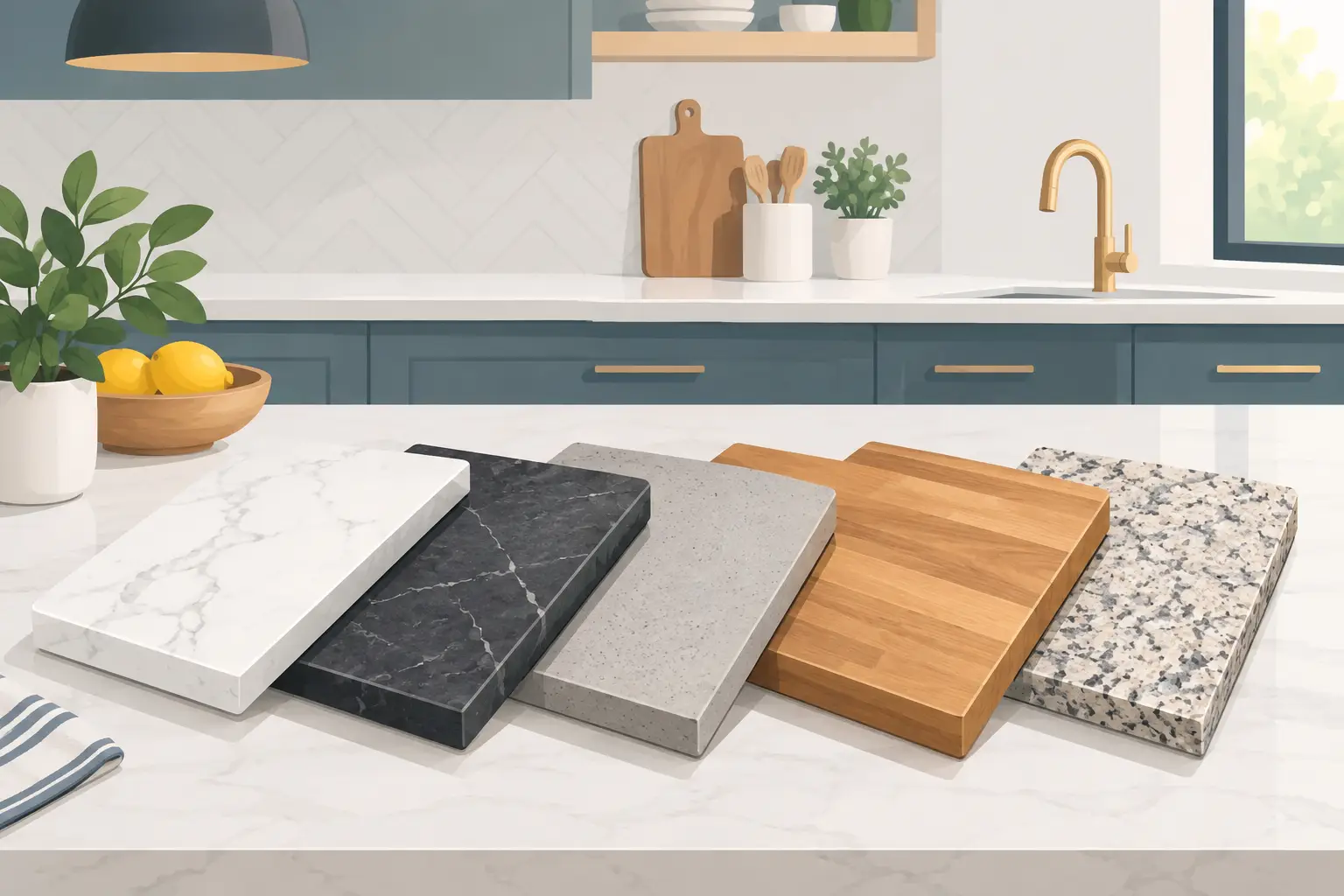
A kitchen countertop is not just a finish choice. It is where groceries land, kids do homework, pans cool down, dough gets rolled out, and morning coffee spills happen. The best countertop materials are the ones that fit the way you actually live, not just the photo you saved for a remodel board.
A beautiful surface that needs constant attention can become frustrating. On the other hand, a surface chosen only for toughness may leave the kitchen feeling flat or impersonal. The right decision comes down to daily use, budget, maintenance preferences, and how much character you want the room to have.
Countertop Materials Compared for Real Homes
There is no single best countertop for every kitchen. A rental refresh, a busy family kitchen, a serious home cook’s workspace, and a custom island all call for different priorities. Start with the practical side, then narrow the choices based on the look you want to live with for years.
Laminate: Budget-Friendly and Easygoing
Laminate remains a practical choice when budget is the main concern. It is available in a huge range of colors and patterns, including options that imitate stone and wood. It is also easy to wipe clean and does not require sealing.
The trade-off is durability at the edges and surface. Laminate can scratch, chip, or swell if water works its way into a seam. Hot cookware can also damage it quickly. For a laundry room, office nook, rental property, or light-use kitchen, it can make good sense. For a centerpiece island that will see years of hard use, many homeowners want something more substantial.
Quartz: Consistent Color With Low Maintenance
Quartz is an engineered surface made from crushed stone and resin. It is popular because it offers a clean, consistent appearance and does not need the routine sealing associated with many natural stones. It stands up well to stains and everyday messes.
Still, quartz is not indestructible. It can be damaged by excessive heat, so a trivet is still a good habit. Large quartz installations also require professional measuring, fabrication, and installation, which can add significantly to the project cost. Its uniform look is a strength for some kitchens, while others prefer the natural variation found in wood or stone.
Granite: Natural Stone With Individual Character
Granite gives a kitchen a one-of-a-kind surface because every slab has its own mineral pattern and movement. It is heat-resistant and durable, making it a longtime favorite for active kitchens.
The color variation is worth seeing in person before committing. A small sample cannot fully show what a whole slab will look like. Granite also typically needs periodic sealing to help resist staining, especially in lighter colors. If you love natural materials but want a stone surface that handles heat well, granite deserves a close look.
Marble: Beautiful, Softer, and More Demanding
Marble has a classic look that is hard to copy. Its soft veining works especially well in traditional, European-inspired, and high-end kitchens. Bakers often appreciate that marble stays naturally cool.
But marble asks for grace. It can etch when exposed to acidic foods and drinks, and it is more likely to stain or scratch than granite or quartz. For some homeowners, those marks become part of a well-used kitchen’s story. For others, they become a source of stress. Marble works best when you understand its aging process and genuinely like the idea of a lived-in patina.
Stainless Steel: Built for Work
Stainless steel is a smart choice for kitchens where performance leads the conversation. It resists heat, water, and bacteria, which is why it is common in commercial kitchens. It also brings a clean, modern, slightly industrial feel to a home.
The downside is that stainless shows fingerprints and can scratch. Those scratches tend to blend into a softer brushed appearance over time, but that look is not for everyone. It is often especially effective on one hardworking prep zone rather than throughout an entire kitchen.
Solid Surface: Repairable and Smooth
Solid-surface countertops offer a smooth, nonporous option with inconspicuous seams and integrated sink possibilities. They are easy to clean and can often be repaired if scratched or lightly damaged.
They do not have the natural depth of real stone or hardwood, and they can be vulnerable to high heat. Still, for homeowners who want a quiet, uniform surface with straightforward care, solid surface can be a sensible middle ground.
Why Wood Countertops Feel Different
Wood countertops bring warmth that stone and manufactured surfaces cannot quite replicate. The grain, color shifts, and handmade feel make a kitchen look more personal. A solid wood top can soften a room full of painted cabinets, tile, and metal appliances, especially on an island, coffee bar, desk area, or dining extension.
Butcher block is also a practical working surface. It is comfortable to lean on, quieter than stone when dishes are set down, and naturally suited to food prep when properly finished and maintained. Unlike many hard surfaces, wood can often be renewed. Small scratches, stains, and signs of use can be sanded and refinished rather than forcing a full replacement.
That renewability is a major reason homeowners choose hardwood. A well-built wood top is not expected to stay frozen in its first-day appearance. It is meant to be cared for, used, and enjoyed.
The Wood Species and Construction Matter
Not all wood countertops are made alike. Hard maple is a classic choice for butcher block because it is dense, durable, and clean-looking. Walnut offers deep, rich tones and bold grain variation. Oak brings pronounced grain and a traditional feel, while cherry develops a warmer, deeper color over time.
Construction affects both appearance and performance. Edge-grain butcher block shows long, continuous strips of wood and is a popular choice for kitchen counters and islands. End-grain construction creates the checkerboard appearance often seen on premium chopping blocks and provides excellent knife-friendly performance, though it is typically more expensive. Wide-plank and face-grain tops offer a furniture-like look for desks, tables, and statement islands.
For a custom project, dimensions matter just as much as species. Overhangs, appliance clearances, wall irregularities, sink cutouts, and thickness all need to be considered before a top is built. A made-to-order piece avoids the awkward compromises that come with trying to force a standard retail size into a nonstandard space.
Maintenance Is Part of the Material Choice
Every countertop has care requirements. The question is whether those requirements fit your routine. Quartz needs basic cleaning but should be protected from direct heat. Natural stone may need sealing. Marble needs quick cleanup around acidic spills. Wood benefits from regular oiling or refinishing depending on the finish and use.
For food-prep butcher block, a food-safe oil and wax routine helps prevent the wood from drying out and improves water resistance. For bar tops, desks, and many islands, a durable protective finish may be the better choice because it creates a more sealed surface. The right finish depends on whether you want to cut directly on the wood, how often it will get wet, and how much maintenance you are comfortable doing.
Do not confuse maintenance with weakness. A solid wood countertop is a long-term material precisely because it can be maintained and renewed. The key is choosing a finish and care routine that match the job.
How to Choose the Right Countertop for Your Space
Think first about the role of each surface. Your main perimeter counters may need easy cleanup and strong stain resistance. Your island may be the place to introduce warmth with a custom wood top. A baking station may benefit from stone, while a utility room may only need an affordable, durable laminate.
Mixing materials is not a compromise. It is often the most thoughtful way to design a kitchen. A wood island paired with quartz or stone perimeter counters gives you a warm gathering point and a low-maintenance work zone. It also lets each material do what it does best.
Measure carefully, including the depth you need, the desired overhang, and any walls that are not perfectly square. If your project calls for a hardwood top built around your exact dimensions, Tooill Cabinets can create a made-to-order butcher block surface with the species, thickness, and finish that suit your plan.
Choose the countertop you will be happy to use, not just admire from across the room. The best surface earns its place one meal, project, conversation, and everyday mess at a time.