
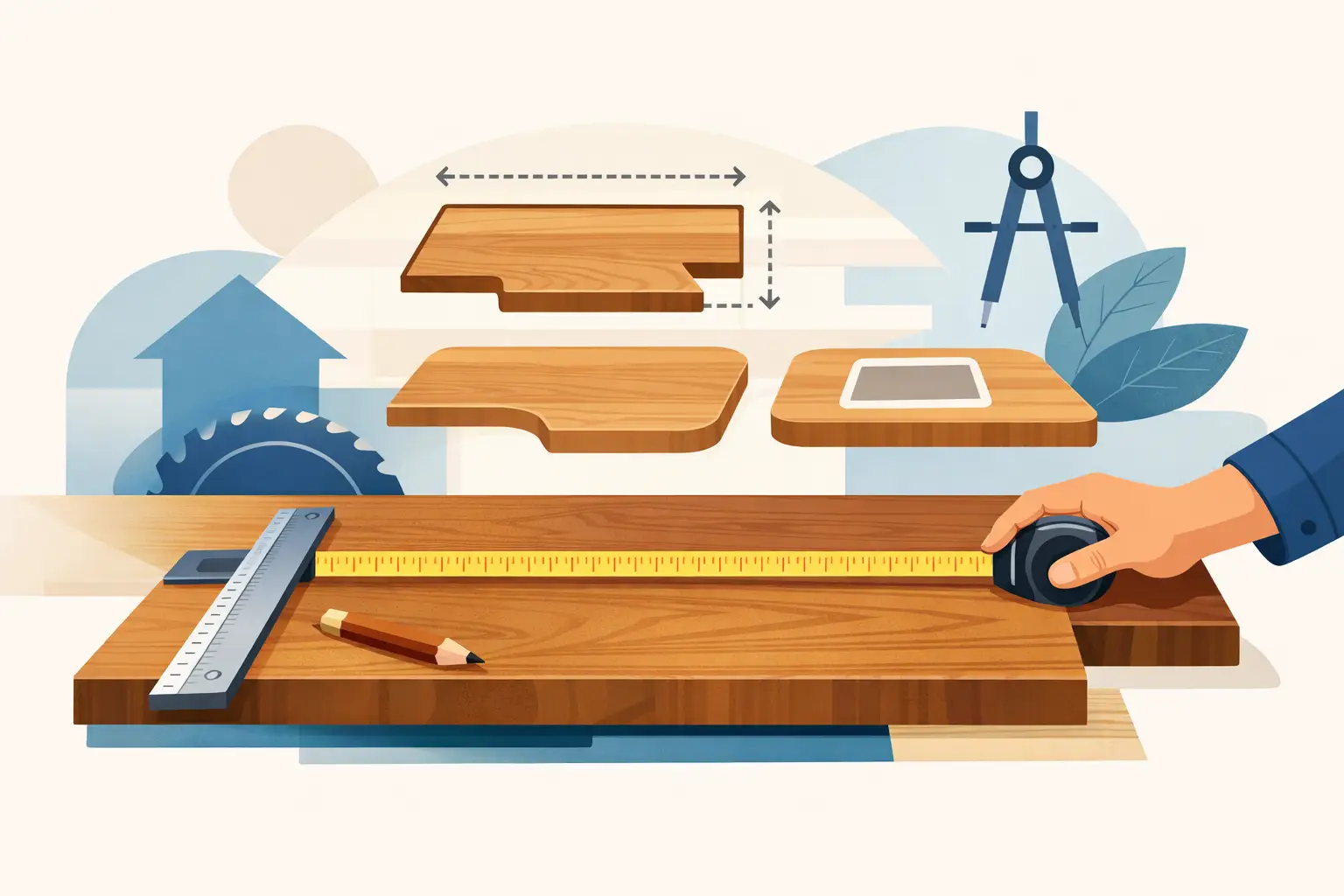
A wood countertop can look perfect in photos and still be wrong for your kitchen the minute it arrives. An overhang is off by an inch. A wall bows more than expected. The dishwasher clearance gets tight. That is why custom sizing for wood countertops matters so much – the best-looking top in the world still has to fit your space, your layout, and the way you actually use the room.
For homeowners, remodelers, and DIY buyers, this is usually the point where the project becomes real. Standard sizes work for some spaces, but many kitchens and utility rooms are not built around standard dimensions. Islands vary. Appliance gaps are inconsistent. Older homes rarely play by the rules. When you order a handcrafted wood top built to your measurements, you are not just picking a material. You are solving for fit, function, and finish all at once.
Why custom sizing for wood countertops is worth it
The biggest advantage of custom sizing is simple – you stop designing your room around whatever happens to be sitting on a shelf. Instead, the countertop is built around your actual cabinet run, island, desk area, laundry room, or work surface.
That matters for appearance, but it matters even more for installation. A properly sized top reduces awkward filler strips, uneven reveals, and last-minute trimming on site. It also helps preserve the finished edges and clean proportions that make a butcher block or solid wood top feel intentional instead of improvised.
There is also a long-term value angle. If you are investing in real wood, you want the final piece to feel like it belongs in the room. A custom top that lands flush where it should, overhangs where it should, and clears nearby appliances correctly tends to look better on day one and keep performing better over time.
What measurements actually matter
Many buyers assume countertop sizing starts and ends with length and depth. Those two numbers are the backbone, but they are not the whole job.
Length needs to reflect the full cabinet span or intended surface area, but you also have to account for any planned overhang. Depth works the same way. A standard base cabinet may suggest one number, but the finished countertop depth depends on how much front reveal you want and whether the back edge meets a wall, backsplash, or open space.
Thickness is another key decision. Thicker tops create a heavier, furniture-style look and can make an island feel more substantial. Thinner tops can work well for cleaner, simpler profiles. Neither is automatically better. It depends on the visual style of the room, the span, and what the top is sitting on.
Then there are the details that cause the most installation headaches when they are skipped: corner conditions, sink openings, cooktop cutouts, wall irregularities, radius corners, and end overhangs. A countertop is rarely just a rectangle once real-world conditions enter the picture.
Where people mismeasure most often
The most common mistake is measuring only once and measuring only the cabinets. Walls are not always straight, and cabinet runs are not always perfectly square. If the countertop is going between walls, taking the width at the front, middle, and back is a smart move. If those numbers vary, the smallest number is not always the final answer. Sometimes you build to one dimension and scribe on site. Sometimes a more tailored custom fit makes sense before it ships. It depends on the installation plan.
Another issue is forgetting overhangs. Buyers often give the cabinet size when what they really want is the finished countertop size. For example, an island top may need seating space on one side and a flush look on the others. If that is not clearly defined at the ordering stage, the top can arrive technically correct and still not match the intended use.
Appliance areas are another trouble spot. Dishwashers, slide-in ranges, and farmhouse sinks all create conditions where exact sizing matters. Too tight, and installation gets difficult. Too loose, and the finished look loses polish.
How to plan the right fit for your space
Start with the use case, not just the tape measure. Ask what the surface needs to do. Is this a primary kitchen countertop, a prep island, a coffee bar, a laundry folding station, or a desk-style work surface? The answer affects overhang, thickness, edge treatment, and even wood species selection.
If the top is going on a kitchen island, think about traffic flow and seating before settling on dimensions. A larger overhang may improve comfort for stools, but if the walkway around the island is already tight, that extra projection can make the whole room feel cramped.
If the top is against a wall, think about how clean the wall really is. In newer homes, standard sizing may be close enough. In older homes, a wall can drift enough to create visible gaps. Some customers want the shop to build as precisely as possible to provided dimensions. Others prefer to leave a little room for field fitting. Neither approach is wrong, but the right choice depends on who is installing the piece and how exact the surrounding conditions are.
The trade-offs that come with custom work
Custom work gives you control, but it also asks for better decisions upfront. When a top is made to your exact size, there is less room to change your mind after production starts. That is why clear measurements and good communication matter.
There can also be trade-offs between a perfect wall-to-wall fit and easier installation. A top built to an exact opening may look cleaner on paper, but if the space is out of square, install day can get tense fast. In some cases, leaving slight adjustment room is the smarter path.
Lead time is another factor. A handmade custom piece is not the same as grabbing a stock panel off a rack. The payoff is that the end result is built for your home rather than forced into it. For most buyers who care about craftsmanship and fit, that trade is well worth it.
How a handcrafted shop approaches custom sizing for wood countertops
A good custom process should feel straightforward, not intimidating. You provide dimensions, project details, and any special requirements. From there, the fabricator helps confirm what those numbers need to mean in the real world.
That may include clarifying whether your measurements represent cabinet size or finished top size, whether overhang is included, how cutouts should be placed, and what edge profile makes sense for the project. This part matters because custom sizing is not just about copying numbers into a build sheet. It is about interpreting the project correctly so the final piece performs the way you expect.
At Tooill Cabinets, that hands-on communication is part of the value. Customers are not left guessing whether their layout notes make sense or whether a dimension is likely to create install issues. That kind of direct feedback helps prevent expensive mistakes before the wood ever hits the bench.
What to have ready before you request a quote
A few clear details can make the whole process faster and more accurate. Start with the finished dimensions you want if you know them. If you only have cabinet measurements, say that clearly. Include whether the top is freestanding, wall-to-wall, or part of a larger countertop run.
Photos help, even simple phone photos. So do notes about sinks, faucet holes, cooktops, seating overhangs, and whether the top needs square corners or eased edges. If you are matching an existing surface nearby, mention that too. The more complete the picture, the easier it is to build the piece to fit both the room and your expectations.
If you are between sizes or unsure about an overhang, say so. That is often where a custom builder can save you from ordering something that looks good on paper but feels off once installed.
Custom sizing is not only for large kitchens
One of the biggest misconceptions is that custom sizing is only for full remodels or high-end designer homes. In reality, it is often most useful in the smaller, stranger, harder-to-fit spaces. A narrow pantry counter, a laundry room worktop, an apartment island, or a replacement section in an older kitchen can benefit just as much from made-to-order sizing.
These are the projects where stock options usually force compromises. Too short, too deep, too thin, not quite right. Custom sizing fixes that by letting the piece fit the room instead of asking the room to adapt.
When wood countertops are built to the right dimensions, they do more than fill space. They settle the room. They make the cabinets look better, the layout work better, and the whole installation feel finished. If you are investing in real craftsmanship, it makes sense to get the sizing right from the start.