
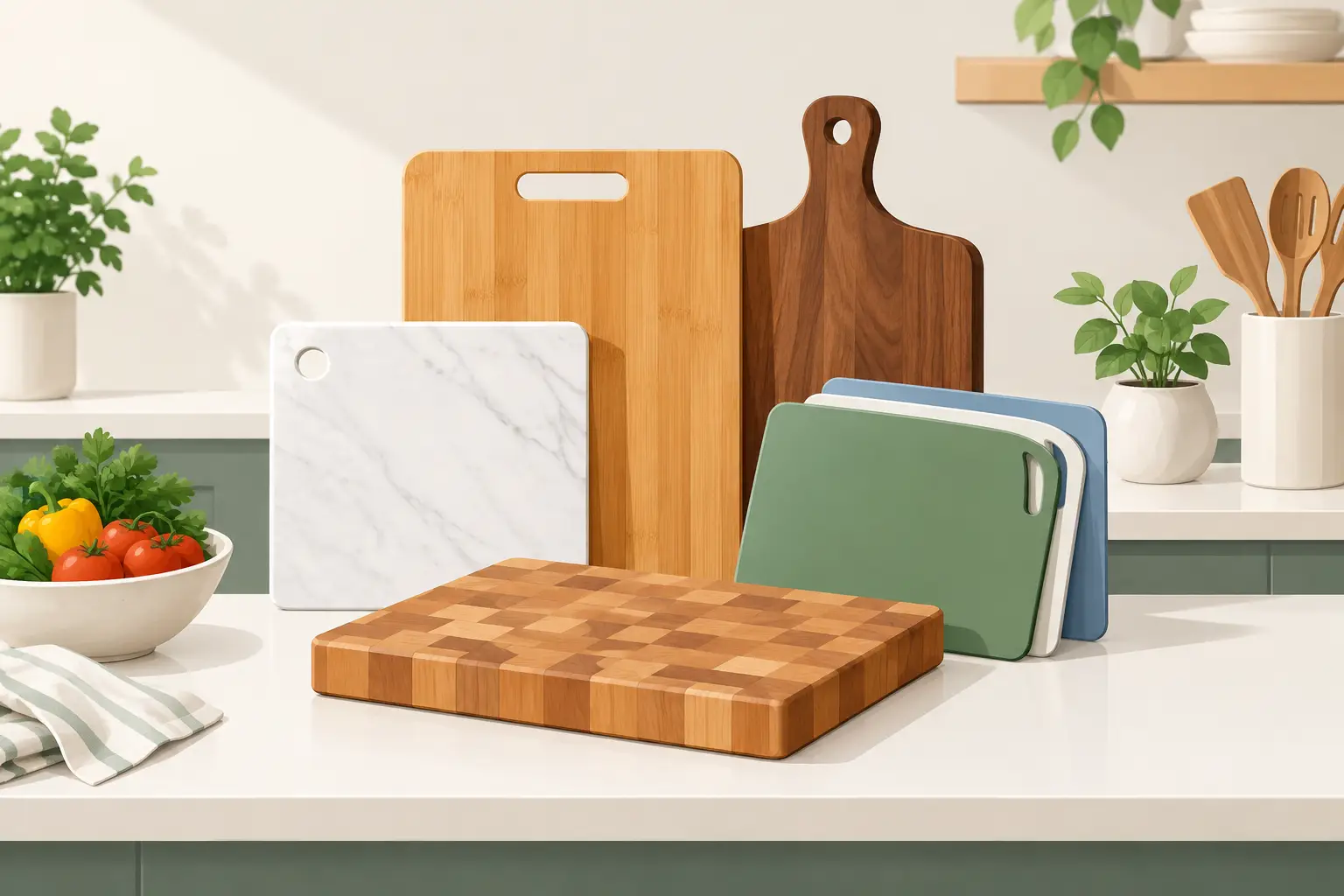
A cutting board takes more abuse than almost any other kitchen surface. It meets sharp knives, wet produce, hot pans, raw ingredients, and hurried weeknight prep day after day. A good board should protect your knives, stay stable on the counter, clean up without trouble, and look at home in your kitchen. This guide to choosing cutting boards focuses on the details that make the difference between a board you use for years and one you replace after a season.
Start With How You Actually Cook
The best cutting board is not automatically the biggest, thickest, or most expensive one. It is the board that fits your counter, your cooking habits, and the ingredients you prep most often.
If you mostly slice fruit, make sandwiches, and chop a few vegetables at a time, a smaller board may be all you need. For family dinners, meal prep, or carving roasts, a larger board gives you room to work without pushing ingredients onto the counter. Many home cooks are happiest with two boards: a substantial wood board for everyday produce, bread, and serving, plus a separate dishwasher-safe board reserved for raw meat.
Think about storage before you choose a generous size. A board that is too large for your cabinet or too heavy to lift will spend more time leaning against a wall than helping with dinner. Measure the open section of counter where you normally prep, then leave a little breathing room around the board for bowls, scraps, and a knife handle.
Guide to Choosing Cutting Boards by Material
Material affects knife feel, maintenance, durability, and appearance. There is no single right answer, but the trade-offs are clear once you know what to expect.
Hardwood: The Everyday Favorite
Quality hardwood is a natural fit for a serious home kitchen. Maple, walnut, and cherry are popular because they are durable, stable, and forgiving on knife edges. Unlike glass, stone, or ceramic boards, a wood surface has enough give to reduce wear on a sharp knife.
Hard maple is a classic working wood. Its light color fits bright kitchens, and its tight grain offers excellent durability. Walnut brings a darker, richer look that works especially well in warm, traditional, or modern kitchens. Cherry starts lighter and deepens in color over time, developing a character that many homeowners appreciate.
A hardwood board does require basic care. It should be hand-washed, dried promptly, and conditioned with food-safe board oil as needed. That small routine helps prevent dryness, keeps the wood looking rich, and limits the chance of warping or checking. For many buyers, that maintenance is a fair trade for the warmth and long service life of a handmade wood board.
Plastic: Practical for Raw Proteins
Plastic boards are affordable, lightweight, and easy to sanitize in a dishwasher. They make sense for handling raw poultry, seafood, and meat, especially when you want a designated board that can go through a hot wash cycle.
The downside is that plastic develops deep knife marks over time. Those grooves can hold residue and are difficult to fully scrub clean once the surface is heavily worn. Plastic is also more likely to slide on a counter unless it has grippy edges or a damp towel underneath. It is useful to have in the kitchen, but it rarely offers the stability, knife-friendly feel, or lasting appearance of a solid wood board.
Bamboo, Composite, and Other Options
Bamboo is often marketed as an eco-friendly alternative, but it is generally harder on knife edges than a well-made hardwood board. It is also made from narrow strips bonded together, so quality can vary based on the adhesive and construction. It can work for light use, but it is not always the best choice for someone who cooks often and values easy knife maintenance.
Composite boards, including paper-based resin boards, are durable and usually dishwasher safe. They can be a good middle ground for cooks who want a darker, dense work surface without the care routine of wood. Still, they are harder on knives than hardwood and can feel less forgiving during extended chopping.
Avoid glass, marble, granite, and ceramic as cutting surfaces. They may look attractive for serving, but they can quickly dull or chip a knife edge. Save those materials for pastry work, cheese presentation, or countertop décor.
Choose the Right Size and Thickness
A board should give you enough cutting room without crowding the kitchen. For everyday chopping, a board around 12 by 18 inches is a versatile starting point. It provides enough room for onions, herbs, and vegetables while remaining manageable to carry and store.
A larger board, often 18 by 24 inches or more, suits cooks who prep several ingredients at once, work on a kitchen island, or want a board that can double as a serving piece. Large boards are also excellent for carving brisket, turkey, or a standing rib roast because they keep the work contained.
Thickness matters more than many shoppers realize. A thin board can feel flimsy, warp more easily, and slide under pressure. A thicker hardwood board has weight and stability, which makes chopping safer and more comfortable. It also has a more substantial handcrafted look when left on display. The trade-off is weight, so consider who will be lifting, washing, and putting it away.
Custom sizing is especially valuable when your kitchen has an unusual prep space, a narrow island, or a specific cabinet opening. A board built to your actual dimensions can make a small kitchen work harder without making it feel crowded.
Understand Edge Grain and End Grain Construction
The way a wood cutting board is assembled affects both its appearance and performance.
Edge-grain boards are made with long strips of wood turned on their side and joined together. They show clean, linear grain patterns, offer excellent durability, and are generally lighter and more budget-friendly than end-grain boards. For most households, an edge-grain hardwood board is a dependable everyday choice.
End-grain boards are made from blocks arranged so the cut ends of the wood face upward. The result is the familiar checkerboard or block pattern often seen in premium butcher blocks. Because a knife cuts between wood fibers rather than across them, end grain can be exceptionally gentle on knife edges. It also has a striking, furniture-quality appearance.
End grain costs more because it requires more material and labor to build correctly. It is often thicker and heavier, too. If you cook frequently, maintain sharp knives, and want a board that feels like a permanent kitchen piece, it can be worth the investment. If you want a simpler, lower-maintenance board for daily slicing, edge grain is often the more practical fit.
Look for Details That Improve Daily Use
The small features are where a well-built board earns its place in the kitchen. A juice groove is useful if you regularly carve meat or cut ripe tomatoes and citrus. It catches runoff before it reaches the counter. For general chopping, though, a flat surface gives you the full board and is easier to wipe clean.
Handles can make a heavy board easier to carry, whether they are routed hand grips on the underside or simple cutout handles at each end. Non-slip feet add stability, but they also make a board one-sided and can trap moisture if the board is left wet on the counter. A reversible board gives you two usable surfaces and is especially handy when one side has a juice groove.
Pay attention to the finish as well. A cutting board should be finished with food-safe oil and wax, not a thick film coating that can chip or peel under knife use. The wood should feel smooth but not slick, with carefully eased edges that are comfortable in the hand.
Care Is Part of the Purchase
A wood cutting board is simple to maintain, but it should not be treated like a plastic tray. Wash it by hand with mild soap and warm water, then dry it right away. Do not soak it in the sink or put it in the dishwasher. Prolonged water exposure can cause swelling, warping, and glue-joint stress.
When the surface begins to look dry or pale, apply food-safe mineral oil or a board conditioner. Let it absorb, then wipe away the excess. The exact schedule depends on your climate and how often you use the board, but a board that feels dry or looks dull is asking for oil.
For odors or stubborn stains, coarse salt and a cut lemon can help freshen the surface, followed by a normal wash and thorough drying. Use a separate board for raw proteins when possible, and replace any board, wood or plastic, that has deep cracks, loose joints, or damage that cannot be cleaned properly.
A cutting board should make cooking feel easier, not more precious. Choose a size you will reach for, a material you are willing to care for, and construction that matches the way you use your knives. When those pieces line up, a handmade hardwood board from a shop such as Tooill Cabinets becomes more than a kitchen accessory. It becomes a dependable work surface that carries the marks of good meals and gets better-looking as your kitchen stories build.