
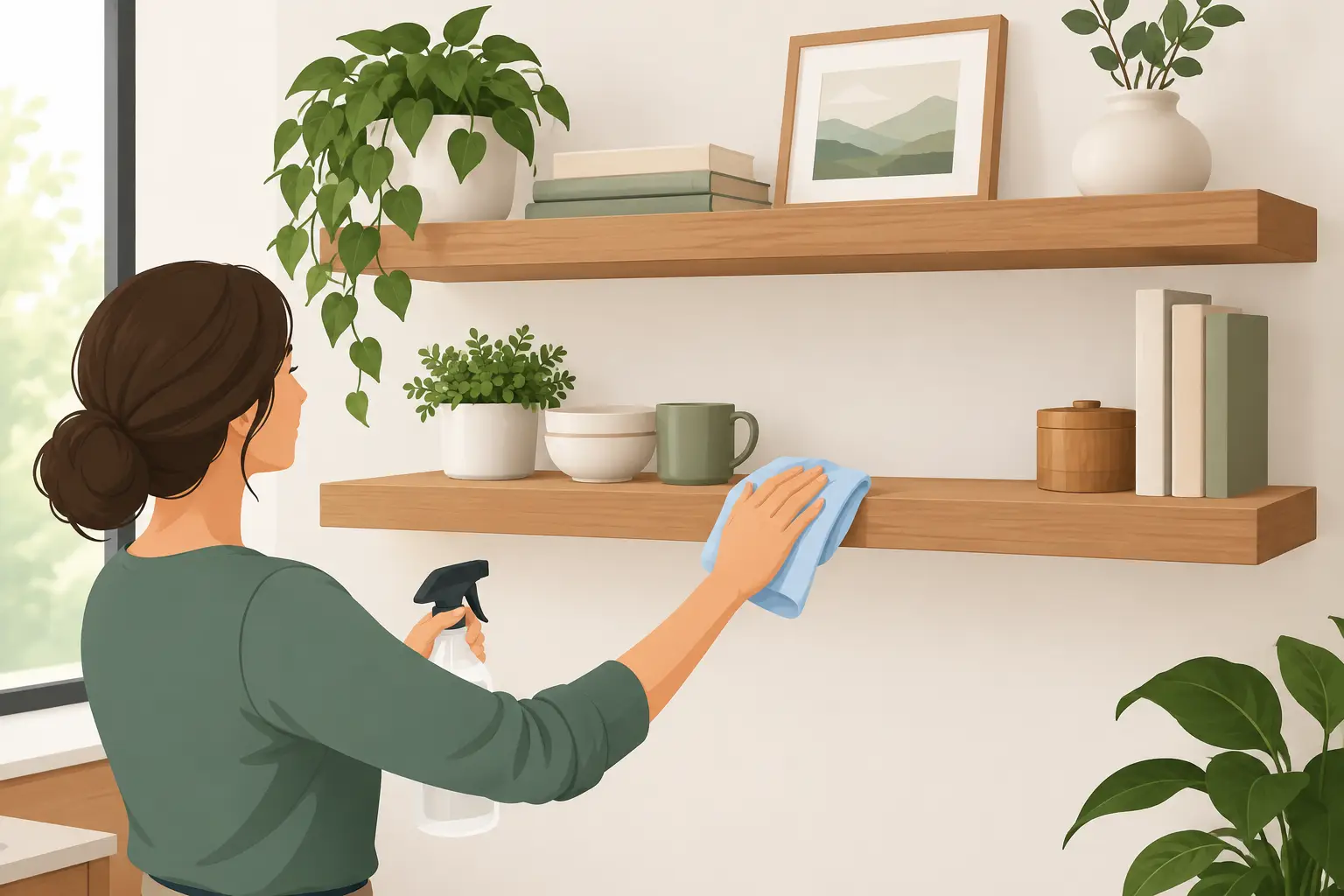
A solid wood floating shelf earns its place the hard way. It holds the everyday items, frames the room, and brings real warmth to walls that might otherwise feel flat. Knowing how to maintain wood floating shelves helps protect that investment and keeps the grain, color, and finish looking right for years.
The good news is that wood shelf care does not require a cabinet full of specialty products. A light touch, sensible moisture control, and attention to what the shelf is carrying will do more for handmade wood than aggressive cleaning ever will.
Start With Regular, Gentle Cleaning
Dust is not just cosmetic. Over time, dust and kitchen grease can create a dull film on a shelf’s finish, especially near a range, coffee station, or busy entryway. Once a week, wipe the shelf with a clean, dry microfiber cloth. Move objects rather than wiping around them so dirt does not collect in rings or corners.
For fingerprints, light splatters, or a sticky spot, use a soft cloth that is barely damp with clean water. Wipe in the direction of the grain, then immediately dry the surface with a second cloth. Wood and standing water do not belong together. Even a well-finished shelf can develop raised grain, cloudy spots, or discoloration when moisture sits on the surface.
In kitchens, a small amount of mild dish soap in water can help with grease. Keep the cloth damp, not wet, and follow with a clean damp wipe and a thorough dry. Do not spray cleaner directly onto the shelf, where it can seep into seams, wall gaps, or mounting areas.
What Not to Use on Wood Shelves
Strong household cleaners can strip or soften a finish, leave residue, or change the wood’s color. Skip abrasive scrubbers, scouring powders, bleach, ammonia, and products made for glass or bathroom surfaces. Furniture polishes that contain silicone or heavy wax can also create a buildup that looks shiny at first but attracts dust and complicates future refinishing.
Oil soaps are another product to use carefully. They may leave a residue that clouds the surface or makes it difficult for a new coat of finish to bond later. If you are unsure what finish is on your shelves, mild soap and water used sparingly is the safer route.
A rough paper towel can leave fine scratches on some finishes, particularly dark stains and satin sheens. Microfiber, a soft cotton cloth, or a clean old T-shirt is a better choice.
How to Maintain Wood Floating Shelves Near Heat and Moisture
Wood moves naturally as humidity changes. It expands when it absorbs moisture and contracts as the air gets dry. That movement is normal, but large swings can lead to slight cupping, checking, finish stress, or gaps where the shelf meets the wall.
Try to keep indoor humidity reasonably stable, generally around 35 to 55 percent. This matters most in homes with very dry winters, humid summers, or forced-air heat. A humidifier or dehumidifier can make a noticeable difference, not only for floating shelves but also for hardwood floors, cabinets, and butcher block surfaces.
Be especially mindful of shelf placement. A shelf directly above a steaming kettle, beside a shower, or within reach of a heat vent has a harder job than one in a living room. That does not mean wood cannot work in those spaces. It simply needs more frequent wiping and a durable finish suited to the location.
If a shelf gets wet from a spill, dry it right away. Do not place wet plants, dripping mugs, damp towels, or freshly washed dishware directly on bare wood. Use saucers under plants and coasters under drinks. Those simple barriers prevent water rings that may require sanding or refinishing to fully remove.
Protect the Finish From Daily Wear
A finish is the shelf’s first line of defense, but it is not armor. Dragging ceramic décor, metal canisters, or rough-bottomed baskets across the surface can scratch even a quality finish. Lift items when rearranging, and add small felt pads to the bottoms of objects that stay in one spot.
For shelves used as open kitchen storage, consider shelf liners only if they are breathable and removable. Rubber or vinyl mats can trap moisture against the wood and create uneven color over time. Felt, cork, or fabric pads are usually better choices beneath heavy pottery or appliances.
Sunlight deserves attention, too. Natural wood changes color as it ages. Some species deepen and warm; others may lighten. That change is part of real wood, but direct, intense sunlight can make it uneven. Rotate decorative objects occasionally so one section of the shelf does not stay permanently shaded while the rest of the wood changes around it.
Keep an Eye on Weight and Support
Floating shelves create a clean, open look because the mounting hardware is hidden. The strength is still there, but every shelf has a practical load limit based on its thickness, depth, length, wall construction, and mounting system.
Avoid slowly adding weight without thinking about the total. A few cookbooks, stoneware bowls, and a small appliance can become much heavier than they look. Spread weight across the shelf instead of stacking it in the center or loading one far end. Heavy objects should sit closer to the wall, where the concealed support has the most strength.
Check your shelves every few months, particularly after a move, a major seasonal humidity change, or a shift in what they hold. Look for a new gap at the wall, visible sagging, loose hardware, or a shelf that no longer feels level. If you notice movement, remove the load and address the mounting issue before it becomes a wall repair.
Refreshing the Wood Finish
How often a wood floating shelf needs finish care depends on its location and how it is used. A decorative shelf in a bedroom may look great for many years with only dusting. A shelf near a sink or stove may need attention sooner.
First, identify the finish if possible. Film finishes such as polyurethane form a protective layer on top of the wood. They usually need cleaning and occasional touch-up only when scratched or worn through. Oil-based or hardwax oil finishes penetrate the wood and may benefit from periodic reapplication, especially when the surface starts to look dry, faded, or less resistant to water.
Do not apply oil, wax, or a new topcoat simply because the shelf is old. The wrong product over an existing finish can leave a sticky surface or create an uneven sheen. Test any maintenance product on the underside or a hidden area first. If you have the original finishing information, follow it closely.
For minor scratches, a finish-matched touch-up product may blend the damage well. Deep dents, water marks, peeling finish, or broad worn areas are different. Those usually call for careful sanding and refinishing, and the work is often best handled once the shelf is removed from the wall.
Handle Small Problems Early
A pale ring after a damp glass sits too long may be moisture caught in the finish. Let the area dry fully for a few days before trying any remedy. Rubbing hard or applying heat too soon can make the issue worse.
A dark mark can mean water reached the wood itself, particularly if the finish was damaged. Surface cleaning will not remove it. Light sanding and refinishing may help, but the right repair depends on wood species, stain color, and finish type.
Tiny checks or hairline cracks can appear as solid wood responds to dry conditions. They are often cosmetic, but monitor them. If a crack grows quickly, the shelf begins to cup, or mounting feels loose, reduce the load and have the shelf and support system evaluated.
Care That Starts Before Installation
The easiest shelves to maintain are built and installed for the room they will serve. Shelf depth, thickness, wood species, finish, mounting hardware, and intended load should all be considered before the first hole goes into the wall.
A custom-built shelf gives homeowners more control over those details. At Tooill Cabinets, handmade wood pieces are made to fit real spaces, which helps homeowners plan for the dimensions, look, and everyday use they actually need instead of forcing a standard shelf to do a custom job.
Once installed, give new shelves time to settle into the home’s environment. Avoid major finish treatments right away unless the maker recommends them. Let the wood acclimate, use it thoughtfully, and establish a simple cleaning habit from the start.
Well-made wood does not need constant fussing. It needs the kind of care you would give any hardworking piece in your home: wipe up spills, respect its limits, and let its natural character become part of the room over time.