
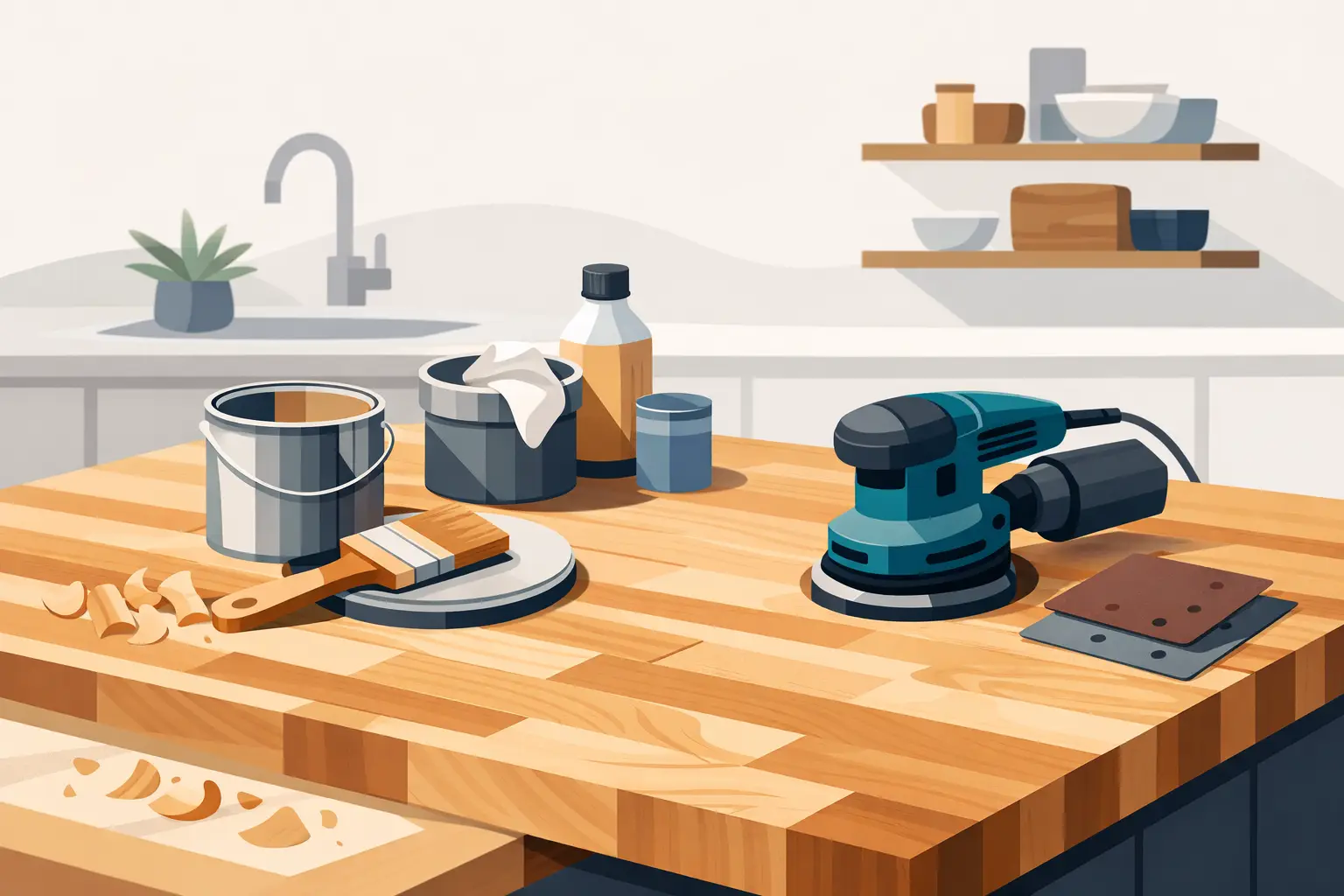
You found the size, the wood tone, and the look you want – then you noticed it was an unfinished butcher block countertop. For some buyers, that is exactly the point. For others, it raises a fair question: is unfinished a smart buy, or just one more project standing between you and a finished kitchen?
The honest answer is that it depends on how you plan to use it. An unfinished top gives you more control over the final look, the sheen, the feel, and even the level of protection. It can also save you from settling for a factory finish that is too orange, too glossy, or simply wrong for your space. But it asks more from you up front. You need to sand where needed, choose the right finish, and apply it correctly if you want the wood to hold up over time.
For homeowners and DIY remodelers who want a more custom result, that trade-off is often worth it.
What an unfinished butcher block countertop really means
An unfinished butcher block countertop is a solid wood surface that has been built, glued up, and sanded for fabrication, but not sealed with a final protective coating. It is not raw lumber straight from a sawmill, and it should not be treated like a rough construction material. It is a countertop blank that still needs its final protection before regular use.
That distinction matters. Many people hear “unfinished” and assume poor quality or incomplete work. In reality, unfinished often means the top is ready for the last stage to be tailored to your home. If you want a natural matte oil finish, you can do that. If you want a more durable satin polyurethane for a laundry room or coffee station, you can do that too.
This is one reason unfinished tops appeal to buyers who care about customization. You are not locked into someone else’s idea of what your wood surface should look like.
Why buyers choose unfinished over prefinished
The biggest advantage is control. A prefinished top arrives with the final appearance already decided. That can be convenient, especially if you want something ready to install with minimal work. But convenience sometimes comes with compromise.
An unfinished top lets you match nearby cabinetry, flooring, shelving, or furniture more closely. If you are working through a renovation where stain colors and paint choices are still moving around, that flexibility can be a real benefit. It also allows you to finish the surface after any final trimming or cutouts, which helps protect exposed wood edges around sinks, walls, and appliances.
Cost can be another factor. Depending on the build and seller, unfinished options may be priced lower than fully finished tops because the final coating process is left to the buyer. That said, the lower upfront price does not mean lower overall cost once you add finishing materials and your time.
The downside is simple: mistakes happen during finishing. Uneven coats, dust in the finish, poor product choice, or skipped sealing on the underside can all create problems later. Unfinished is a great option when you want freedom and are willing to handle the details carefully.
Where an unfinished butcher block countertop works best
This type of countertop works especially well in projects where custom appearance matters more than speed. Kitchens are the obvious example, but they are not the only one. An office desk surface, pantry counter, laundry room folding area, mudroom drop zone, dry bar, and kitchen island can all be strong candidates.
Use matters when choosing your finish strategy. A lightly used coffee station needs something different than a main prep counter beside a sink. A bathroom vanity top needs moisture resistance but may not face knives or hot cookware. A utility room work surface may benefit more from toughness than from a food-safe oil finish.
That is where many buyers get tripped up. They ask whether unfinished wood is good or bad, when the better question is whether the finish plan fits the room.
Choosing the right wood species matters too
Not every butcher block behaves the same way once it is finished. Grain pattern, hardness, and natural color all shape the final result. Maple is a classic choice because it is hard, clean-looking, and versatile. Walnut brings deeper color and a richer furniture-like appearance. Oak offers visible grain and a more traditional feel.
If you are ordering a custom top, think beyond color alone. A busy grain pattern may hide wear better in a hardworking family kitchen. A smoother, more uniform wood may suit a modern space better but show dents and scratches differently. There is no single best answer, only the best fit for your use and design goals.
How to prep an unfinished butcher block countertop
Preparation is where long-term performance starts. Before any finish goes on, let the wood acclimate indoors based on the conditions of the room where it will live. Wood moves with humidity, and rushing installation can create headaches later.
Check the surface for any areas that need final hand sanding, especially after transport, trimming, or sink cutouts. Always remove dust thoroughly before applying a finish. Skipping this step is one of the fastest ways to get a rough, dirty-looking result.
Just as important, finish all sides as your chosen product requires. That includes the underside, ends, and cut edges. People naturally focus on the visible top face, but wood responds to moisture from every direction. A balanced finish schedule helps the top behave more consistently.
Finish options for an unfinished butcher block countertop
There is no universal best finish for every project. The right one depends on how you use the surface.
For true food-prep areas where the wood itself may function as a cutting surface, many people choose mineral oil or a butcher block oil system. This gives a natural look and is easy to refresh, but it requires ongoing maintenance. Water spots, drying, and wear are part of the deal. If you want low maintenance, this may not be your favorite option.
For kitchen counters that are not intended to be chopped on directly, a hardwax oil or a film-building finish can make more sense. Hardwax oils keep a more natural feel while offering better water resistance than simple oil alone. Film finishes like polyurethane provide stronger surface protection, especially against spills and staining, but they create more of a sealed coating on top of the wood. Some homeowners love that durability. Others prefer the softer, more tactile feel of oil-based systems.
The key is to be honest about your habits. If your household is hard on surfaces, choose protection first. If the top is more about warmth and appearance than daily abuse, a natural-looking finish may be the better match.
Common mistakes to avoid
Most butcher block problems are not wood problems. They are installation and finishing problems.
One common mistake is placing an unfinished top into service too early. Even a good finish needs the right cure time. Another is treating a wood countertop like a stone slab. Wood is durable, but it is still a natural material. Standing water around a sink, poor support over long spans, and direct heat from pans can shorten its life.
Another issue is choosing the wrong finish for the job. Food-safe oils are great in some uses and frustrating in others. Heavy film finishes protect well, but they are harder to spot-repair if damaged. There is always a trade-off between ease of maintenance, look, and toughness.
Custom sizing makes unfinished tops even more practical
Unfinished wood tops are especially useful when your project is not standard. Older homes, built-in nooks, oversized islands, and furniture-style installations rarely match off-the-shelf dimensions. A made-to-order top gives you the correct length, width, thickness, and edge style from the start.
That means less site modification and a cleaner final fit. It also means you can choose a finish after seeing the top in your actual lighting, next to your cabinet color, flooring, and wall paint. That kind of control is hard to get with mass-produced stock pieces.
At Tooill Cabinets, that is a big part of the value. A handcrafted wood surface built to your measurements gives you a stronger starting point before the final finish ever goes on.
Is unfinished the right choice for you?
If you want fast, no-fuss installation, prefinished may be the easier road. If you want more say in the final look, need custom sizing, or care about getting the finish exactly right for your room, an unfinished butcher block countertop is often the better option.
It asks for a little more patience, but it also gives you something big-box surfaces usually cannot: a wood top that looks like it belongs in your home because it was finished for your home. Start with the way you actually live, and the right choice gets much easier.