
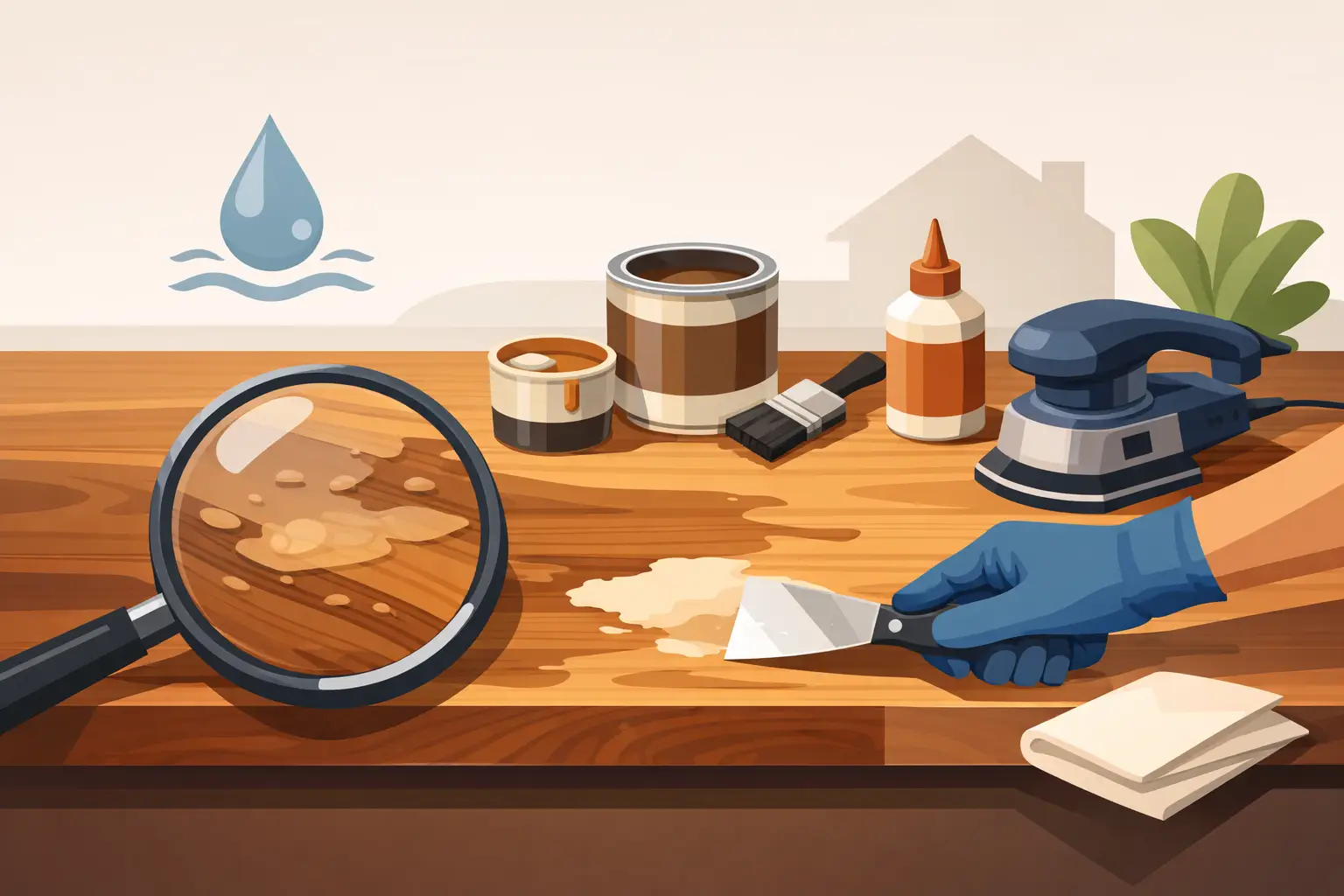
A wood countertop usually tells you something is wrong before it fully fails. The finish starts looking cloudy near the sink, the grain raises a little, or a dark ring shows up where water sat too long. Wood countertop water damage repair is often possible, but the right fix depends on whether the problem is only on the surface or has worked deeper into the board.
That distinction matters. A water spot in the finish is one kind of repair. Swelling at a seam, black staining around a faucet, or soft wood near a sink cutout is another. If you act early, solid wood can often be brought back with sanding, careful drying, and a fresh finish. If you wait too long, the repair becomes more about stopping spread and deciding whether a section can still be saved.
What water damage looks like on a wood countertop
Not all damage means the countertop is ruined. In many cases, water affects the finish first and the wood second. That is the best-case scenario because the surface can often be refinished without major structural work.
Light damage usually shows up as hazy finish, faint gray marks, minor grain raise, or a slightly rough feel where water kept sitting. You might also see dull patches where the original topcoat has worn away. These problems are frustrating, but they are often very repairable.
More serious damage tends to look different. Boards may cup or swell, joints can separate, black stains can settle deep into the grain, and the area may feel soft when pressed. Around sinks and faucets, trapped moisture can work down through unsealed edges or worn finish and stay there longer than it should. Once wood fibers start breaking down, cosmetic repair becomes less certain.
Start wood countertop water damage repair with a dry assessment
Before sanding or applying any product, make sure the area is fully dry. This sounds obvious, but it is where many repairs go sideways. If moisture is still in the wood, refinishing over it can trap the problem and leave you with discoloration, adhesion issues, or more swelling later.
First, remove anything keeping the area damp. That may mean resealing a faucet base, fixing a plumbing drip, or changing a habit like leaving wet dish mats on the surface overnight. Then dry the countertop thoroughly with towels and moving air. A fan helps. A dehumidifier helps even more in a humid kitchen.
Give the wood time. A lightly affected surface may dry in a day or two, while a thicker butcher block top with deeper moisture can take several days. If the wood still feels cool, swollen, or darker than the surrounding area, it may not be ready yet.
Surface damage can often be sanded and refinished
If the damage is limited to rough grain, water rings, finish failure, or shallow staining, a straightforward refinish is usually the best approach. Start by cleaning the area with a mild wood-safe cleaner and letting it dry fully. Dirt, grease, and kitchen residue can clog sandpaper and make the repair look uneven.
Sand with the grain, not across it. For a localized repair, begin with a grit that is aggressive enough to remove the damaged finish but not so coarse that it gouges the wood. In many cases, medium grit followed by finer grit is enough. Blend beyond the visible spot so you do not create a dip or a repair halo.
The trade-off here is simple. Spot repairs save time, but they can be harder to blend perfectly, especially on darker species or tops with a rich, aged finish. If the damaged area is large or the color variation is obvious, sanding and refinishing the entire top often gives a more even result.
Once the surface is smooth and clean, reapply the appropriate finish. That part depends on what was on the countertop to begin with. An oil-finished butcher block used as a true work surface needs a food-safe maintenance finish. A sealed countertop used more like furniture may need a hardwax oil, polyurethane, or another film-building topcoat that matches the original system. Mixing finishes without knowing what is already there can create adhesion problems, so when in doubt, strip back enough area to start clean.
How to deal with black stains and raised grain
Black or very dark stains usually mean water sat long enough to react with tannins in the wood or introduce mild mildew-related discoloration. These stains are harder to remove than a cloudy finish. Sometimes sanding alone will take care of them. Sometimes it will not.
If the stain remains after light sanding, you may need a wood-safe oxalic acid treatment, which is commonly used to lighten water and iron stains in wood. It can be effective, but it needs to be handled carefully and used exactly as directed. After treatment, the wood must dry fully again before final sanding and refinishing.
Raised grain is simpler. Water causes wood fibers to swell upward, leaving the surface fuzzy or rough. Once dry, this can usually be knocked back with a light sanding and then protected with a fresh finish. If the grain keeps raising in the same area, the real problem is usually ongoing moisture exposure, not the wood itself.
Swelling, seam issues, and soft spots are more serious
When boards swell at the edges or a glue seam begins to open, wood countertop water damage repair becomes less about cosmetics and more about structure. Solid wood moves naturally, but localized swelling from repeated water exposure can stress joints and distort the top.
A slightly raised seam may settle some as the countertop dries. If it does, sanding and refinishing may be enough. If the seam stays proud, separated, or uneven, the repair can require regluing, clamping, flattening, or replacing a section. That kind of work needs care because forcing swollen wood back into shape too soon can make things worse.
Soft spots are a bigger warning sign. If the wood compresses easily, flakes, or feels punky near a sink cutout or faucet, the fibers may be deteriorating. At that point, surface refinishing will not solve the underlying issue. The damaged section may need to be cut out and rebuilt, or the countertop may need replacement if the damage is extensive.
This is where solid wood still has an advantage over many manufactured surfaces. A well-built wood top can often be resurfaced or repaired in ways laminate or particle-based products cannot. But there is still a line where replacement is the smarter investment.
When repair makes sense and when replacement is better
Repair usually makes sense when the countertop is structurally sound and the damage is limited to finish failure, shallow staining, minor grain raise, or light edge swelling. In those cases, the wood still has plenty of life left, and a careful refinish can make a big difference.
Replacement becomes more likely when water has caused deep cracking, major cupping, widespread seam failure, mold concerns, or soft, degraded wood. It also makes sense when the top was poorly sealed from the start or built from material that cannot be reliably restored.
For homeowners who love the look of real wood, this can be a good moment to think beyond a basic replacement. A made-to-order top with better species selection, sink-area detailing, and a finish that matches how the space is actually used will usually perform better over time than an off-the-shelf compromise. That is one reason many customers come to shops like Tooill Cabinets when they are ready to replace a worn-out surface with something built for their kitchen, not just trimmed to fit it.
Preventing the same problem from coming back
Most repeat water damage comes from the same few spots: around sink rims, faucet bases, soap dispensers, dishwasher steam zones, and any place wet items sit for hours. Wood does not need babying, but it does need common-sense care.
Keep standing water off the surface, wipe up puddles promptly, and do not let wet towels or mats trap moisture against the finish. Re-oil or recoat the countertop on a schedule that makes sense for the finish type and how heavily the surface is used. Pay special attention to sink cutouts, underside edges near dishwashers, and end grain, because those areas are more vulnerable if they were missed during finishing or have worn down.
It also helps to be realistic about use. A heavily used kitchen island where kids do homework, groceries get dropped, and water glasses sweat all afternoon will need maintenance sooner than a display counter in a pantry. That is not a flaw in wood. It is just the trade-off for having a real, repairable natural surface.
If your countertop has only light to moderate damage, there is a good chance it can be saved with patience and the right steps. And if the damage has gone too far, a replacement is still an opportunity to choose a better-built top that fits your space and your daily routine a whole lot better.