
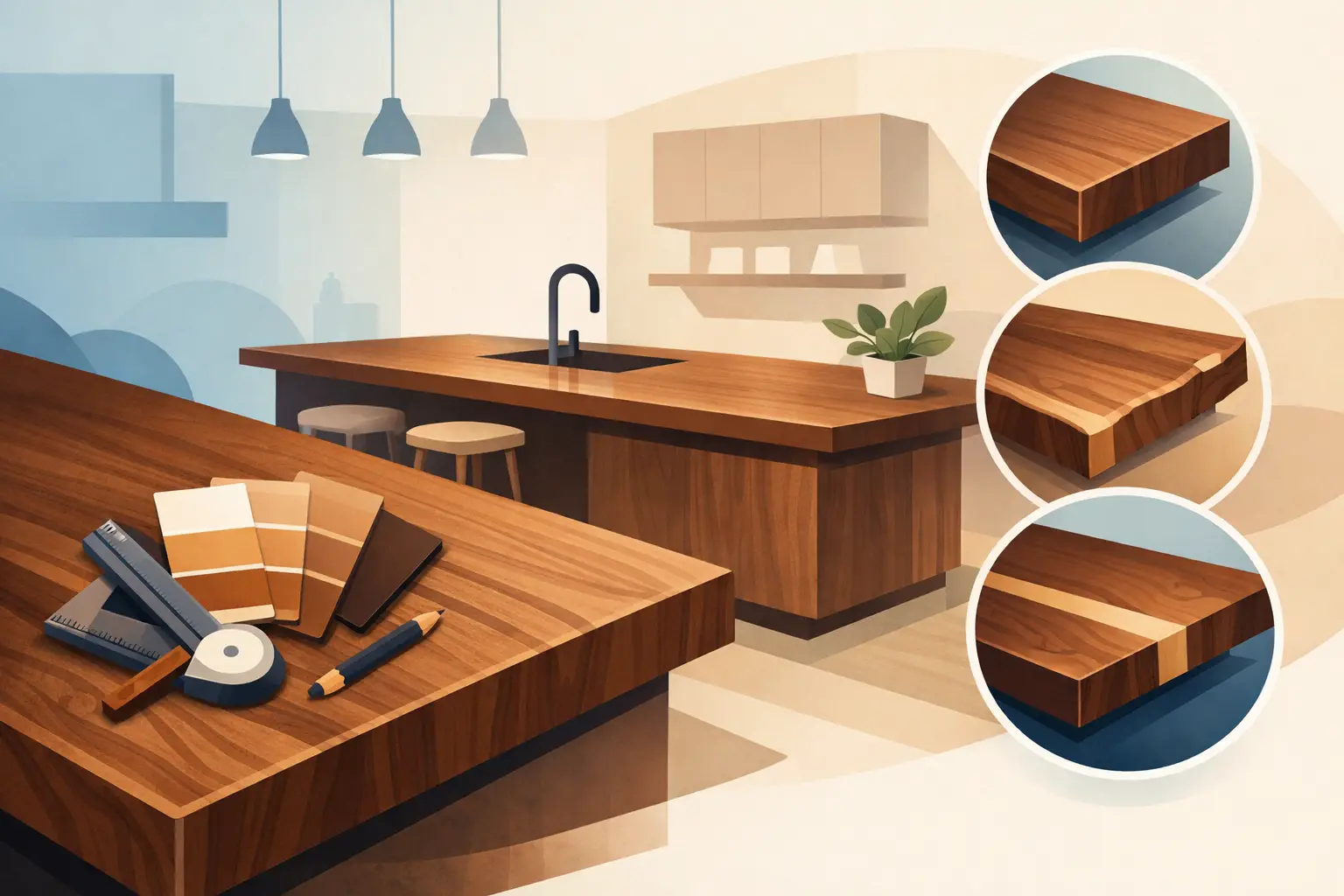
A walnut countertop can make a room feel finished before anything else is in place. The grain has movement, the color has depth, and the surface brings real wood character that laminate and stone alternatives simply do not. When homeowners start looking at custom walnut countertop options, they are usually trying to solve two problems at once – getting the exact fit they need and getting a surface that actually looks like it belongs in their home.
That is where custom work matters. Standard tops can work in simple layouts, but real homes are rarely that simple. Islands vary, laundry rooms have tight wall dimensions, desks need specific depths, and bar tops often need overhangs or shape details that off-the-shelf pieces do not offer. Walnut is a premium choice, so it makes sense to build it to the right size, finish, and style from the start.
Why custom walnut countertop options are worth considering
Walnut has a distinct look that feels warm without being rustic-only and refined without feeling overly formal. It works in modern kitchens, traditional homes, darker moody interiors, and mixed-material spaces with painted cabinetry or metal accents. The wood itself is one reason people choose it, but customization is what makes it practical.
A custom countertop lets you match the piece to the room instead of adjusting the room around a stock panel. That can mean ordering a top to the exact inch, selecting a thickness that feels proportional to your cabinetry, or choosing a finish based on how the surface will actually be used. For a kitchen island, durability and edge profile might matter most. For a desk or coffee bar, the visual effect may lead the decision.
There is also the question of quality. A handcrafted walnut top is built with attention to grain layout, glue-up consistency, sanding, and finish prep. Those details are easy to miss on a screen, but they are exactly what separates a long-lasting wood surface from one that looks rough, uneven, or rushed once it arrives.
Sizing choices that shape the whole project
The first decision with custom walnut countertop options is usually size, and this is where made-to-order work earns its keep. Length, depth, and thickness all change how the top looks and how it functions.
Length and depth are straightforward on paper, but they affect more than fit. A kitchen counter section may need precise wall-to-wall coverage with a little room for movement. An island top may need an overhang for seating. A desk top may need enough depth for monitors and workspace without crowding the room. Getting these dimensions right prevents the common compromise of buying something close enough and trying to make it work.
Thickness changes the visual weight of the piece. A slimmer top can feel cleaner and more contemporary, especially in smaller spaces. A thicker walnut top has more presence and often fits better in kitchens, islands, and statement applications where you want the wood to read as substantial. There is no universal best choice here. It depends on cabinet scale, room size, and the overall style of the project.
Finish options for custom walnut countertop options
Finish is where looks and maintenance meet. Walnut is beautiful unfinished, but countertops are working surfaces, not showroom samples. The right finish depends on whether the top will be used for food prep, daily kitchen traffic, or a lighter-duty area like a desk or console.
For kitchen and utility use, a protective finish helps guard against moisture, spills, and day-to-day wear. That gives many homeowners the balance they want – the natural character of wood with a surface that stands up better to real life. The sheen level also matters. A lower-sheen finish tends to feel more natural and hides minor wear better over time, while higher sheen can look richer at first but may show scratches and fingerprints more easily.
Some buyers prefer a more natural oil-based approach, especially if the top is intended as a butcher block style work surface. Others want a more sealed finish for easier wipe-downs and less routine upkeep. Neither is automatically right for every project. If the countertop is going next to a sink, coffee maker, or high-splash cooking area, the maintenance expectations should be part of the decision.
Edge profiles and shape details
Edge style might sound minor, but it changes the feel of the whole top. A simple eased edge keeps the look clean and works well in modern and transitional spaces. A roundover softens the appearance and can feel more casual and family-friendly. A more defined edge profile can make the countertop feel more furniture-like, especially on islands, bar tops, and freestanding pieces.
Custom work also allows for shape details that stock options usually ignore. That might include clipped corners, notches to fit around walls or posts, or specific overhangs for seating. In older homes especially, walls are not always straight and dimensions are not always consistent. A made-to-order walnut top helps solve those problems before installation day instead of after.
Grain, color, and wood character
Not every walnut countertop looks the same, and that is part of the appeal. Walnut naturally ranges from medium brown to darker chocolate tones, often with lighter variation and strong grain movement. Some homeowners want a more uniform look, while others want visible variation that makes the piece feel unmistakably real.
When you choose custom, you are not just choosing measurements. You are also choosing the kind of character you want the wood to show. More active grain can create a statement piece on an island or bar top. A calmer grain pattern may suit a long countertop run where you want elegance without too much visual busyness.
This is also why handcrafted production matters. Grain layout, board selection, and glue-up decisions affect the final look in a big way. Walnut is too beautiful a material to treat like a commodity.
Where walnut works best in the home
Walnut is often used in kitchens, but it is not limited to kitchens. One of the biggest advantages of custom walnut countertop options is flexibility across different spaces.
In kitchens, walnut makes excellent island tops, perimeter sections, coffee station counters, and baking surfaces. In dining and entertaining areas, it works beautifully for bar tops and buffet surfaces. In home offices, it creates a desk top that feels warmer and more substantial than manufactured alternatives. Laundry rooms, mudrooms, and pantry spaces can also benefit from a custom wood top that turns a purely functional area into something finished and intentional.
The right application depends on how much wear the surface will take and how willing you are to maintain real wood. Walnut rewards that effort with a look that only gets better when it is chosen well and cared for properly.
What to think through before ordering
A custom order goes more smoothly when the details are clear upfront. Accurate measurements come first, especially if the top needs to fit between walls or align with cabinetry. It also helps to think through how the piece will be used every day. A prep surface, a serving area, and a desk may all be made from walnut, but they do not always need the same finish or design details.
You should also consider support and installation conditions. Overhangs may require planning. Large pieces need a clear path into the home. If the top will sit near a sink, range, or dishwasher, that should be factored into finish and care expectations. Custom does not mean complicated, but it does mean the better the planning, the better the result.
This is one reason many homeowners prefer working directly with a maker instead of pulling a stock panel from a warehouse shelf. Good communication before production helps prevent sizing mistakes, finish mismatches, and design regrets.
The value of handcrafted custom work
There is a reason people keep coming back to made-to-order wood surfaces when they want something that feels permanent. A handcrafted walnut countertop is not just cut to size. It is built with attention to proportion, material quality, sanding, finishing, and shipping protection. Those details matter when the piece is large, visible, and expected to last.
At Tooill Cabinets, that custom approach matters because buyers are not looking for filler material. They are looking for a countertop that fits their space, reflects their style, and arrives ready to become part of the home. Walnut deserves that level of care.
If you are weighing your options, the smartest move is to think beyond species alone. The best walnut countertop is the one built for your exact dimensions, your daily use, and the look you want to live with for years.