
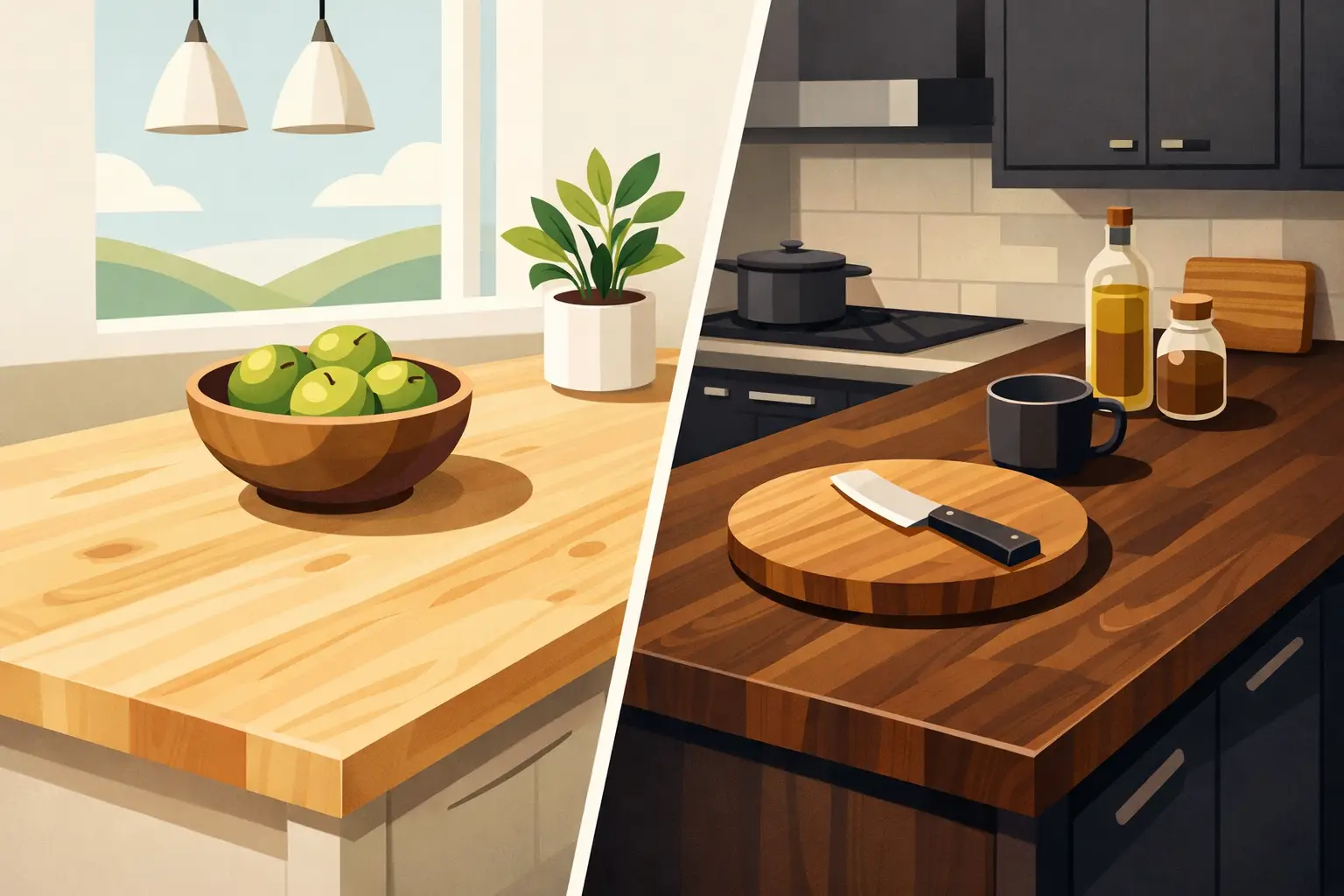
If you are stuck between maple vs walnut countertops, the choice usually comes down to one simple question: do you want a brighter, harder-working look, or a richer, darker statement piece? Both are solid wood options with real character, but they live very differently in a kitchen. The right pick depends on how you use the space, how much wear you expect, and what kind of finish and color you want to see every day.
Maple vs walnut countertops at a glance
Maple and walnut are both excellent countertop woods, but they give off completely different moods. Maple is lighter, cleaner, and more classic for butcher block applications. Walnut is darker, warmer, and often chosen when the countertop is meant to feel more like furniture than a standard work surface.
From a build standpoint, both can be crafted into durable, long-lasting countertops when they are properly fabricated, finished, and maintained. The bigger differences show up in appearance, hardness, how scratches present over time, and how each wood fits into the rest of the room.
Appearance and color
For many homeowners, this is where the decision gets made.
Maple has a lighter, brighter look
Maple usually ranges from creamy white to light tan, sometimes with subtle grain movement and occasional natural variation. It gives a kitchen a fresh, clean feel and works especially well in spaces that need to stay visually open. If your kitchen is smaller, has limited natural light, or already uses darker cabinets or flooring, maple can help balance the room.
It also fits a wide range of styles. Traditional kitchens, farmhouse spaces, Scandinavian-inspired interiors, and practical utility rooms all tend to wear maple well. It looks familiar in the best way – simple, honest, and easy to live with.
Walnut brings depth and contrast
Walnut is known for its chocolate brown tones, often mixed with lighter streaks and dramatic grain character. It reads more upscale and more dramatic right away. In kitchens with painted cabinets, white walls, or lighter tile, walnut creates contrast that feels intentional and custom.
Walnut countertops often appeal to buyers who want the wood to be a design feature, not just a surface. It has a furniture-grade look that works beautifully on islands, bar tops, desk surfaces, and statement areas where the wood is meant to stand out.
Hardness and day-to-day durability
Countertops need to look good, but they also need to hold up.
Maple is harder than walnut
Maple is generally the tougher choice in terms of surface hardness. That matters in busy kitchens where the countertop gets regular use, especially around prep zones, islands, and family spaces where things get set down, slid around, and bumped into place.
Because maple is harder, it tends to resist dents a bit better than walnut. If your household is rough on surfaces, or if you want a wood countertop that can take more day-to-day traffic, maple has an edge.
Walnut is softer, but still durable
Walnut is not fragile. It is still a hardwood and still a strong option for countertops. But compared with maple, it is softer and can show wear a little sooner in high-use areas.
That said, walnut has a practical advantage of its own. Because the wood is darker and the grain is more active, minor wear can blend in better than it does on a light wood surface. A small mark on maple may stand out quickly. A similar mark on walnut may be less obvious unless you are looking for it.
So durability is not just about hardness. It is also about how the wood ages visually.
How scratches, dents, and patina show up
This is where real-life use matters more than showroom appearance.
Maple tends to show contrast more clearly. Dark crumbs, knife marks, water spots, and general use can stand out against the lighter tone. If you like a crisp, clean surface, that is not a deal breaker, but it does mean you may notice wear sooner.
Walnut usually develops a softer, more blended patina. Scratches and everyday marks can become part of the look rather than interrupting it. Many homeowners love that. Others prefer the cleaner, brighter appearance of maple and are happy to do a little more upkeep to preserve it.
Neither choice stays brand new forever, and that is part of the appeal of real wood. It wears in, not just out. The better question is what kind of aging you prefer to live with.
Style match in the kitchen
Maple vs walnut countertops is often a design decision as much as a functional one.
If your kitchen leans bright, casual, or classic, maple usually feels right at home. It pairs well with white cabinets, painted shaker doors, soft grays, and natural finishes. It is also a strong choice when you want the countertop to support the room without becoming the center of attention.
If your kitchen needs warmth, contrast, or a more custom furniture look, walnut often wins. It is especially strong on islands where you want a centerpiece effect. Paired with white cabinetry, black hardware, or warm brass accents, walnut can give the whole room more depth.
There is also a middle ground. Some homeowners choose maple for perimeter counters and walnut for an island top. That approach can add contrast without making the whole kitchen feel dark.
Maintenance and finishing expectations
Both woods need care because both are real wood. That is not a downside. It is just part of owning a handcrafted surface instead of a factory-made imitation.
The finish matters as much as the species. A food-safe oil finish gives a more natural look and easy spot repair, but it needs regular re-oiling. A more protective topcoat can reduce maintenance and improve resistance to spills, but it changes the feel and repair process.
Maple with an oil finish may need a little more visual attention simply because the surface is lighter. Walnut can be more forgiving in that sense, especially in homes where the countertop is used hard and cleaned often.
Sunlight is another factor. Walnut can lighten over time with UV exposure, while maple can warm and deepen slightly. Neither transformation is necessarily bad, but if your kitchen gets strong direct sun, it is worth planning for natural color change.
Price and value
Walnut is usually the more expensive option. That comes from the lumber itself as well as the demand for its color and appearance. If budget is a major driver, maple often gives you a more accessible entry point into a solid wood countertop without giving up quality.
That does not mean walnut is overpriced. It means you are paying for a different visual impact. For many buyers, that darker tone and premium look are worth it, especially on islands, bars, or centerpiece installations.
If you are covering a large area and want to keep costs more manageable, maple may make more sense. If you are investing in one standout feature, walnut can be a strong value because of the way it transforms the room.
Which one is better for butcher block use?
If the countertop will see a lot of food prep, chopping, and heavy kitchen traffic, maple has a long history as a butcher block favorite for good reason. It is hard, dependable, and practical.
If the top is more of a serving, seating, or presentation surface – like an island, coffee bar, or entertaining area – walnut often shines. It still performs well, but its biggest advantage is the visual richness it brings.
This is where custom work matters. The right thickness, construction style, edge detail, and finish can make either species perform better for your exact use. A made-to-order countertop should match the way you live, not force you into a one-size-fits-all decision.
So, should you choose maple or walnut?
Choose maple if you want a lighter look, stronger surface hardness, and a classic butcher block feel that works in almost any kitchen. It is practical, versatile, and often the better fit for busy family spaces.
Choose walnut if you want darker color, stronger visual character, and a countertop that feels more like a custom furniture piece. It is especially appealing when the wood itself is meant to be part of the design story.
At Tooill Cabinets, this is usually the point where customers start thinking less about which wood is best in general and more about which wood is best for their kitchen, their lighting, and their daily use. That is the right way to approach it.
The best countertop is not the one with the most hype. It is the one that still feels right after the cabinets are installed, the room is finished, and you are living on it every day.