
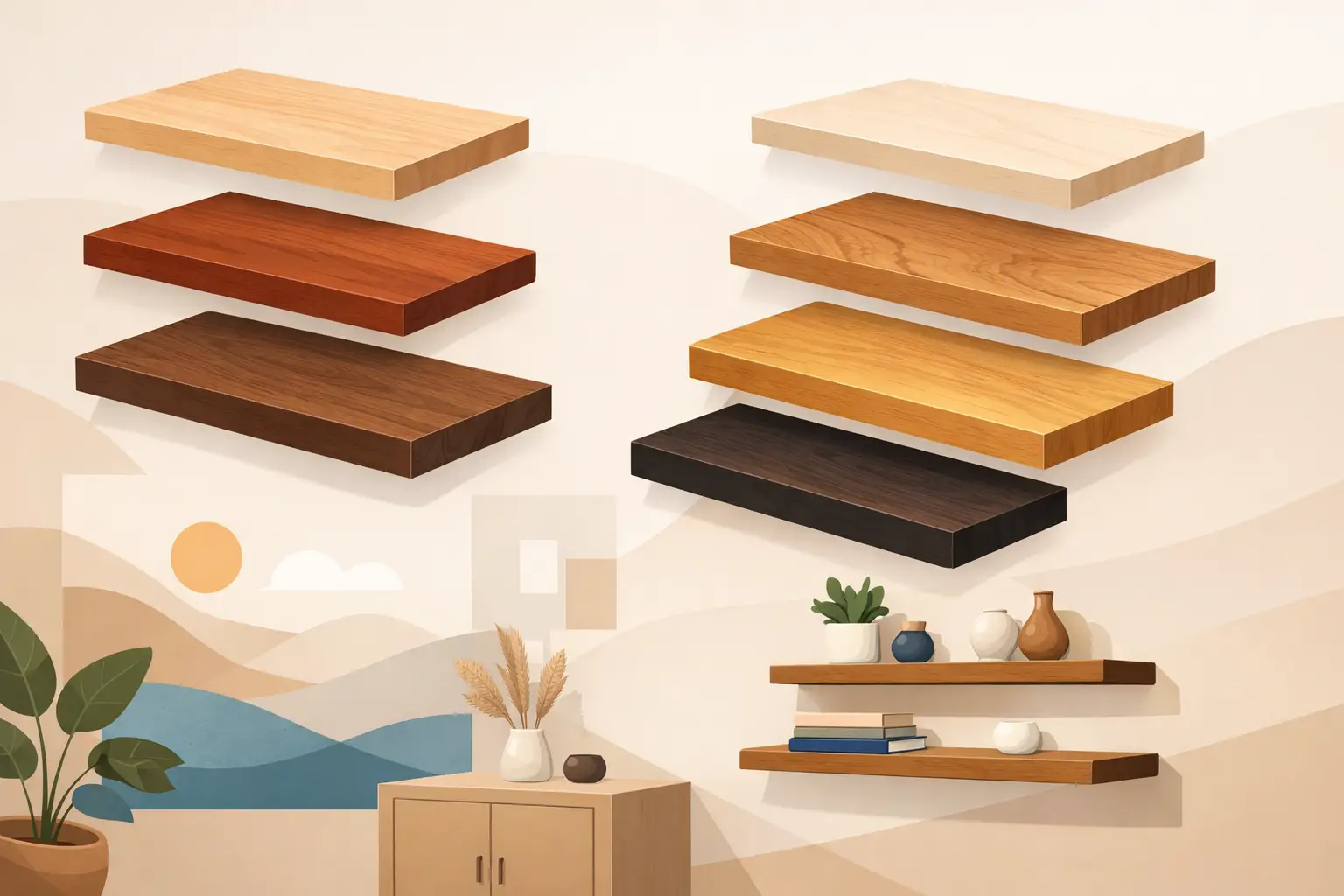
A floating shelf can look clean and simple on the wall, but the wood you choose does a lot of the heavy lifting. The best woods for floating shelves need to do more than look good in a photo. They need to hold weight, stay stable, finish well, and fit the style of the room they live in.
That is where the decision gets more specific than most people expect. A shelf in a kitchen has different demands than one in a powder room or above a desk. Some homeowners want bold grain and warmth. Others want a smooth painted finish or a lighter, more modern look. The right answer depends on load, span, finish, and the overall feel you want in the room.
What makes a wood good for floating shelves?
Strength matters first. Floating shelves rely on hidden brackets or internal support systems, so the wood has to cooperate with that hardware. If the shelf is too soft, too thin, or too unstable, it can sag, split, or move more than you want over time.
Appearance matters just as much because shelves sit at eye level. You notice grain pattern, color variation, knots, and edge detail every day. Some woods bring a clean furniture-grade look. Others add rustic character. Neither is automatically better. It depends on whether you want the shelf to blend in or stand out.
Then there is workability. Some species machine cleanly and take stain evenly. Others can blotch, dent, or require more prep to get a consistent finish. If you are ordering custom shelves, this affects the final look. If you are building them yourself, it affects how much effort the project takes.
7 best woods for floating shelves
White oak
White oak is one of the strongest all-around choices for floating shelves. It is hard, durable, and naturally more resistant to moisture than many other domestic hardwoods, which makes it a smart fit for kitchens, laundry rooms, and bathrooms with decent ventilation.
Visually, white oak has a distinct grain that feels refined without looking formal. It works in modern homes, farmhouse spaces, and transitional interiors. It can be finished natural for a lighter look, stained medium brown for warmth, or brushed for extra texture.
The trade-off is cost. White oak usually sits above more budget-friendly species, but it earns that price with durability and versatility.
Walnut
If you want shelves that read more like furniture than basic storage, walnut is hard to beat. Its rich brown tone and smooth grain give floating shelves a premium look right away. It is especially strong in offices, dining rooms, bars, and living spaces where the shelf itself is part of the design.
Walnut is stable and strong enough for well-built shelving, but it is often chosen more for appearance than for utility-only spaces. It also costs more than oak, maple, or poplar. For homeowners who want a darker wood without relying on stain, though, walnut is one of the best investments.
Hard maple
Hard maple is a practical choice when you want strength and a cleaner, more understated grain. It is dense, durable, and well suited to shelves that need to carry real weight, especially in kitchens, mudrooms, and workspaces.
Its color is usually light and creamy, which fits bright interiors and contemporary designs. Maple can look excellent with a clear finish, but it is not always the easiest wood to stain evenly. If you have a very specific stain color in mind, it may take more prep and testing to get the result right.
Cherry
Cherry brings warmth in a quieter way than walnut. It has a smooth, fine grain and a rich tone that deepens naturally over time. In the right room, cherry floating shelves can add a custom built-in look without feeling heavy.
This wood is a great fit for traditional homes, classic kitchens, and spaces where you want subtle elegance instead of dramatic grain. It is strong and dependable, though usually not the first pick for rough utility use. The main consideration is color shift. Cherry darkens with age and light exposure, which many people love, but it is worth knowing upfront.
Hickory
Hickory is a strong option when durability is the priority. It is one of the harder domestic woods commonly used in home products, and it stands up well in active households. If your shelves need to hold cookware, books, or heavier decorative pieces, hickory deserves a look.
Its grain and color variation are more pronounced than maple or cherry. That gives it a bold, natural character that works well in rustic, farmhouse, and cabin-inspired interiors. If you want a calm, uniform look, hickory may feel too busy. If you want visible wood character, it delivers.
Pine
Pine is a common shelving choice because it is affordable, accessible, and full of character. For lighter-duty floating shelves, especially in casual or rustic spaces, it can work well. It takes paint nicely and can also be stained, though knotty pine will always keep a more informal look.
The reason pine does not rank as high for every project is softness. It dents more easily than hardwoods, and long spans under heavy load can be more of a concern. Pine is best when budget matters, the shelf thickness is appropriate, and the use is decorative or moderate rather than heavy duty.
Poplar
Poplar is often overlooked, but it has a place in floating shelf projects, especially when the shelves will be painted. It is relatively stable, easy to machine, and more economical than many premium hardwoods.
For stained floating shelves, poplar is usually not the first choice because its natural color can vary from pale cream to greenish or brown tones. Under paint, though, that issue disappears. If you want custom-sized painted shelves with a smooth finish, poplar is a smart and efficient option.
How to choose the best woods for floating shelves in your home
Start with what the shelf needs to carry. A short decorative shelf holding a small vase and a framed photo gives you more flexibility than a 48-inch kitchen shelf holding stacks of dishes. The heavier the load and the longer the span, the more important wood density, shelf thickness, and bracket quality become.
Then think about the room. In kitchens and bathrooms, wood movement matters more because humidity changes are more common. White oak and maple tend to be dependable choices here. In living rooms, offices, and bedrooms, you may care more about grain pattern and color than moisture resistance.
Finish should also drive the decision. If you want a natural clear coat, choose a species you already like in its raw color, such as walnut, white oak, cherry, or maple. If you want paint, poplar and pine are often more sensible than paying for a premium hardwood only to cover it up.
Custom sizing is another big factor. A shelf that is too deep, too thin, or too long for its support will underperform no matter how beautiful the wood is. That is one reason many homeowners skip big-box options and order made-to-size shelves built around the exact span, thickness, and bracket system their wall needs.
Solid wood vs. cheaper alternatives
Not every floating shelf sold online is solid wood, even when the listing makes it sound that way. Some are veneer over engineered material or hollow construction wrapped in a wood-look finish. Those products can work for light decor, but they do not offer the same durability, edge detail, repairability, or long-term feel as real hardwood.
Solid wood shelves cost more because the material and labor are real. You feel the difference in weight, see it in the grain, and notice it years later when the shelf still looks like part of the home instead of a temporary fix. For homeowners who care about craftsmanship and exact fit, that difference usually matters.
A few mistakes to avoid
The biggest mistake is choosing wood based only on color. A shelf can match the room perfectly and still be the wrong species for the load or environment. The second mistake is underestimating hardware. Even the best woods for floating shelves cannot make up for weak bracket support or poor installation into drywall without proper anchoring.
Another common issue is ignoring thickness. Floating shelves need enough material to house the support system and resist sagging. Thin shelves can look sleek, but they are not always practical, especially at longer widths. Good shelf design always balances appearance with structure.
At Tooill Cabinets, that balance is a big part of the work. A shelf should look clean on the wall, but it also needs to be built for the way your home actually functions.
If you want your floating shelves to feel finished, solid, and built for the long run, choose the wood the same way you would choose a countertop or table top. Start with how you live, how much weight the shelf needs to carry, and what kind of character you want the wood to bring into the room.