
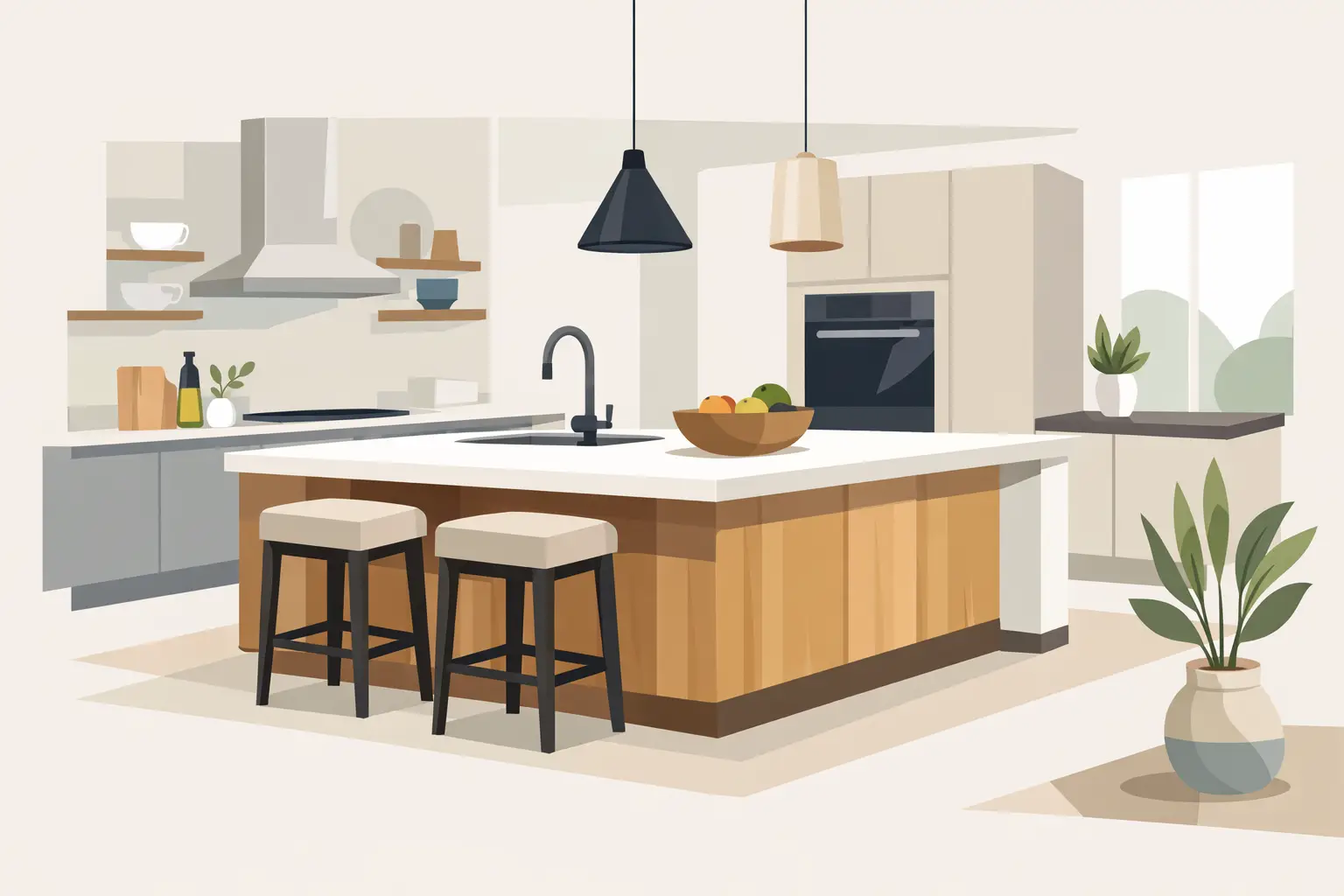
A kitchen island earns its place by doing real work. It catches grocery bags, gives kids a place to finish homework, holds a cutting board during dinner prep, and becomes the spot where everyone gathers without being asked. The strongest custom kitchen island trends are not about chasing a showroom look. They are about building an island around the way your home actually functions.
For homeowners planning a renovation, that is good news. Custom work makes room for the details standard cabinet packages often miss: a top sized to your layout, storage for the tools you use most, seating that does not crowd the walkway, and solid wood that brings warmth to a room full of hard surfaces.
Custom kitchen island trends are becoming more personal
The era of the oversized, one-size-fits-all island is giving way to more intentional designs. A large island can be useful, but only when the kitchen has enough clearance to move around it comfortably. In a narrower room, a smaller island with excellent storage and a well-planned overhang often works harder than a massive centerpiece.
Homeowners are also moving away from the idea that every surface must match. Painted cabinets paired with a natural wood island top, for example, add contrast without making the room feel busy. The island becomes furniture as much as cabinetry – a grounded, welcoming piece that gives the kitchen its own character.
Customization is what makes this approach practical. Instead of adapting your routine to a stock island size, you can determine the dimensions, edge profile, wood species, finish, and seating arrangement before a single board is cut.
Warm wood tops remain a clear favorite
Wood is one of the most lasting island-top choices because it brings a texture that stone and engineered surfaces cannot duplicate. Maple offers a clean, light look that works especially well in bright kitchens. Walnut brings deeper color and a more dramatic grain pattern. White oak has a calm, tailored appearance that fits everything from modern organic interiors to updated traditional homes.
Butcher block is especially appealing when homeowners want the island to feel useful rather than precious. It provides a comfortable surface for prep work, serving, baking, and everyday gathering. A properly built and finished solid wood top can be maintained for years, and small signs of use often add to its character instead of ruining the surface.
That does not mean wood is the right choice for every kitchen task. Wood needs regular care, and standing water should be wiped up promptly. It can dent if it takes a hard hit, and a food-safe oil finish will need refreshing over time. For many households, those trade-offs are worthwhile because wood is repairable. Light scratches and dry spots can often be addressed instead of forcing a full replacement.
Mixed materials make the island feel designed, not decorated
One of the most useful current ideas is mixing surfaces with purpose. A stone perimeter counter can handle high-heat cookware and frequent splashes, while a wood island top creates a warmer prep and gathering zone. Some homeowners choose a full wood top; others use a thick wood section at the seating end or on a smaller secondary island.
The key is not adding materials simply for contrast. Each surface should have a job. If the island will be used for rolling dough, chopping vegetables, and setting out meals, a solid wood top makes sense. If it will house a busy sink with very little room for drying dishes, another surface may require less upkeep. Good custom design begins with honest use, not a saved photo.
Storage is getting more specific
The best island storage is not just more storage. It is storage that answers a daily frustration. Deep drawers for pots and pans, vertical dividers for sheet pans, a pullout for trash, and a dedicated spot for pet bowls can make a kitchen noticeably easier to use.
Open shelves are still popular, particularly on the seating side of an island. They are a good fit for cookbooks, serving pieces, baskets, or a few pieces of pottery. However, they work best when you have items worth displaying and are comfortable keeping them reasonably tidy. In a high-traffic family kitchen, closed storage usually offers more flexibility and less visual clutter.
A custom island can also account for appliances before cabinetry is finalized. Microwave drawers, beverage refrigerators, charging outlets, and concealed receptacles all need space, ventilation, and careful placement. Plan these early. Retrofitting them after the island is built can compromise both the appearance and the usable storage inside.
Seating is becoming more comfortable and less crowded
An island should not force people to perch shoulder-to-shoulder. Comfortable seating starts with enough knee room, appropriate stool height, and space between seats. The exact overhang depends on the support system and top thickness, especially with a substantial solid wood slab or butcher block top. A fabricator and cabinet professional can help make sure the design is properly supported rather than relying on a guess.
Many homeowners are choosing fewer seats with better spacing. Three stools that can be pulled out easily are often more useful than four that constantly bump into each other. If the island is the main eating space, consider where elbows land, whether the cook can still pass behind seated guests, and how the stools look when pushed in.
Curved ends and softened corners are another detail worth considering. They take up a little more planning than a simple rectangle, but they can improve circulation in a tight layout and make the island friendlier for young children.
Furniture-style details add staying power
Kitchen islands are increasingly designed to look less like a cabinet box dropped in the center of the room. Furniture-style legs, applied end panels, inset details, feet, and varied paint colors can make the island feel like a permanent, considered piece of the home.
This trend works particularly well with a thick wood top. The visual weight of solid wood pairs naturally with a base that has some architectural detail. A clean-lined oak top on a dark painted base can feel refined and current. A maple butcher block paired with softer paint and simple legs can bring a relaxed farmhouse influence without leaning into a themed look.
Restraint matters here. If the cabinets already have ornate doors, dramatic hardware, and busy stone, a simpler island may create better balance. If the kitchen is minimal and flat-fronted, the island may be the right place to introduce grain, texture, and depth.
Plan dimensions before choosing a top
A beautiful island top cannot correct a poor floor plan. Before choosing species or finish, confirm the room measurements and intended clearances. Account for appliance doors, pantry doors, traffic paths, and the distance needed to open drawers. If seating is part of the plan, include the stool footprint, not just the countertop overhang.
Then decide what the island needs to do first. A prep island needs open work surface near the sink, knife storage, and easy trash access. An entertaining island may prioritize seating and a generous serving area. A baker may want an uninterrupted wood surface and storage for mixers, pans, and ingredients. One island can perform several roles, but the primary role should guide the layout.
For a made-to-order wood top, accurate measurements are especially important. Consider whether the top will sit flush with the cabinet base or have an overhang on one or more sides. Think about edge style, corners, cutouts for sinks or outlets, and how the wood color will relate to the flooring and cabinets. Samples can help, but natural wood always has its own grain variation. That is part of what makes a handcrafted top distinct.
Choosing a custom wood top with confidence
A custom island top should be built for the room, not pulled from a warehouse shelf and trimmed down on site. Ask clear questions about wood species, thickness, finish options, lead time, packaging, and care requirements. You should also confirm how the top will be installed and whether support is needed for any extended overhang.
At Tooill Cabinets, that made-to-order approach is central to the work. A custom solid wood top gives homeowners the freedom to specify dimensions and details that fit their cabinetry, their style, and the way they use the kitchen. It also gives a renovation a feature that will not look exactly like every other kitchen on the block.
The best trend to follow is the one that still makes sense after the photos are old. Build an island that gives you room to prep, sit, store, and gather, then choose materials with enough real character to make those everyday moments feel better.