
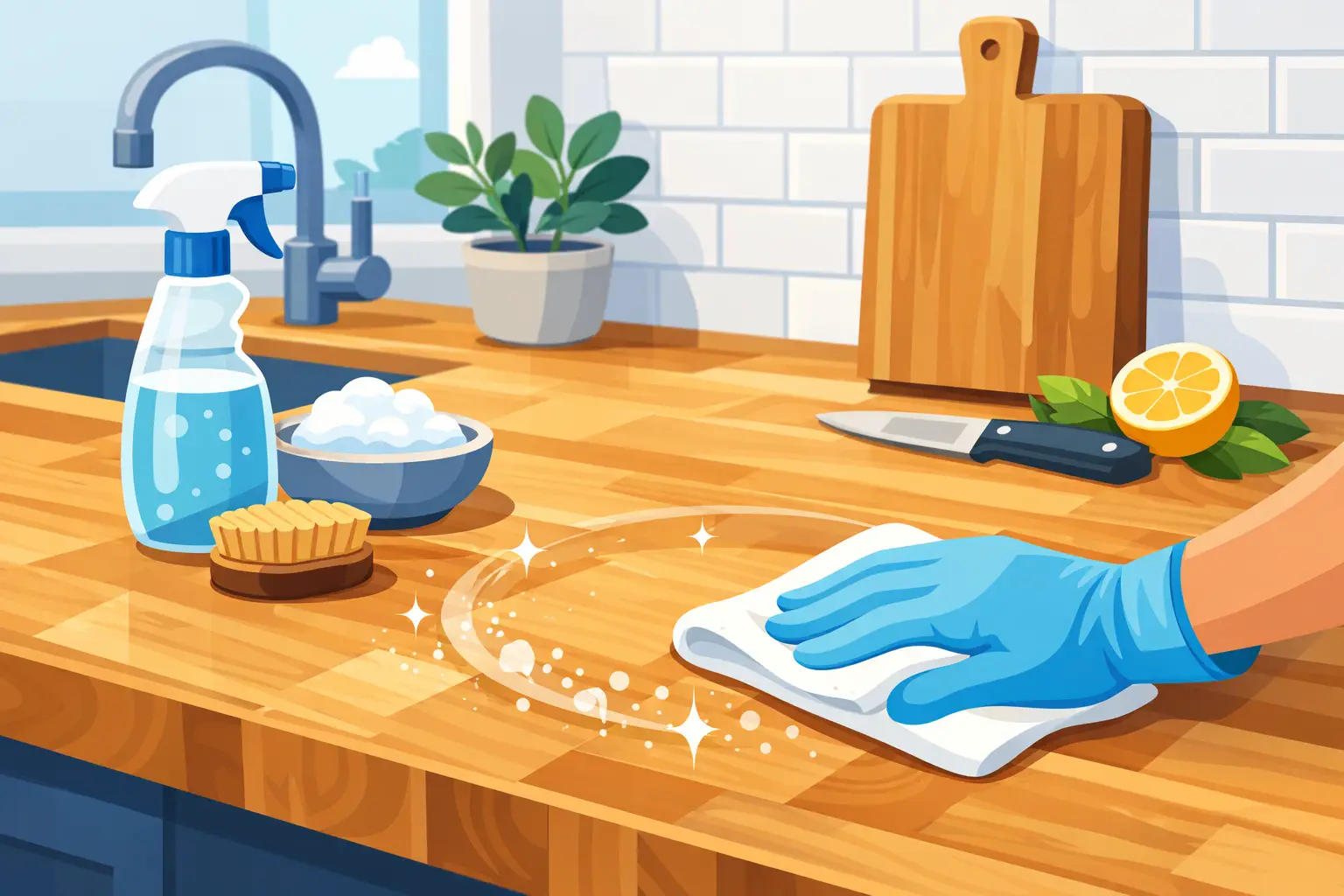
A butcher block countertop earns its character in the everyday moments: bread sliced at the island, a coffee ring left behind during a busy morning, dinner prep that runs a little long. Solid wood is durable, but it is not a plastic laminate surface. The right routine keeps it clean without stripping moisture from the wood or dulling the finish. Here is how to clean butcher block countertops in a way that respects the material and helps it look good for years.
Start by Knowing Your Countertop’s Finish
Before reaching for a cleaner, determine whether your butcher block is finished for food preparation or sealed as a work surface. This changes what belongs on it.
A food-safe oil finish, commonly mineral oil or a blend of mineral oil and wax, penetrates the wood and is often used on cutting boards and countertops meant to double as chopping surfaces. It needs regular renewal because it is not a hard protective film. A film-forming finish, such as polyurethane, creates a protective top layer and is more common on countertops used primarily for serving, folding laundry, or general kitchen work rather than direct cutting.
If you are unsure, ask the maker or review your order details. Never assume that a shiny surface is food-safe for cutting. Likewise, do not use a heavy cleaner designed for stone, glass, or stainless steel just because it works elsewhere in the kitchen. Wood responds best to a lighter hand.
How to Clean Butcher Block Countertops Every Day
For regular cleanup, remove crumbs and wipe the surface with a soft cloth or sponge dampened with warm water and a small amount of mild dish soap. The cloth should be damp, not dripping. Follow the grain when wiping, then wipe again with a clean damp cloth to remove soap residue.
Dry the countertop immediately with a clean towel. This is the small habit that makes the biggest difference. Standing water can raise the grain, leave dark marks, and work its way into seams over time. Pay extra attention around faucets, sink cutouts, and areas where appliances trap moisture.
Avoid soaking the countertop, spraying cleaner until it pools, or leaving a wet dish towel on the wood. Even a well-built, properly finished butcher block benefits from being kept dry. Wood naturally moves with changes in humidity, and repeated moisture exposure makes that movement harder on the surface.
Treat Stains and Stuck-On Food Gently
For dried food, start with a plastic scraper or an old credit card held at a low angle. This removes residue without gouging the wood. Then clean the area with mild soap and water, dry it fully, and check whether the spot is still visible.
A light surface stain on an oiled butcher block can often be lifted with fine-grit sandpaper, usually 180 to 220 grit. Sand lightly with the grain, only over the affected area at first. Wipe away the dust with a dry cloth, then reapply the same food-safe oil or conditioner used on the rest of the top. Broad, aggressive sanding can create a noticeably lighter patch, so use restraint.
For a stubborn dark water mark, sanding may be needed, but the depth of the mark matters. If it has penetrated deeply, it may require more than a quick touch-up. That is one advantage of a solid wood top: unlike a thin veneer, it can be renewed. Still, it is worth testing a discreet area or speaking with the original maker before refinishing a large section.
Do not use steel wool, scouring powder, oven cleaner, bleach-based sprays, or abrasive scrub pads. They can scratch the surface, discolor the wood, or damage the finish. Vinegar is also best avoided as a routine cleaner. Its acidity can dry an oil-finished top and may dull certain protective coatings.
Sanitizing a Food-Prep Surface
Cleaning and sanitizing are not quite the same job. Soap and water remove everyday soil. When raw meat, poultry, or fish has touched an oiled butcher block surface, clean it promptly with hot, soapy water, then dry the wood completely.
For additional sanitation, use a food-safe product according to its label directions and confirm that it is appropriate for unfinished or oil-finished wood. Do not saturate the surface. Apply only as directed, allow the required contact time, then wipe and dry thoroughly. If you use the countertop as a cutting surface often, a dedicated solid wood cutting board is a practical way to limit wear on the larger top and make cleanup simpler.
It depends on how your kitchen functions. A butcher block island used mainly for baking and serving needs a different maintenance rhythm than one that sees daily knife work. There is nothing wrong with protecting a beautiful custom top by placing a cutting board on it for messier tasks.
Re-Oil When the Wood Looks Dry
An oiled butcher block should be conditioned when it begins to look pale, feels dry, or absorbs water instead of making it bead on the surface. In an active kitchen, that may be every few weeks. In a lightly used space, it may be every few months. Dry winter air and frequent cleaning can shorten the interval.
Use a food-grade mineral oil or a conditioner made for butcher block. Do not use cooking oils such as olive, vegetable, or canola oil. They can oxidize, become sticky, and develop an unpleasant odor.
Apply a generous but controlled amount of oil with a lint-free cloth, working with the grain and covering edges and end grain as well as the top surface. Let it soak in according to the product directions. Wipe away all excess before using the countertop again. A wax-and-oil conditioner can add a little more water resistance after the wood has been properly oiled, but it is not a substitute for routine cleanup and drying.
If your countertop has a sealed film finish, do not apply mineral oil over it. Clean it with mild soap and water, keep it dry, and address scratches with the finish system recommended for that specific surface.
Protect the Countertop Between Cleanings
Good care is not complicated, but a few kitchen habits prevent most avoidable damage. Use trivets under hot pans and slow cookers, because direct heat can dry, crack, or discolor wood. Put rubber feet or a breathable mat under countertop appliances that stay in one place, especially near a sink. Move them occasionally so moisture and sunlight do not create uneven areas.
Wipe up wine, citrus juice, tomato sauce, and other colorful spills quickly. They are more likely to leave a mark if they sit, particularly on a lighter wood species or a freshly oiled surface. Keep dish racks from trapping water against the countertop edge, and check seams near sinks regularly.
Solid wood is meant to be lived with. Small signs of use are normal, and many homeowners appreciate the warmer, more relaxed look that develops over time. The goal is not to keep butcher block looking untouched. It is to keep it clean, well-conditioned, and ready for the next meal.
A handcrafted wood surface rewards simple, consistent care. Wipe it dry, treat spills early, renew the finish when the wood asks for it, and let the natural grain do what it was made to do: bring real warmth and working beauty to the room.