
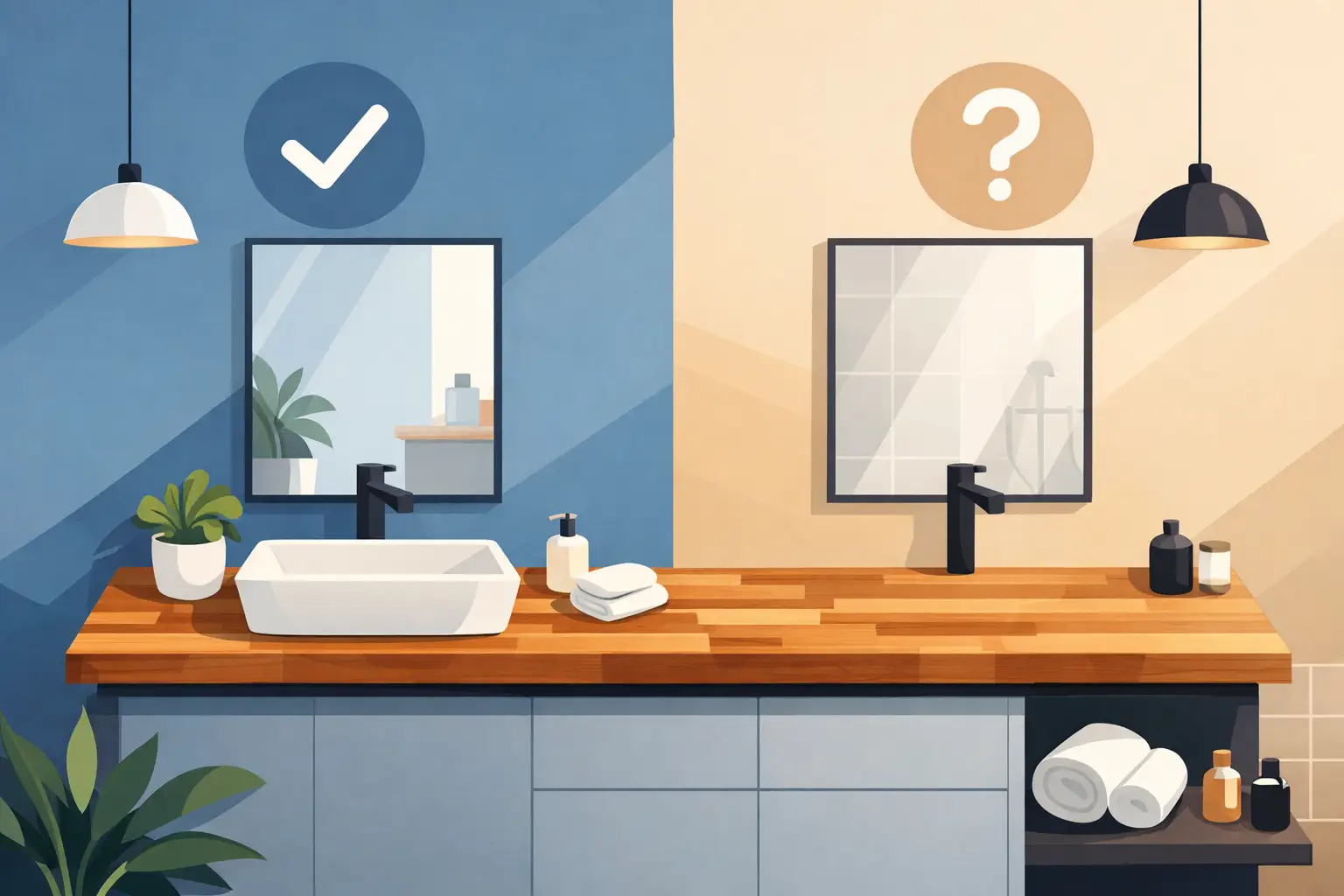
A bathroom vanity gets more daily attention than most surfaces in the house. It holds wet hands, toothbrush cups, soap dispensers, styling tools, and the occasional rushed morning spill. A butcher block bathroom vanity top brings real warmth to that hardworking spot, turning a standard cabinet into a piece that feels built for the room instead of pulled from a warehouse shelf.
Wood is not the lowest-maintenance vanity material. It is also not fragile when it is made well, installed correctly, and protected with the right finish. For homeowners who want a bathroom with character, custom sizing, and a surface that can be renewed rather than replaced, butcher block is a strong choice.
Why Choose a Butcher Block Bathroom Vanity Top?
Stone, quartz, and solid-surface vanity tops have their place. They are familiar, easy to shop for, and often available in standard sizes. But they can also make a bathroom feel cold or predictable. A solid wood top adds grain, depth, and natural color variation that manufactured materials cannot copy.
That character works especially well in bathrooms with white cabinetry, black fixtures, handmade tile, or a simple modern vanity that needs some contrast. It can lean farmhouse, rustic, Scandinavian, coastal, or clean-lined contemporary depending on the wood species, edge profile, and finish.
The practical advantage is customization. A made-to-order top can be built for the exact cabinet width, wall-to-wall space, overhang, sink location, faucet hole, and backsplash plan. That matters in powder rooms, older homes, and remodels where standard vanity sizes leave awkward gaps or force design compromises.
A quality butcher block top is also repairable. Small scratches, water marks caught early, or wear around a faucet can often be sanded and refinished. With a laminate or cultured-marble top, damage usually means living with it or replacing the entire surface.
The Real Trade-Off: Water Requires Attention
A wood vanity top does not need to be babied, but it does need respect around standing water. The most vulnerable locations are sink cutout edges, faucet holes, seams against a wall, and any spot where water can sit repeatedly.
The difference between a top that lasts for years and one that develops problems is usually not the wood itself. It is the finishing and installation details. Every face, edge, underside, cutout, and drilled hole should receive a complete protective finish. Sealing only the visible top surface leaves routes for moisture to enter the wood.
Daily care is simple: wipe up splashes and do not leave a soaked hand towel or dripping toiletry bottle against the surface. A family bathroom with constant use can absolutely have a wood top, but it needs a homeowner who will handle routine wipe-downs and occasional maintenance. In a bathroom where standing water is regularly ignored, quartz may be the better fit.
Humidity matters, too. Wood expands and contracts as seasons and moisture levels change. A properly built and installed top accounts for that movement rather than locking the wood so tightly that it has nowhere to go.
Choose the Right Wood and Construction
Not all butcher block is built the same way. The species, grain pattern, thickness, and glue-up quality affect both the appearance and long-term performance of your vanity top.
Hardwood species for bathroom use
Maple is a popular choice for its light, clean appearance and fine, consistent grain. It suits bright bathrooms and holds up well to everyday use. Walnut offers a richer brown tone with dramatic grain variation, making it a natural choice for a vanity meant to be the focal point of the room.
White oak has a warm, timeless look and distinct grain that works beautifully in traditional and modern spaces. It is often chosen when homeowners want a natural finish with a little more texture. Other hardwoods can work as well, but the best choice depends on the color, grain character, and overall style you want to carry through the bathroom.
Wood is a natural material, so variation is part of the product. Color shifts, knots, grain changes, and mineral streaks are not defects in a handcrafted hardwood top. They are the details that make one piece different from the next.
Edge grain, face grain, and thickness
For a bathroom vanity, a face-grain or edge-grain butcher block top is typically the right direction. Both offer a finished furniture-like appearance and enough stability for vanity use when fabricated from quality hardwood and finished correctly. End-grain construction is visually striking but is more commonly used for cutting boards and is not necessary for most vanity installations.
Thickness changes the feel of the finished piece. A thicker top creates a substantial, custom-furniture look, especially on a floating vanity or open base. A slimmer profile can feel more modern and may be useful when drawer clearance, vessel sink height, or an existing backsplash limits the overall build-up.
Plan the Size Before You Order
Custom woodwork starts with good measurements. Measure the vanity cabinet at the front, center, and back, especially if walls are not perfectly square. Record the finished cabinet width and depth, then decide whether you want the top flush with the cabinet or with an overhang.
A modest front overhang is common and gives the vanity a more finished appearance. Side overhangs can be useful on freestanding cabinets, while wall-to-wall installations often need careful scribing or a small planned gap that will be covered by trim or backsplash.
Do not forget the sink and faucet layout. An undermount sink creates a clean, continuous look, but its cutout edge must be sealed thoroughly. A drop-in sink covers the cutout edge with its rim, which can simplify installation. Vessel sinks make a strong design statement, though they raise the bowl height and require thoughtful faucet placement.
Before finalizing dimensions, account for drawers, plumbing, wall clearance, mirror placement, and the swing of nearby doors. In a tight powder room, an extra inch of overhang can matter more than it does in a large primary bath.
Finish Is the Protection System
For a butcher block bathroom vanity top, the finish is not an afterthought. It is the barrier between the wood and the moisture-heavy environment around it.
A durable film-forming finish is generally the practical choice for bathroom use because it creates a stronger water-resistant surface than a food-safe oil finish. Oil finishes are excellent for cutting boards because they are easy to renew, but a vanity top needs more defense against splash zones and repeated contact with soap, cosmetics, and water.
The finish should be applied to every surface, including the bottom. Once the sink and faucet holes are cut, those fresh wood edges need sealing before installation. Use a high-quality bathroom-appropriate sealant where the top meets the wall, around faucet bases when appropriate, and according to the sink manufacturer’s instructions.
No finish makes wood completely waterproof forever. A well-protected top should shed normal splashes, but standing water should still be wiped away. Think of the finish as a raincoat, not a force field.
Care That Keeps the Wood Looking Good
Routine care takes very little time. Clean the surface with a soft damp cloth and mild soap, then dry it rather than letting water air-dry in puddles. Avoid abrasive scrubbers, harsh bleach products, and aggressive cleaners that can dull or damage the finish.
Pay special attention around the faucet and sink rim. Those areas see the most water and are the first places where a finish may show wear. If water stops beading on the surface, the finish looks cloudy, or bare wood becomes visible, address it before moisture gets deeper into the grain.
Small surface damage is often manageable. Light scratches may be improved with a compatible touch-up method, while more significant wear may call for sanding and refinishing. That renewability is one of solid wood’s best long-term advantages.
When Custom Craftsmanship Makes the Difference
A vanity top may look like a simple rectangle, but the details decide whether it feels right in the finished room. Grain direction, board selection, color tone, edge treatment, sink placement, and exact dimensions all influence the final result.
Tooill Cabinets builds handcrafted wood surfaces for homeowners who need more than an off-the-shelf size. A custom-made butcher block top gives you room to specify the dimensions and details that make your vanity look intentional, whether you are updating a small powder room or finishing a full primary-bath remodel.
Bring your cabinet measurements, sink choice, and a clear idea of the finished look to the planning stage. The right piece of hardwood, properly finished and cared for, can make the vanity the detail people remember long after the remodel is done.