
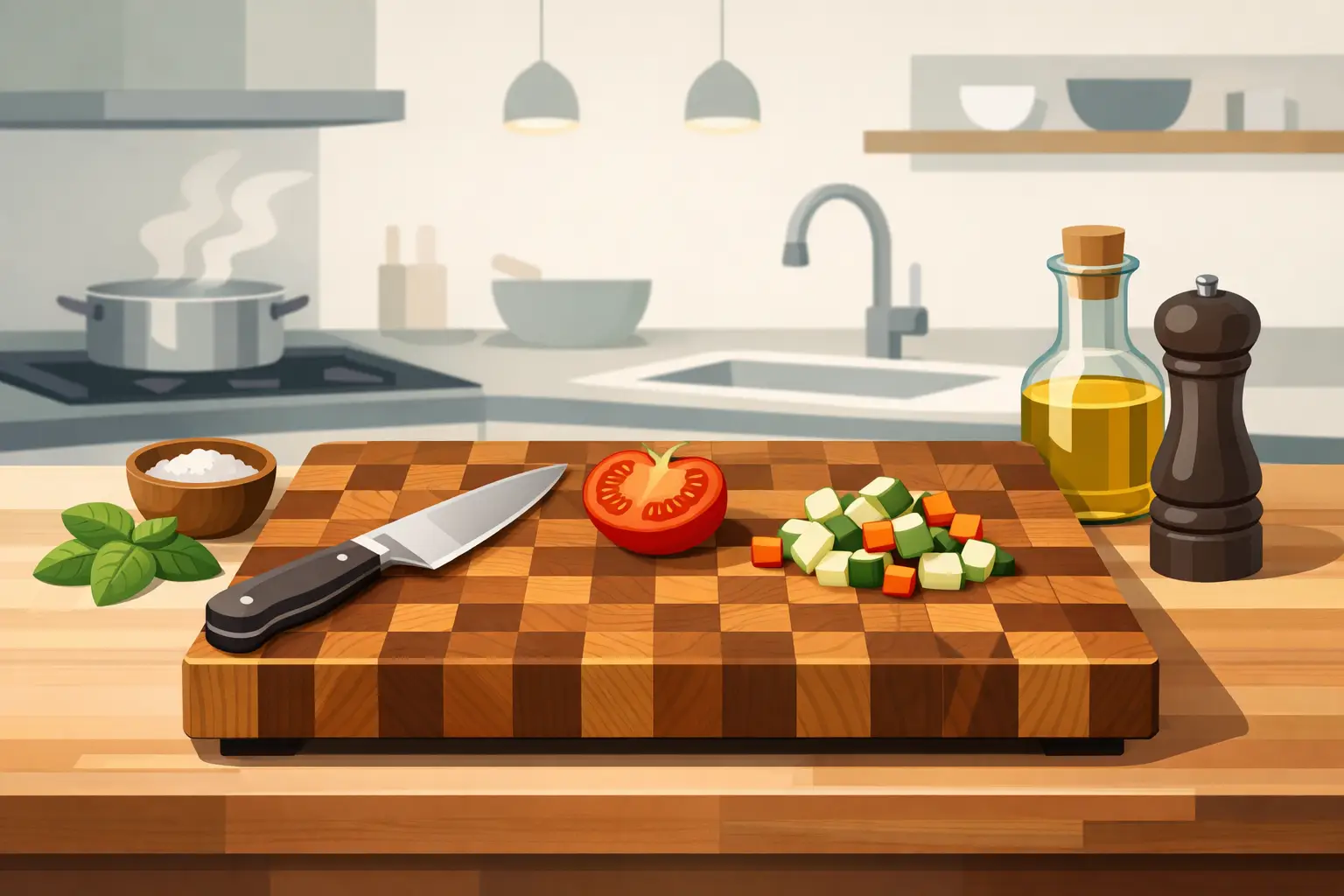
A knife sinking into a well-made end grain surface feels different from cutting on a thin board or hard countertop. The blade meets thousands of upright wood fibers instead of slicing across long fibers, which is the foundation of the most talked-about end grain butcher block benefits. For homeowners who cook often, want a hardworking island top, or are choosing a cutting board meant to last for years, that construction makes a real difference.
End grain butcher block is not just a decorative checkerboard pattern. It is a labor-intensive build method with practical advantages, a distinct appearance, and a few ownership responsibilities worth understanding before you order.
Why End Grain Construction Is Different
Wood has three visible surfaces: face grain, edge grain, and end grain. End grain exposes the cut ends of the wood fibers. In a butcher block, small wood pieces are turned upright and glued together so those fibers face the working surface.
Think of the surface as a tightly packed bundle of tiny wooden straws. When a knife lands on end grain, the fibers can separate slightly around the blade and then close back together. With edge grain or face grain, the blade cuts across the fibers more directly. That difference is why end grain is widely considered the premium construction for serious cutting boards and prep surfaces.
The look is part of the appeal, too. Each block reveals rings, mineral streaks, and natural shifts in color. No two tops come out exactly alike. A custom end grain butcher block can bring warmth to a kitchen while still feeling substantial enough for daily work.
End Grain Butcher Block Benefits for Knives
The biggest reason many cooks choose end grain is knife friendliness. A quality knife is an investment, whether it is a reliable everyday chef’s knife or a set you have carefully built over time. Hard surfaces such as stone, glass, ceramic, and steel can dull an edge quickly. Even very hard wood can be tough on blades when the knife repeatedly cuts across its grain.
An end grain surface gives the blade a little more forgiveness. Rather than forcing the knife edge to sever long fibers, the fibers move aside around it. That can reduce the harsh impact on the edge during routine chopping, slicing, and dicing.
This does not mean knives stay sharp forever. Technique, blade steel, and how often you use the surface all matter. But for a kitchen where the butcher block will see real food prep, end grain is one of the better choices for protecting both the surface and your knives.
A Surface That Can Handle Real Use
A properly built end grain block has excellent durability. The individual pieces are glued together in a pattern designed to distribute use across the surface, and the thickness of a quality block gives it a solid, furniture-grade feel. It is made for the occasional dropped pan, busy weekend meal prep, and the small marks that come with a kitchen people actually use.
Minor cuts and dents often become less noticeable after the wood is cleaned, conditioned, and used over time. If the surface eventually needs more attention, solid wood can generally be sanded and refinished. That is a major advantage over many manufactured countertops and thin cutting boards, which cannot be renewed once the top layer is damaged.
That said, end grain is not indestructible. Deep gouges, standing water, extreme heat, and prolonged dryness can still cause trouble. A handcrafted wood surface rewards normal care, not neglect. The good news is that maintenance is straightforward and far less intimidating than many buyers expect.
It Brings More Character Than a Flat, Factory-Made Surface
End grain has visual depth that is hard to replicate with a printed or laminated material. The pattern can be orderly and geometric, or more varied depending on the wood species and block layout. Maple offers a bright, clean look. Walnut brings deeper brown tones and stronger contrast. Cherry starts warmer and naturally deepens in color with age.
For a kitchen island, small countertop section, or oversized cutting board, end grain can become a focal point without feeling flashy. It works especially well in kitchens that need a little warmth alongside painted cabinets, tile, stone, or stainless appliances.
Custom sizing matters here. A board that fits your prep area, a countertop made for an unusual cabinet run, or an island top built around a specific overhang will look intentional instead of improvised. Tooill Cabinets builds solid wood pieces to customer dimensions because the right fit is every bit as important as the wood species or finish.
The Trade-Offs Worth Knowing Before You Buy
The end grain butcher block benefits are meaningful, but this is not the right choice for every application or budget. End grain takes more lumber, more glue-up work, more machining, and more finishing time than a simple edge grain panel. That typically makes it more expensive.
It is also heavy. A thick end grain island top or large workstation board needs proper support and careful handling during installation. If you are planning a countertop, make sure cabinets are level and capable of carrying the weight. Large custom pieces should be measured carefully before production, including wall clearances, appliance gaps, overhangs, and any cutouts.
Moisture management is another consideration. Wood naturally responds to humidity changes, and end grain absorbs moisture readily if left unprotected. A food-safe oil finish needs periodic renewal, especially on a cutting surface that is washed often. For a decorative countertop section that will not be used as a cutting station, a more protective finish may make sense, but it changes how the surface can be maintained and repaired.
End grain is also not always necessary. If your primary goal is a beautiful wood counter with occasional light prep, edge grain butcher block may offer a lower-cost option with a more linear appearance. If you want the best working surface for frequent chopping, an end grain board or dedicated prep section is usually money well spent.
Choosing the Right Wood and Specifications
Start with how the piece will be used. A daily-use cutting board should be thick enough to feel stable, sized for the way you prep, and finished for direct food contact. A butcher block island top may need extra thickness for visual balance, seating overhangs, or a substantial furniture-like profile.
Hard maple is a classic choice because it is dense, durable, and light in color. Walnut is popular for its rich appearance and is still a practical hardwood, though it is somewhat softer than maple. Mixed-species blocks can create strong contrast, while a single-species block offers a quieter, more uniform look.
Ask practical questions early: Will there be a sink cutout? Will the top sit beside a range? Is it for chopping or just serving? Do you need eased edges, a specific thickness, or a certain overhang? Good custom work begins with those details, not with a one-size-fits-all product listing.
Simple Care Keeps Wood Looking Its Best
For an oiled end grain cutting surface, wipe up spills promptly, wash with mild soap and warm water, and dry it right away. Do not soak it in the sink or put it in the dishwasher. When the wood looks dry, feels rough, or loses its rich color, apply a food-safe mineral oil or butcher block conditioner according to the product directions.
For countertops, daily care depends on the finish and intended use. Use trivets for hot cookware, avoid leaving wet towels or glasses on the surface, and clean spills before they sit. A little attention goes a long way toward preventing stains, raised grain, and uneven drying.
The right end grain piece should not feel precious. It should feel like a dependable part of your home – made to be used, maintained, and appreciated. Measure carefully, be honest about how you cook, and choose a wood surface built for the work you expect it to do.