
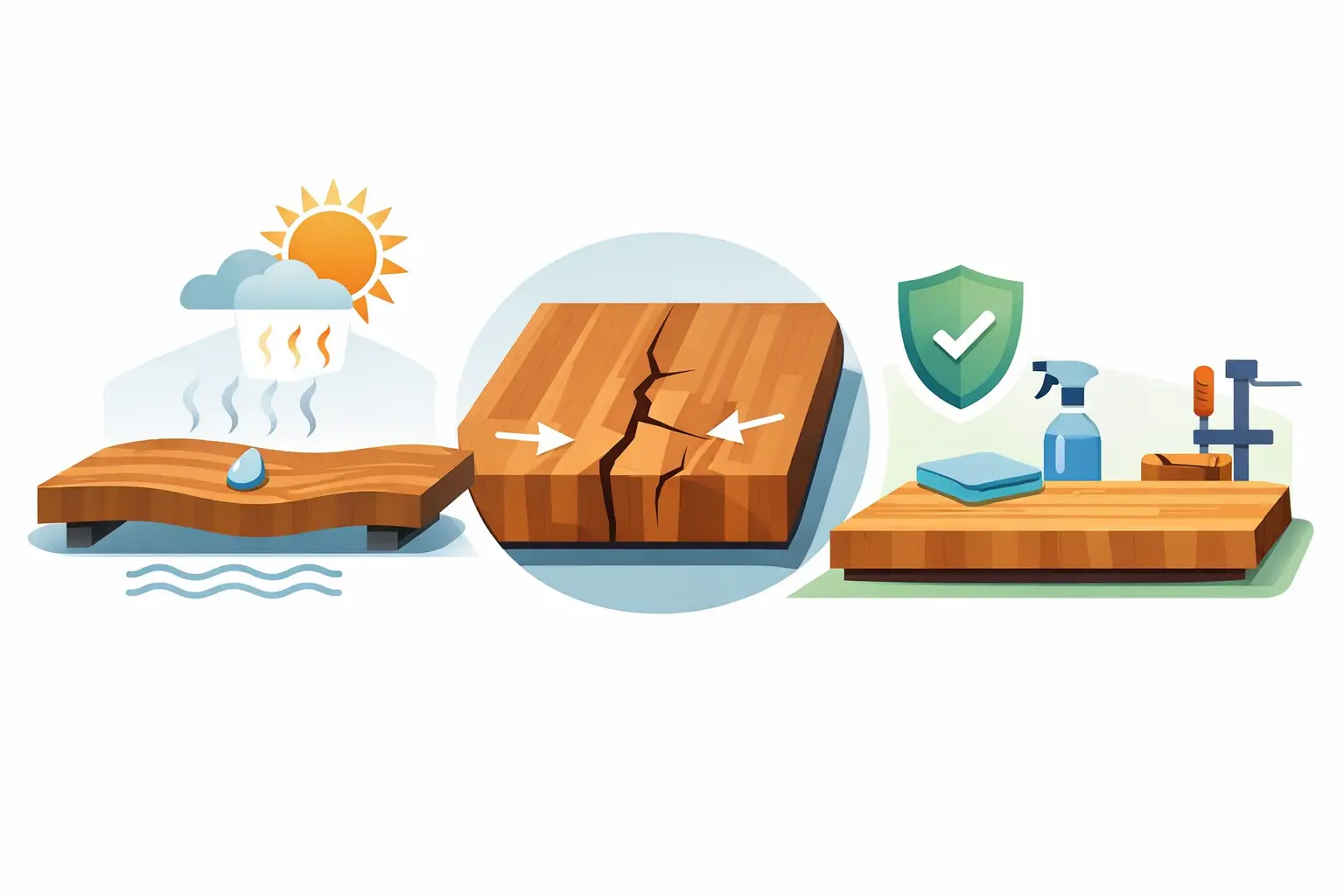
A solid wood countertop can arrive flat, look beautiful for years, and still react to a damp cabinet, a leaking dishwasher, or a newly dry winter house. So, can butcher block warp? Yes – but warping is not inevitable, and it is usually preventable when the wood is built, finished, installed, and cared for correctly.
Butcher block is real wood, not a printed surface over particleboard. That is exactly why it has warmth, character, and a long service life. It also means it responds to changes in moisture. Knowing what movement is normal and what signals a problem helps you protect a custom countertop, island top, table, shelf, or cutting board before a small issue becomes a major repair.
Why Can Butcher Block Warp?
Wood expands as it takes on moisture and contracts as it dries. It does not move evenly in every direction. Most movement happens across the width of the boards, not along their length. When one face of a butcher block gains or loses moisture much faster than the other, that imbalance creates stress. The wood may cup, bow, twist, or develop a slight crown.
A little seasonal movement is normal. A wide countertop may expand and contract slightly through the year as humidity changes. A properly made and installed top has room for that movement, so it remains functional and visually flat. Warping occurs when the wood is restrained, exposed unevenly, or pushed beyond what its construction can accommodate.
The most common form is cupping, where the edges rise while the center dips, or the center rises while the edges fall. Bowing is a curve along the length of the top. Twisting is less common in a well-made butcher block, but it can happen when moisture exposure is severe or the piece was not supported correctly.
The Conditions That Cause Butcher Block to Move
The biggest culprit is unbalanced moisture exposure. A countertop that is sealed carefully on the top face but left raw underneath can absorb humidity or water vapor from below. The same problem can happen when the underside is sealed but the top is repeatedly soaked around a sink.
Kitchen leaks deserve quick attention. Water from a faucet base, dishwasher steam, a loose drain connection, or a wet sponge left against a backsplash can work into the wood over time. Standing water is especially tough on end grain and cutouts around sinks, faucets, and cooktops. Wipe spills promptly, and do not let wet dish towels live on the same spot day after day.
Dry indoor air can cause trouble too. In many US homes, winter heating lowers relative humidity enough to pull moisture from wood. If the room swings from very humid summers to extremely dry winters, a butcher block can move more than it would in a climate-controlled space. That does not mean solid wood is a poor choice. It means the top needs a finish and installation method suited to a living material.
Heat creates another risk. Placing a hot pan directly on wood can damage the finish and dry a small area too quickly. Dishwashers and ovens can also send heat and steam toward nearby countertop edges. Use trivets, maintain appliance seals, and make sure exposed edges near heat-producing appliances have an appropriate protective finish.
Construction and Installation Matter as Much as Care
A quality butcher block begins with properly dried lumber and thoughtful grain selection. Individual staves are glued into a panel, then flattened and sanded. Good craftsmanship reduces internal stress before the piece ever reaches your home. Still, no shop can make genuine wood completely motionless in every environment.
The finish matters because it slows moisture exchange. It does not turn wood into plastic, nor should it. A countertop should be finished on all sides, including the underside, edges, sink cutouts, and any holes drilled during installation. For food-prep surfaces, a penetrating oil-and-wax system is a popular choice, but it needs regular renewal. For a bar, desk, table, or non-food-prep counter, a durable film finish may offer more resistance to water and daily wear.
Installation is where otherwise beautiful tops can get into trouble. Butcher block should be secured in a way that holds it in place while allowing it to expand and contract across its width. Screws through elongated holes, tabletop fasteners, or purpose-made countertop brackets can provide that flexibility. A top that is glued rigidly to cabinets or screwed tightly through round holes with no allowance may split, bow, or push against walls as seasons change.
Support matters as well. Base cabinets should be level and flat. Long spans, overhangs, and areas around sink cutouts need the right support for the thickness and design of the top. A countertop forced onto uneven cabinets can appear warped when the real issue is the cabinet run beneath it.
How to Prevent Butcher Block Warping
The best prevention starts before installation. Let a new butcher block acclimate indoors in the room where it will be installed. Keep it flat, supported, and away from direct heat, moisture, or concrete floors. The goal is to let the wood adjust to the home before it is fastened in place.
Once installed, maintain both the finish and the environment. For oil-finished tops, reapply conditioner when water stops beading and begins soaking in. The schedule depends on use, cleaning habits, sunlight, and indoor humidity. A busy kitchen prep surface may need attention more often than a lightly used island.
Clean with a lightly damp cloth and mild soap when needed, then dry the surface. Avoid soaking the wood, harsh cleaners, and leaving wet items against it. If a sink is installed in the top, inspect caulk, plumbing connections, and the finish around the cutout regularly. Those few minutes of maintenance can protect a custom surface for years.
For the most stable conditions, aim for reasonably consistent indoor humidity. You do not need a laboratory-controlled house. Avoiding extreme, prolonged swings is what counts. A humidifier in a very dry winter home or better ventilation in a damp kitchen can make a real difference.
Can a Warped Butcher Block Be Fixed?
Sometimes. The right repair depends on the type of movement, the cause, and how long it has been present. A mild cup caused by a temporary moisture imbalance may improve after the top is removed from the moisture source and allowed to equalize slowly in a conditioned space. Do not try to force it flat with heavy weights or excessive heat. That can add stress, damage the finish, or create new cracks.
If a top is installed too tightly, correcting the attachment method may relieve the pressure. If uneven cabinets are the issue, shimming or repairing the base can bring the surface back into plane. A professional may be able to flatten a thicker top by removing material and refinishing it, although that is not always practical around installed sinks, seams, or backsplashes.
Severe twisting, deep cracking, delamination, or water damage around a sink may call for a more involved repair or replacement. The key is finding the moisture or installation problem first. Flattening a top without addressing a leak, raw underside, or rigid fastening only sets it up to move again.
What to Look for When Ordering a Custom Top
A made-to-order butcher block gives you the chance to plan for the actual conditions in your home. Share the final dimensions, intended use, sink or cooktop cutouts, overhang requirements, and whether the surface will be used for food prep. Those details help determine the right species, thickness, finish, and support plan.
At Tooill Cabinets, handcrafted wood surfaces are built for real homes, not a one-size-fits-all shelf. Clear measurements and a thoughtful installation plan are part of getting the durability and appearance you expect from solid wood.
Wood movement is not a defect in butcher block. It is proof that you chose a genuine, hardworking natural material. Give it balanced protection, proper support, and a little routine care, and it can stay flat, useful, and beautiful through many seasons of family life.