
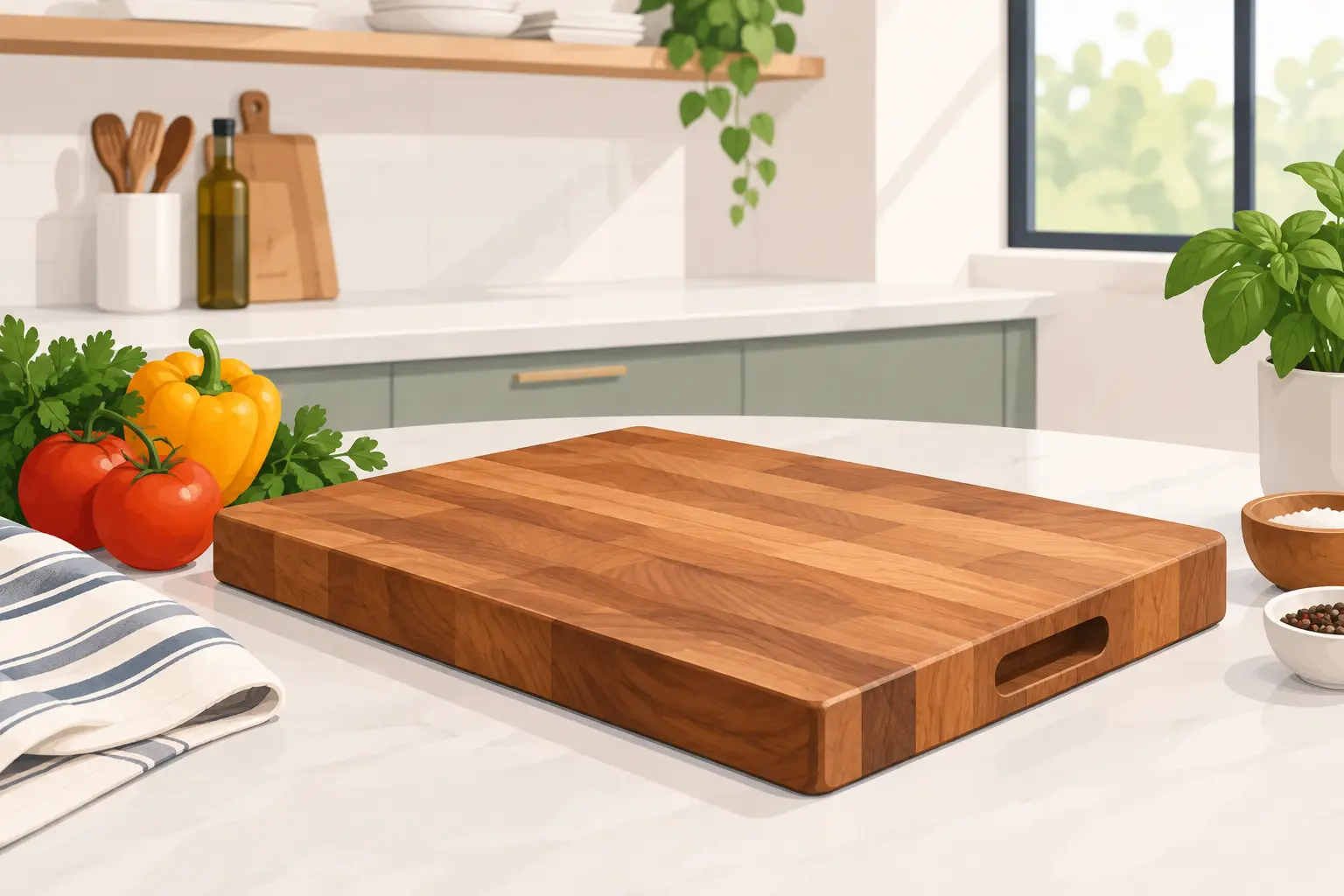
A cutting board gets judged fast in a real kitchen. It either stays put while you slice tomatoes, gives you enough room to prep dinner, and cleans up easily, or it becomes the board you avoid reaching for. This custom cutting board review looks past the first impression to the details that determine whether a made-to-order board earns its place on your counter.
A custom board is not automatically better because it is handmade or because it carries a name. The value comes from choosing the right wood, construction, dimensions, and finish for how you actually cook. When those choices are right, a solid wood board can be both a hardworking kitchen tool and a piece you are proud to leave out.
What a Custom Cutting Board Should Deliver
The biggest advantage of custom work is fit. Store-bought boards are built around standard packaging and shelf sizes. A custom board can be sized for the prep space between your sink and range, made to sit over a particular section of countertop, or designed as a substantial carving board for weekend meals.
That extra intention matters. A board that is too small creates a crowded work area, while an oversized board can be heavy enough that it stays in the cabinet. The best size is usually the largest one you can comfortably lift, wash, and store. For daily chopping, many home cooks appreciate a board with enough surface for vegetables, proteins, and a chef’s knife without constantly sweeping ingredients into a bowl.
Custom sizing also makes sense for gifts and special-use boards. A board for a bread station, outdoor grill, charcuterie spread, or holiday carving setup does not need the same dimensions or features as an everyday prep board. Asking for the board’s intended use before selecting a size prevents a lot of second-guessing later.
Wood Choice Is More Than a Color Decision
Hardwood is the standard for a reason. It is durable, naturally attractive, and forgiving on knife edges compared with glass, stone, or ceramic surfaces. But not every hardwood performs the same way, and the color you like may not be the best match for your routine.
Maple remains a dependable choice for a clean, classic kitchen look. It is light in color, dense, and well suited to regular food prep. Walnut brings deeper brown tones and stronger visual contrast. It is a favorite for homeowners who want a board that can double as countertop decor or a serving piece. Cherry starts warmer and develops a richer tone as it ages, which appeals to buyers who enjoy wood with character.
The practical trade-off is visibility. Knife marks and dark food stains show differently on light and dark species. Maple may reveal marks sooner, especially in a busy kitchen, while walnut can disguise them better. Neither outcome means the board is failing. A well-used wood board develops a working patina, and light resurfacing can refresh it when needed.
Look for responsibly selected hardwoods and avoid boards made from unidentified softwood or thin decorative veneer. Soft woods dent easily, and veneer cannot be sanded and renewed in the same way that solid wood can. With a made-to-order board, it is worth confirming that the cutting surface is solid hardwood rather than a thin finish layer over a manufactured core.
Edge Grain or End Grain? Choose for the Job
Construction changes both the appearance and the feel of a cutting board. Edge-grain boards are made by joining long boards so the side grain forms the work surface. They are strong, attractive, and typically lighter than end-grain boards of the same size. For most home kitchens, edge grain is an excellent balance of durability, cost, and manageable weight.
End-grain boards show the ends of wood fibers on the surface, often in a checkerboard-style pattern. They are thicker, heavier, and highly regarded for knife work because the blade passes between fibers rather than cutting across them. A quality end-grain board can feel substantial and perform beautifully, particularly for frequent chopping.
That does not make end grain the automatic winner. It costs more, takes up more space, and can be inconvenient if you need to move the board to the sink after every meal. If you cook every day and want a centerpiece board that stays on the counter, end grain can be a worthwhile upgrade. If you want a versatile board you can grab, clean, and put away with one hand, edge grain may suit you better.
The Details That Separate a Good Board From a Great One
A custom board should be evaluated from the bottom up, not just from the top surface. Thickness matters because it affects stability and long-term durability. A thin board can be perfectly useful for light tasks, but a thicker hardwood board feels more secure during heavy chopping and is more forgiving if it ever needs to be resurfaced.
Feet are another practical choice. Non-slip rubber feet keep a board stable and lift it off the counter, allowing airflow beneath it. They are useful for a dedicated prep board, especially on smooth stone or quartz counters. The downside is that feet prevent you from using both sides. A reversible board offers two working surfaces and is often better for buyers who want one side for produce and another for raw proteins.
Juice grooves are helpful for carving meats, slicing ripe fruit, or working with anything that releases liquid. They keep runoff from reaching the counter, but they also reduce flat cutting area and require a little more attention during cleaning. On a small board, a groove may take away too much usable space. On a larger carving board, it can be one of the most useful features available.
Handle cutouts make a heavy board easier to carry without interrupting the clean look of the top. Personalized engraving can turn a board into a meaningful gift, but placement is worth discussing. A name or message looks best in an area that will not receive repeated knife work. The board should still be built first as a functional surface.
Finish, Food Safety, and Everyday Care
A cutting board finish should protect the wood without creating a hard film that can chip under knife use. Food-safe mineral oil and board conditioners are common choices because they soak into the wood and are easy to renew. The board should arrive ready for use, but it will need occasional care as it settles into your kitchen.
Wash a wood board by hand with mild soap and warm water, then dry it upright or on edge. Do not soak it, leave it in standing water, or put it through the dishwasher. Excess moisture is the real enemy of a wood board because it can cause swelling, warping, or separation at glue joints.
How often should you oil it? Let the wood tell you. If the surface looks dry, feels rough, or absorbs water immediately instead of beading it briefly, it is time for conditioner. In a busy kitchen, that may be every few weeks. In lighter use, it may be every month or two. Consistent, simple maintenance does more for a board’s lifespan than any complicated care routine.
What to Ask Before Ordering a Custom Board
A made-to-order purchase works best when the builder has clear information. Share the space available, how you plan to use the board, and whether you want it to live on the counter or store in a drawer. If it needs to fit a specific opening or work alongside a butcher block countertop, measure twice and provide the finished dimensions you need.
Ask about species, finished thickness, grain orientation, edge treatment, feet, grooves, and the expected lead time. For a gift, confirm the engraving details early and allow room in the schedule for handmade production. Good communication is part of the product when something is built specifically for your home.
At Tooill Cabinets, that conversation is central to the process. A cutting board should not feel like a compromise pulled from a warehouse shelf. It should feel considered, solid in your hands, and built around the way you cook.
The right board will collect small signs of use over time: a softened finish, faint knife marks, and the easy familiarity of a tool that has seen hundreds of meals. Choose one made from honest hardwood, sized for your space, and cared for with a little consistency. It will do far more than protect your countertops.