
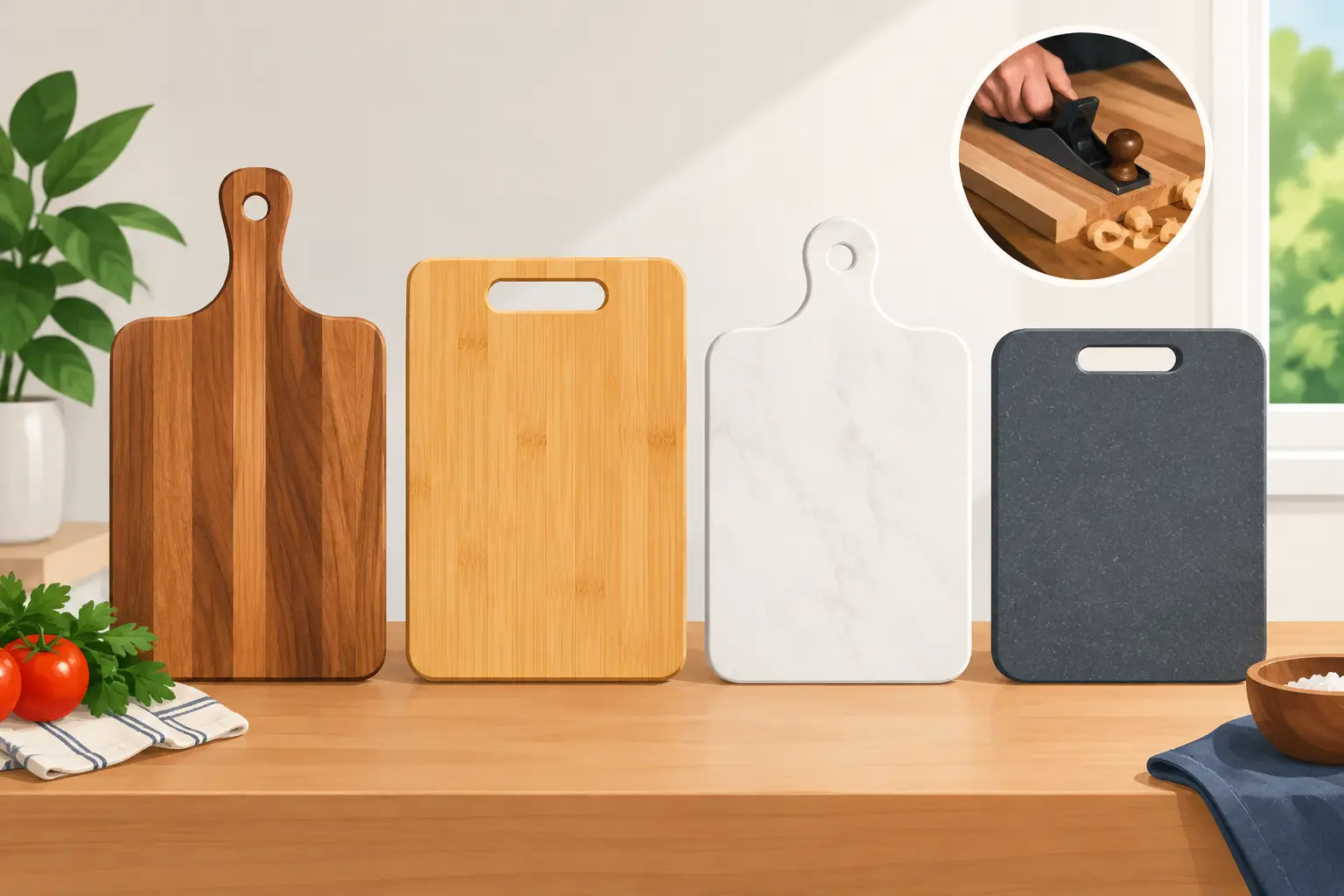
A cutting board earns its keep the hard way: under sharp knives, wet produce, hot pans set down too quickly, and daily cleanup. So, which cutting board lasts longest? For most home kitchens, a well-made hardwood board – particularly thick maple, walnut, or cherry – has the best chance of serving you beautifully for decades when it is properly cared for.
That answer comes with a practical caveat. The longest-lasting board is not simply the hardest material on a store shelf. It needs to resist deep cuts, stay stable through changing humidity, treat knives well, and be repairable when normal kitchen wear shows up. Solid wood does all four better than most alternatives.
Which Cutting Board Lasts Longest in a Real Kitchen?
A quality hardwood cutting board generally outlasts bamboo, thin plastic, and most composite boards because it can be maintained and renewed rather than discarded. Small knife marks can be sanded, a dry surface can be re-oiled, and a board that has seen years of use can often be refinished to look remarkably fresh.
Hard maple is the classic workhorse. Its fine, closed grain gives it excellent durability without being excessively hard on knife edges. Walnut is slightly softer, but it is still a strong, dependable hardwood with rich color and a forgiving cutting surface. Cherry performs well too, with a warm tone that deepens naturally over time.
For a board intended for regular chopping, a thick solid-wood build matters as much as the species. A board around 1 1/2 inches thick has the mass to lie flat, absorb everyday use, and be refinished more than once. Thin boards have less material to work with and are more likely to warp when exposed to moisture on one side.
Why Hardwood Boards Keep Going
Wood has a quality that manufactured cutting surfaces cannot fully match: it can recover from use. Knife cuts compress and separate wood fibers, but many shallow marks become less noticeable with washing, oiling, and time. When the surface eventually looks worn, a light sanding and food-safe finish can give the board another chapter.
That does not mean every wood board will last forever. Construction matters. A board made from properly dried lumber, carefully glued, sanded smooth, and finished with food-safe mineral oil is built for the kitchen. A cheaply made board with rushed glue joints or poorly dried stock may crack, cup, or separate no matter what species is printed on the label.
Grain orientation also affects service life. Edge-grain boards, built with the long side of the boards facing up, are durable, attractive, and often a practical choice for daily home use. End-grain boards show the cut ends of the wood on the surface, creating a checkerboard-like appearance. They are exceptionally kind to knives because the blade slips between fibers instead of cutting across them. They are also thicker, more labor-intensive, and usually more expensive.
An end-grain butcher block can last a very long time in a committed cook’s kitchen, but it asks for regular oiling and careful drying. For many households, a well-built edge-grain maple or walnut board offers the best balance of longevity, cost, appearance, and low-maintenance ownership.
Maple, Walnut, and Cherry: The Best Long-Term Choices
Hard maple is a favorite for good reason. It is light in color, dense enough to handle busy prep work, and traditionally used for butcher block surfaces. It suits kitchens where a clean, classic look is the goal and where the board will see plenty of chopping.
Walnut brings a darker, more dramatic look to the counter. It is durable enough for a serious cutting board while being a little gentler on knives than maple. It can show light flour and dried residue more easily than maple, but many homeowners choose walnut because it looks at home in both modern and traditional kitchens.
Cherry lands between those two in color and hardness. It starts with a warm reddish tone and matures into a deeper, richer color with exposure to light. Like walnut, it makes a handsome long-lasting board when it is built from solid stock and maintained well.
How Other Cutting Board Materials Compare
Plastic boards have one clear advantage: they are easy to sanitize in a dishwasher. In commercial settings, color-coded plastic boards can also help prevent cross-contamination. But plastic develops deep grooves over time, and those grooves are difficult to fully clean. Once a plastic board is heavily scarred or warped, replacement is usually the only sensible option.
Bamboo is often marketed as a durable, sustainable choice. It is hard and can resist surface marking, but hardness is not the whole story. Bamboo boards are made from narrow strips bonded together, and quality varies widely. Lower-quality versions can split at seams, feel harsh on knife edges, and become rough as they age. Bamboo can be a good budget board, but it is not usually the longest-lived choice for a kitchen that cooks every day.
Composite boards, often made with wood fiber and resin, resist staining and can handle a dishwasher better than wood. They are useful for quick prep and cleanup, especially around raw meat. The trade-off is that their hard surface can dull knives faster, and they cannot be sanded and restored the way solid wood can. They may last a long time structurally, but they do not age as gracefully.
Glass, marble, and ceramic boards may look clean and stylish, but they are poor choices for active knife work. They are unforgiving on knife edges, slippery for some tasks, and offer no advantage in long-term performance once you factor in the knives they damage.
The Care That Decides a Board’s Lifespan
Even the best hardwood board needs the right routine. Wash it by hand with mild soap and warm water, then dry it right away. Do not soak it in the sink, run it through the dishwasher, or leave it standing in pooled water. Wood absorbs moisture unevenly, and that is what leads to warping and cracking.
Apply food-grade mineral oil when the board looks dry or feels rough. In a frequently used kitchen, that may mean every few weeks at first and then monthly or as needed. Oil slows moisture movement, helps prevent stains, and keeps the wood from becoming brittle. A board conditioner with mineral oil and beeswax can add a little extra surface protection, but it should not replace regular oiling.
Use both sides of the board when possible. This simple habit helps it age evenly. Keep it away from direct heat, avoid placing hot cookware on it, and let both faces get air after washing. If it develops light fuzziness or shallow knife marks, a gentle sanding followed by fresh oil can restore the surface.
A few warning signs call for closer attention. A deep crack that reaches through the board, a loose glue joint, persistent warping, or a surface that cannot be cleaned effectively may mean it is time for repair or replacement. A good solid-wood board, though, rarely needs to be retired because of ordinary cosmetic wear.
Choosing a Board Built for Your Kitchen
The right board should fit the way you prep food and the counter space you actually have. A small board is convenient for fruit, sandwiches, and quick jobs, but it will feel crowded during dinner prep. A larger board gives you room to chop safely and can double as a serving piece, provided you have a place to store it.
Look for a board that is thick enough to stay planted, smooth without feeling slick, and sized for your sink and work area. Details such as softened edges, handholds, juice grooves, and custom dimensions are not just decorative. They can make a board easier to use every day, which means it is more likely to receive the care that keeps it around.
At Tooill Cabinets, handmade hardwood cutting boards are built with the same attention to material selection and fit that goes into custom wood surfaces. The goal is not a disposable kitchen accessory. It is a useful piece of craftsmanship made for the meals, gatherings, and everyday routines that happen around your counter.
If you want a board that will still look and work well years from now, choose solid hardwood, buy the best construction your budget allows, and give it a few minutes of care each month. The marks it gathers will not be flaws. They will be proof that it has become part of your kitchen.