
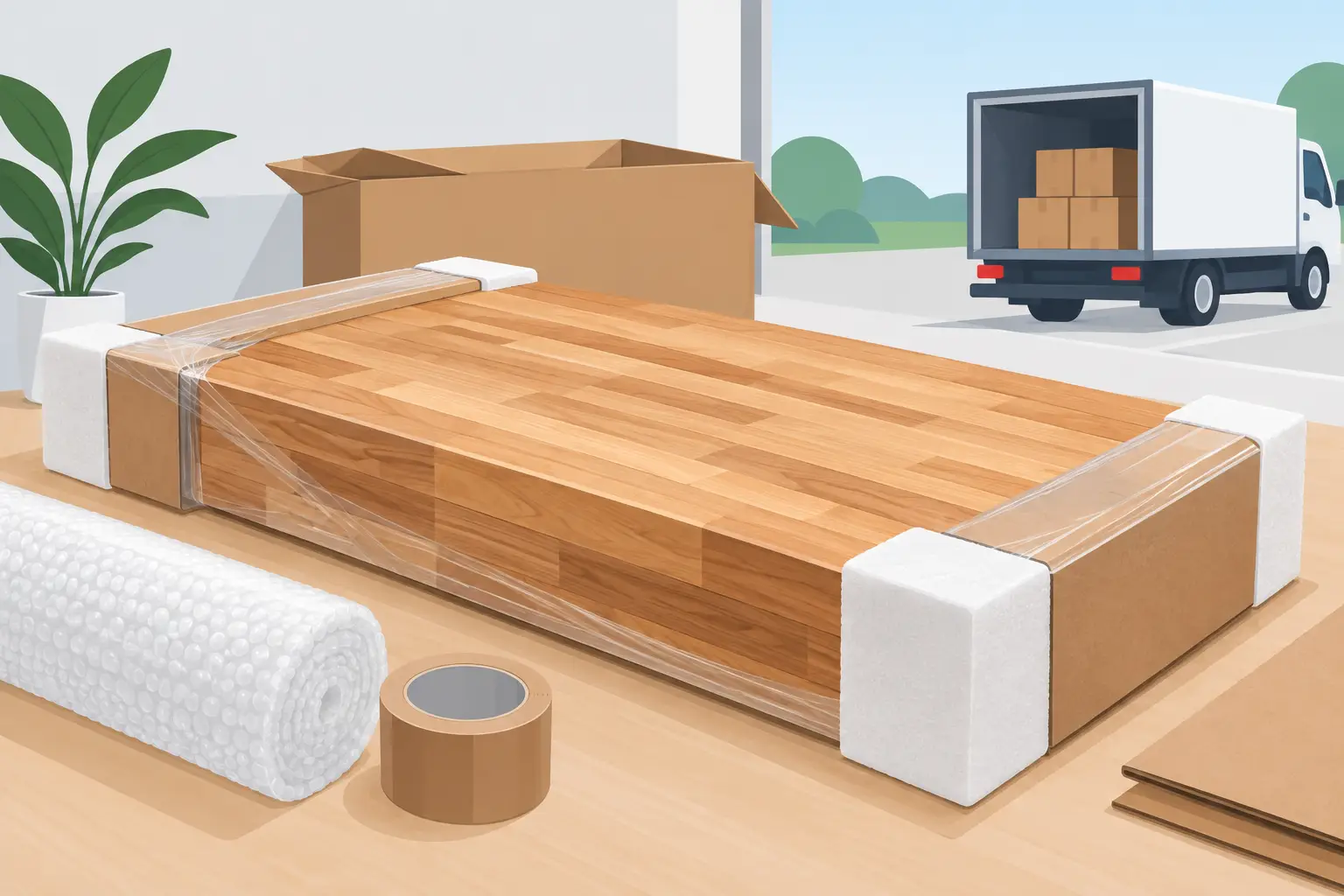
A butcher block countertop may look like a simple wood slab, but shipping one safely takes more than cardboard and a shipping label. If you are learning how to ship butcher block countertop pieces, the goal is to protect the wood from impact, moisture, flexing, and careless freight handling from the moment it leaves the shop until it reaches the home.
A properly built countertop is heavy, valuable, and often made to exact customer measurements. One damaged corner or a warped panel can delay an entire kitchen project. Careful packaging protects the piece, but it also protects the experience a homeowner expects when they order a handcrafted wood surface.
Start With a Fully Prepared Countertop
Never package a countertop immediately after applying finish. Oil, hardwax oil, polyurethane, or other protective coatings need adequate cure time before the piece is wrapped. Packaging a surface too early can trap odors, imprint packing material into the finish, or leave marks where padding touches the wood.
Before shipment, inspect the top under good lighting. Check for dents, scratches, glue squeeze-out, uneven edges, and finish inconsistencies. Confirm the final dimensions, wood species, edge profile, thickness, and any custom cutouts against the order. This is also the right time to photograph the countertop from all sides, including close-ups of corners and edges.
Wood moves with changes in humidity, so the countertop should be acclimated in a reasonably stable shop environment before it ships. That does not mean wood will never move in transit or after installation. It means you are sending a dry, finished piece that has been given the best possible start.
Protect the Surface Before Building the Package
The first layer should protect the countertop without scratching or staining it. Cover finished faces with a clean, non-abrasive barrier such as kraft paper, foam sheeting, or protective wrap suitable for finished wood. Avoid putting tape directly on the countertop, especially on freshly finished surfaces.
After the surface layer is in place, add corner protection. Corners take the hardest hits during loading, unloading, and delivery. Heavy cardboard corner guards can work for smaller tops, while rigid foam or custom wood corner blocks provide better protection for larger and heavier pieces.
Next, wrap the countertop in multiple layers of cushioning. The package should resist impact, but it should not allow the slab to slide around inside. A heavy butcher block needs firm support around the perimeter and across the face. Loose bubble wrap alone is not enough for a countertop that may weigh well over 100 pounds.
For a simple shipment, the packing sequence often looks like this:
- A clean protective layer against the finished wood
- Reinforced corner and edge protection
- Dense foam or corrugated cushioning around the full piece
- A rigid outer carton, wood frame, or crate
- Exterior strapping and clear handling labels
The exact materials depend on the size, weight, value, and destination of the countertop. A small desktop or narrow bar top may ship securely in a reinforced carton. A large island top deserves a stronger solution.
When to Crate a Butcher Block Countertop
Crating is one of the most reliable ways to ship a custom countertop, particularly when the piece is oversized, thick, unusually shaped, or traveling by freight. A crate prevents the slab from flexing and gives forklifts, pallet jacks, and carrier crews something durable to handle.
A good crate is not just a wooden box. It should support the countertop evenly, keep it from shifting, and leave enough clearance that an outside impact does not transfer directly to the wood. Interior blocking should hold the countertop in place without putting pressure on vulnerable corners or finished edges.
For long countertops, add support points so the piece cannot bow under its own weight. This matters with solid wood because even a strong top can be damaged if it is stored improperly in transit. The countertop should be supported flat across its length or secured upright in a purpose-built crate that prevents flexing.
Palletizing can also be appropriate. If using a pallet, choose one that is wider and longer than the packaged countertop. Nothing should hang over the edge where it can be struck or crushed. Strap the crate securely to the pallet and use stretch wrap only as a secondary measure, not as the main source of protection.
Choose the Right Carrier and Service
Carrier choice is a practical decision, not an afterthought. Parcel carriers may work for compact pieces that meet their size and weight limits. Larger countertops are usually better suited to LTL freight, meaning less-than-truckload shipping. Freight costs more than a standard parcel label, but it gives a large custom top a more appropriate path to its destination.
When arranging freight, be clear about the shipment’s dimensions, total weight, residential delivery needs, and whether liftgate service is required. Many homeowners do not have a loading dock or forklift. A liftgate delivery lowers the pallet from the truck to ground level, but it does not always mean the driver will carry a crate into a garage or home.
Set expectations before the order ships. Let the customer know whether the delivery will be curbside, what equipment may be needed, and how many people should be available to move the countertop. A solid wood island top is not a one-person lift, and planning ahead prevents a stressful delivery day.
Label the Shipment for Real-World Handling
Clear labels help, even though labels cannot replace a strong crate. Mark the package with the recipient’s name, phone number, delivery address, package weight, and any tracking or order number. Add visible labels such as “Fragile,” “Do Not Stack,” “This Side Up,” and “Keep Dry” where appropriate.
Use “Do Not Stack” carefully. It communicates that the shipment should not carry another load on top of it, but carriers cannot guarantee perfect handling. The package itself still needs enough strength to withstand the realities of a freight terminal.
It is smart to place a duplicate shipping label and order information inside the crate or carton. If the exterior label is torn or wet, the carrier has another way to identify the shipment. For high-value custom work, include handling instructions and a simple unpacking note for the customer as well.
Insure It and Document Everything
Custom woodwork is not easily replaced with an off-the-shelf item. If damage occurs, the replacement process may involve new material, shop time, finishing, packaging, and reshipping. Use declared value coverage or shipping insurance that reflects the true replacement value of the countertop, not only the original freight cost.
Take photos before wrapping, after wrapping, and after the countertop is loaded into its crate or carton. Photograph the sealed package from every side, including labels and straps. Keep measurements, weight records, shipping receipts, and tracking details with the order file.
These records are helpful if a claim is needed, but they also help answer customer questions quickly. For a made-to-order countertop, clear communication is part of the craftsmanship. The customer should know when the piece ships, how it will arrive, and what to do if the crate shows obvious damage.
Give Customers a Delivery Inspection Plan
Ask customers to inspect the outside of the package before signing for freight delivery. If there is a puncture, crushed corner, broken crate board, water damage, or visible impact, they should photograph it and note the damage on the delivery receipt. A clean signature without comments can make a freight claim more difficult later.
If the packaging looks intact, the countertop should still be unpacked as soon as practical. Customers should inspect the face, underside, corners, and edges before moving forward with installation. It is best to keep all packaging until the piece has been checked and the delivery is confirmed.
For heavier tops, remind customers to lift rather than drag. Dragging a countertop across concrete, a truck bed, or a garage floor can damage the finish and put stress on the edges. Two or more capable people, padded supports, and a clear path into the home make a major difference.
Shipping Custom Woodwork Is Part of the Build
At Tooill Cabinets, we treat protective packaging as part of delivering a handcrafted countertop, not a separate last step. The same attention given to grain selection, glue-up, sanding, and finishing should carry through to the crate, carrier plan, and delivery communication.
The best shipping method depends on the countertop’s size, weight, finish, and destination. What never changes is the standard: build the protection around the piece, choose transportation that fits the job, and make sure the homeowner knows what to expect when their custom wood surface arrives.