
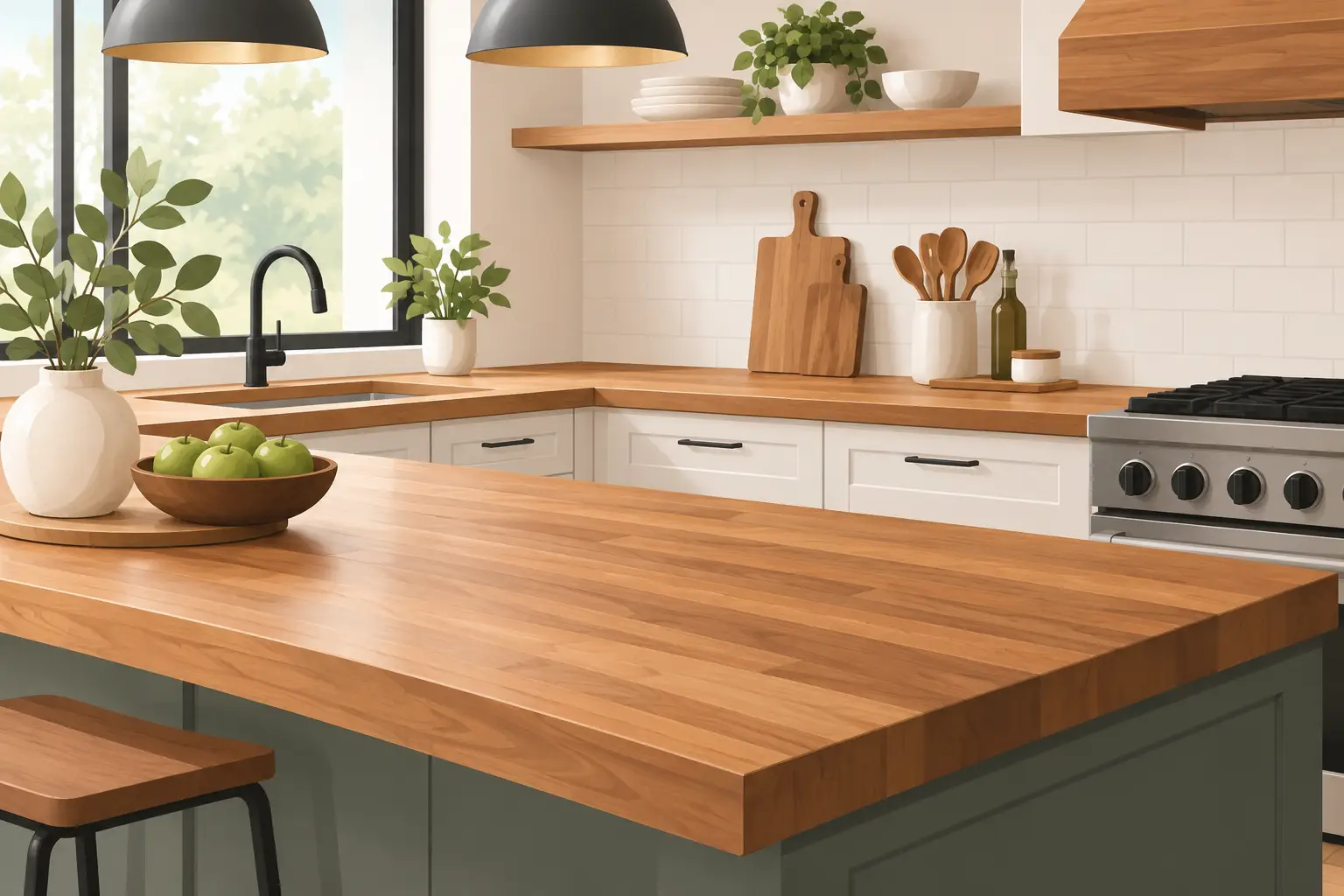
A kitchen can have beautiful cabinets, expensive appliances, and perfect tile, then still feel flat because every surface is hard, cold, and manufactured. That is why kitchen wood countertop trends continue to gain ground with homeowners who want a room that feels lived-in, useful, and genuinely theirs. A well-made wood top brings warmth immediately, but it also has to earn its place through daily prep, spills, homework, entertaining, and all the small routines that happen around the kitchen.
The strongest trend is not one particular species or stain color. It is choosing a real wood surface that fits the way the kitchen works. Custom dimensions, natural color variation, durable finishes, and purposeful placement are shaping the best wood countertop projects right now.
Kitchen Wood Countertop Trends Moving Beyond the Showroom Look
For years, many kitchens chased a perfectly matched, nearly sterile look. Current designs are more comfortable with contrast. Homeowners are pairing wood with painted cabinets, stone perimeter counters, matte hardware, and handmade-looking tile. The goal is not to make every material match. It is to make the room feel balanced.
Wood works especially well as a visual break in kitchens with white, gray, black, or deep green cabinetry. A walnut island top can add depth to a light kitchen. Maple can keep a darker cabinet color from feeling too heavy. White oak offers a relaxed, natural look that works across modern farmhouse, Scandinavian-inspired, transitional, and contemporary spaces.
This shift also favors visible grain and honest variation. Wood is not supposed to look printed or identical from board to board. Knots, mineral streaks, and changes in tone are part of the character. The key is setting expectations before the piece is built, especially when ordering a custom top. A handcrafted surface should look intentional, not artificially uniform.
Warm, Natural Wood Tones Are Replacing Cool Gray Stains
Cool gray finishes had their moment, but warm wood is now setting the tone in many kitchen renovations. That does not mean every countertop needs to be dark. It means homeowners are letting the natural color of the species show through rather than covering it with a heavily tinted stain.
White oak remains popular for its subtle grain and soft golden undertones. Maple offers a clean, light appearance with a smoother grain pattern, making it a practical choice for bright kitchens. Walnut delivers a rich brown color that feels tailored and substantial, particularly on an island or bar area. Cherry develops more depth over time, which appeals to buyers who want a surface that becomes more personal with age.
The right species depends on the kitchen’s lighting, cabinet color, and how much contrast you want. A dark walnut top can be a standout against creamy painted cabinets, but it may feel too heavy in a small kitchen with limited natural light. A lighter maple or white oak surface can open up that same room while still giving it warmth.
Clear finishes let the material do the work
A clear protective finish is one of the most practical ways to follow this trend without chasing a color that may feel dated in a few years. It allows the grain to remain the focus and makes future design changes easier. If cabinets are repainted or hardware is swapped later, a natural wood top usually still belongs in the room.
Oil finishes create a more natural, low-sheen appearance and can be renewed as needed. Film-forming finishes generally provide more protection against stains and moisture, though repair methods differ. Neither is automatically better. The right choice comes down to whether the top is a food-prep surface, a dining area, a laundry folding counter, or an island used for everything.
Custom Sizing Is Becoming the Real Luxury
The most useful kitchen wood countertop trend is also the least flashy: made-to-order sizing. Homeowners are done trying to make a standard retail slab work around an awkward wall, an off-center cabinet run, or a shallow pantry niche.
Custom fabrication lets a countertop fit the actual space. That can mean a narrow coffee bar, a deep island overhang, a wall-to-wall desk area, or a butcher block surface sized precisely for a base cabinet. Details such as thickness, edge profile, corner shape, cutouts, and overhang depth matter because they affect both the look and the everyday use of the piece.
A thicker top can give an island the presence of furniture, while a slimmer profile may be better for a compact worktop or a modern kitchen with clean lines. For seating areas, overhang needs should be discussed early so the top has proper support. If a countertop includes a sink or cooktop cutout, planning for movement in solid wood is also essential. Wood expands and contracts with seasonal humidity, so installation needs to allow the material to move naturally.
That is where direct communication with the maker matters. A custom countertop is not simply a product pulled from a shelf. It is a built piece that should reflect real measurements, installation conditions, and the intended use.
Wood Islands Are Taking Center Stage
Rather than installing wood across every counter, many homeowners are using it strategically. A wood island top is one of the most popular applications because it creates a strong focal point while leaving stone, laminate, or another low-maintenance material on the perimeter counters.
This approach gives homeowners the best of both materials. Stone can handle areas around a sink or range where standing water, acidic foods, and hot cookware are common. Wood gives the island warmth and makes it feel more like a gathering table than a work station. It is particularly effective in open kitchens where the island is visible from the living or dining room.
A wood-topped island also makes sense for households that use the kitchen for more than cooking. It becomes a place to roll dough, serve meals, help with schoolwork, or sit with coffee while someone cooks. A quality hardwood surface can take on those jobs gracefully, provided it receives the care appropriate to its finish.
Butcher Block Is Being Used With More Intention
Butcher block is still a favorite, but homeowners are choosing it with a clearer understanding of how they want to use it. An edge-grain butcher block shows long, continuous strips of wood and offers a classic, streamlined appearance. It is a versatile choice for countertops, islands, and work surfaces.
End-grain construction, which shows the ends of wood blocks on the surface, has a more distinct checkerboard look and is often chosen for dedicated chopping or baking areas. It can be an impressive feature, but it is not necessary for every kitchen. The visual style, budget, and maintenance preference all matter.
For a true food-prep surface, a renewable oil-and-wax treatment may be preferred because it can be refreshed in place. For a bar top or table-style island where cutting will not happen directly on the wood, a more protective finish may make better sense. Using the right finish for the job prevents disappointment later.
Handmade Details Matter More Than Perfect Uniformity
There is growing interest in kitchens that feel collected rather than copied from a catalog. That has brought more attention to live-edge accents, eased edges, softly rounded corners, and grain-matched panels. These details can make a countertop feel personal without turning the kitchen into a themed space.
A live edge is best used thoughtfully. It can look excellent on a breakfast bar, floating shelf, or waterfall-style feature, but a straight edge may be more practical where cabinets, appliances, or walls need a tight fit. Likewise, a square edge gives a crisp modern look, while an eased or round-over edge feels softer and more forgiving in a busy family kitchen.
The best handmade details support the architecture of the room. They should not compete with it. At Tooill Cabinets, that is the value of building to order: the surface can be shaped around the space instead of asking the space to settle for a standard slab.
What to Consider Before Choosing a Wood Countertop
Wood countertops are durable, but they are not maintenance-free. That is part of the honest trade-off. They can scratch, dent, darken slightly with age, and react to neglect. Many homeowners see that evolving character as a benefit, while others prefer a surface that stays visually unchanged.
Avoid leaving standing water around sinks, wipe up spills promptly, and use trivets for very hot cookware. Never assume a wood countertop is indestructible just because it is thick. Good fabrication, proper installation, and regular care all work together.
It also helps to think about placement before choosing material. A wood top beside a sink can work well with the right finish and careful use, but a full wood perimeter in a high-volume family kitchen asks more of the homeowner than a wood island or coffee station. There is no wrong answer, only the answer that fits your household.
Choose a species you enjoy seeing every day, a finish that matches how you will use the surface, and dimensions that solve a real problem in the room. When a wood countertop is built for your kitchen instead of squeezed into it, it does more than follow a trend. It gives the kitchen a surface with a purpose, a story, and a place in daily life.