
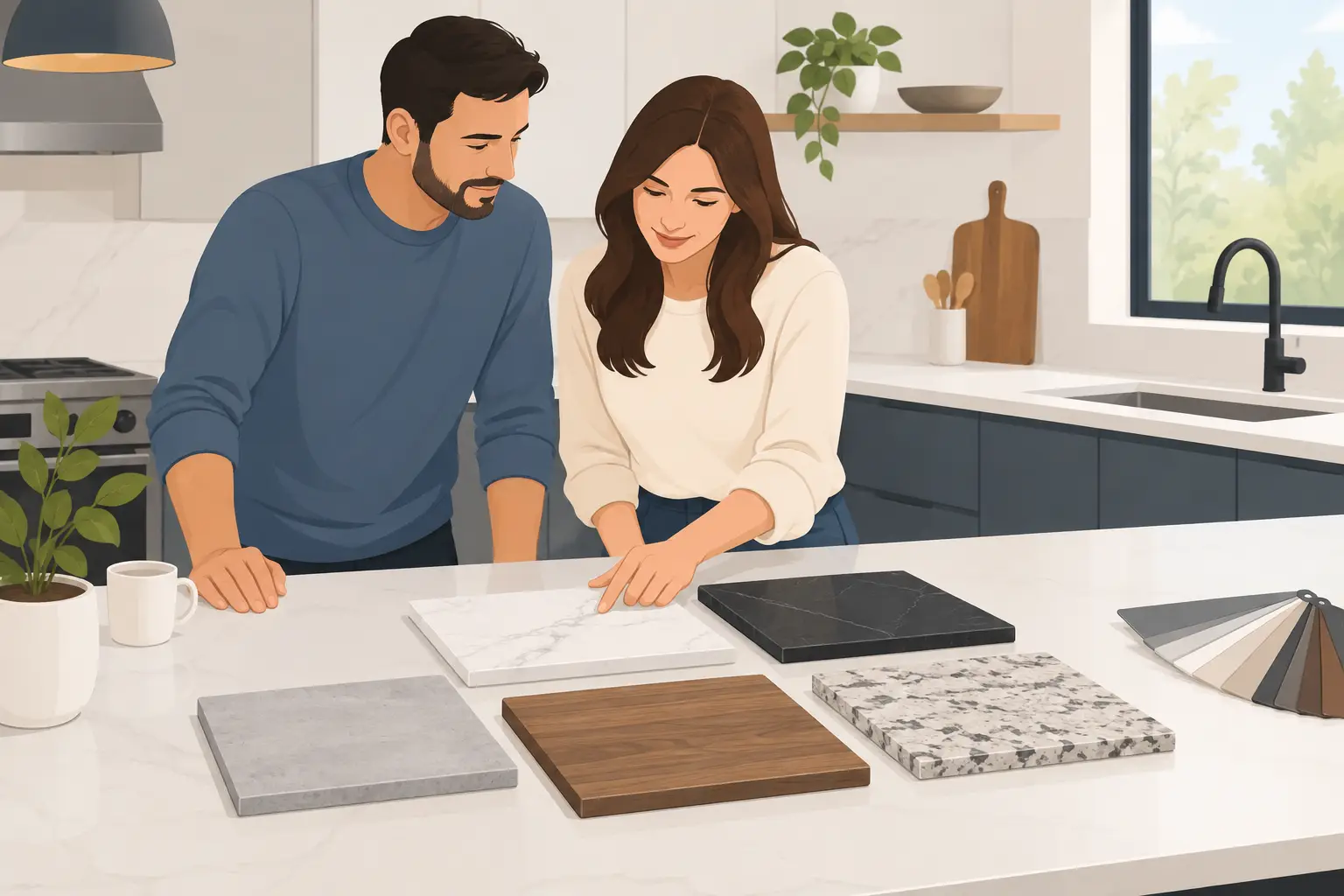
A countertop can be the piece that makes a kitchen island feel built for the room instead of dropped into it. The right wood top brings warmth, character, and a solid working surface to a kitchen, laundry room, desk, bar, or dining space. This custom countertop buying guide will help you make the decisions that matter before your top is built – from measuring and wood selection to finish, edge details, and installation support.
A made-to-order countertop is not a shelf pulled from a warehouse. It is built around your space, your use, and the look you want to live with for years. A little planning up front makes the ordering process simpler and helps ensure the finished piece fits the first time.
Start With the Space, Not the Wood Species
Most buyers begin by falling in love with a wood color or grain pattern. That is understandable, but the first job is confirming what the countertop needs to do. An island top that will see daily meal prep has different needs than a desk surface, a coffee bar, or a laundry folding counter.
Think about the surface beneath the top as well. Cabinets, legs, brackets, and bases all affect what dimensions and thickness make sense. A long overhang for stools needs proper support. A narrow cabinet run may call for a slimmer profile. If the countertop will sit over appliances, sinks, or drawers, those openings and clearances need to be accounted for before production begins.
Custom work is especially valuable when standard sizes create compromises. Maybe your wall is slightly out of square, your island base is an uncommon width, or you need a top that meets an existing backsplash cleanly. Exact sizing allows the countertop to belong in the room instead of forcing the room to work around it.
Measure Carefully and Account for Overhangs
Measure the finished cabinet base or support structure in several places, not just once in the middle. Walls are rarely perfectly straight, and cabinets can vary slightly from one end to the other. Record length, depth, and any cutout locations. If you are replacing an existing top, do not assume its dimensions are correct for the new installation.
Decide on overhang before placing an order. A small reveal around a cabinet base can give the piece a finished look, while a seating overhang needs to be planned around knee room and structural support. The deeper the unsupported overhang, the more likely you will need brackets, corbels, legs, or a substantial base.
For sink and faucet cutouts, confirm the exact model specifications before finalizing dimensions. A well-made wood countertop deserves a clean, intentional installation, and a few careful measurements prevent expensive last-minute changes.
Choose a Wood That Fits Your Style and Use
Solid wood has variation by nature. Grain direction, mineral streaks, knots, and color shifts are part of what make a handcrafted top different from a printed or mass-produced surface. The goal is not to find wood that looks identical from edge to edge. It is to choose a species whose natural character suits your home.
Hard maple is a popular choice for clean, bright kitchens and work surfaces. Its light color and fine grain work well with modern, farmhouse, and traditional spaces. Walnut offers deeper brown tones and dramatic grain, making it a strong choice for islands, dining tops, and statement counters. Cherry starts warmer and can deepen in color as it ages. Oak brings pronounced grain and dependable strength, while ash can offer a lighter look with visible pattern and texture.
There is no single best wood species. A busy family kitchen may benefit from a hard, forgiving species and a maintenance routine the household will actually follow. A bar top or decorative counter may give you more freedom to choose based on color and grain alone. If matching existing floors, cabinets, or furniture matters, view wood as a complement rather than expecting an exact match. Natural wood will always have its own personality.
Grain Construction Changes the Look
The way boards are arranged affects both appearance and function. Face grain shows the broad face of the boards and often creates a furniture-like surface with long, continuous visual lines. Edge grain uses narrower board strips and offers a classic butcher block look. End grain displays the ends of the wood fibers and creates a bold, block-pattern surface often associated with serious chopping blocks.
For most kitchen counters, islands, desks, and tables, face grain or edge grain provides the right balance of beauty, stability, and practical use. End grain is distinctive, but it is usually a more specialized choice. Consider where the top will live, how much visual movement you want, and whether you intend to cut directly on it.
Thickness, Edges, and Details Make It Look Built In
Thickness is not just a structural choice. It changes the visual weight of the entire room. A thinner countertop can look clean and tailored on a desk, vanity, or compact cabinet run. A thicker top creates a substantial, furniture-grade presence that works especially well on islands and dining tables.
The right thickness depends on span, support, overhang, and desired style. A thick top may be the right visual choice but still needs appropriate support underneath. Likewise, a thinner top can be strong when it is well supported across its length. Share details about your base, brackets, and intended use when requesting a custom quote.
Edge profiles are a smaller detail with an outsized impact. A simple eased edge gives the countertop a crisp, timeless finish without a sharp corner. A rounded edge feels softer in family spaces and high-contact areas. A more decorative profile may suit a traditional kitchen or furniture-style island, but simple profiles tend to age well across remodels and changing decor.
Also consider corners. Square corners keep a clean architectural look, while eased or rounded corners can be more comfortable in tight walkways or around children. These choices are worth making early because they affect the finished dimensions and installation plan.
Pick a Finish Based on How You Will Use the Top
The finish protects the wood, shapes its color, and determines the care routine. This is one area where the right answer truly depends on use.
A food-safe oil and wax finish is a natural fit for surfaces intended for direct food preparation or cutting. It brings out the grain beautifully and can be refreshed over time, but it requires regular care. Water, spills, and dry conditions all affect how often the surface may need oiling.
A protective film finish is often a better choice for a countertop used as a desk, bar, buffet, laundry counter, or decorative island surface. It creates a more sealed layer against everyday moisture and spills, with less frequent maintenance. It is not designed to be cut on directly, so use a separate cutting board for knives and heavy food prep.
Neither option is maintenance-free. Wood responds to its environment, especially changes in humidity and standing water. Wipe spills promptly, avoid harsh cleaners, and never leave wet towels or containers sitting on the surface for long periods. With reasonable care, a quality solid wood countertop develops a lived-in character rather than wearing out like a disposable surface.
Plan for Movement, Moisture, and Support
Wood expands and contracts across its width as humidity changes. That movement is normal, and a proper installation allows for it. A countertop should be secured in a way that holds it firmly while giving the wood room to respond to seasonal conditions. Do not glue a solid wood top rigidly along its full width to a fixed cabinet base.
Moisture deserves special attention around sinks and dishwashers. Wood can work beautifully in kitchens, but it should be sealed appropriately, supported well, and protected from repeated standing water. If you are planning an undermount sink, discuss the application carefully and make sure your installer understands how to protect exposed wood edges.
Long spans, seating overhangs, and heavy daily use all call for thoughtful support. Brackets and corbels are not an afterthought. When planned correctly, they protect the countertop while staying visually unobtrusive. A custom maker can help you think through the top itself, but final installation should follow the realities of your cabinetry, walls, and structure.
Order With Clear Details and Realistic Expectations
A strong custom order begins with clear information: finished length and depth, thickness, species, grain style, edge profile, finish, cutouts, and intended use. Photos or sketches of the space can also help communicate what words and measurements sometimes miss.
Remember that handmade wood products are made from real lumber, not a uniform sheet material. Color variation, grain changes, knots, and natural markings are expected. They are evidence that your countertop was built from solid wood, not manufactured to look like it. If you prefer a calmer or more character-rich look, say so early in the conversation.
At Tooill Cabinets, every custom top is built with that practical conversation in mind. The best result comes from pairing careful measurements with honest communication about how the surface will be used.
A custom wood countertop should feel good every time you lean against the island, set down a coffee mug, or gather people around it. Take the extra time to measure, choose the finish that fits your routine, and plan the support underneath. The payoff is a surface made for your home, not a compromise you have to learn to live with.