
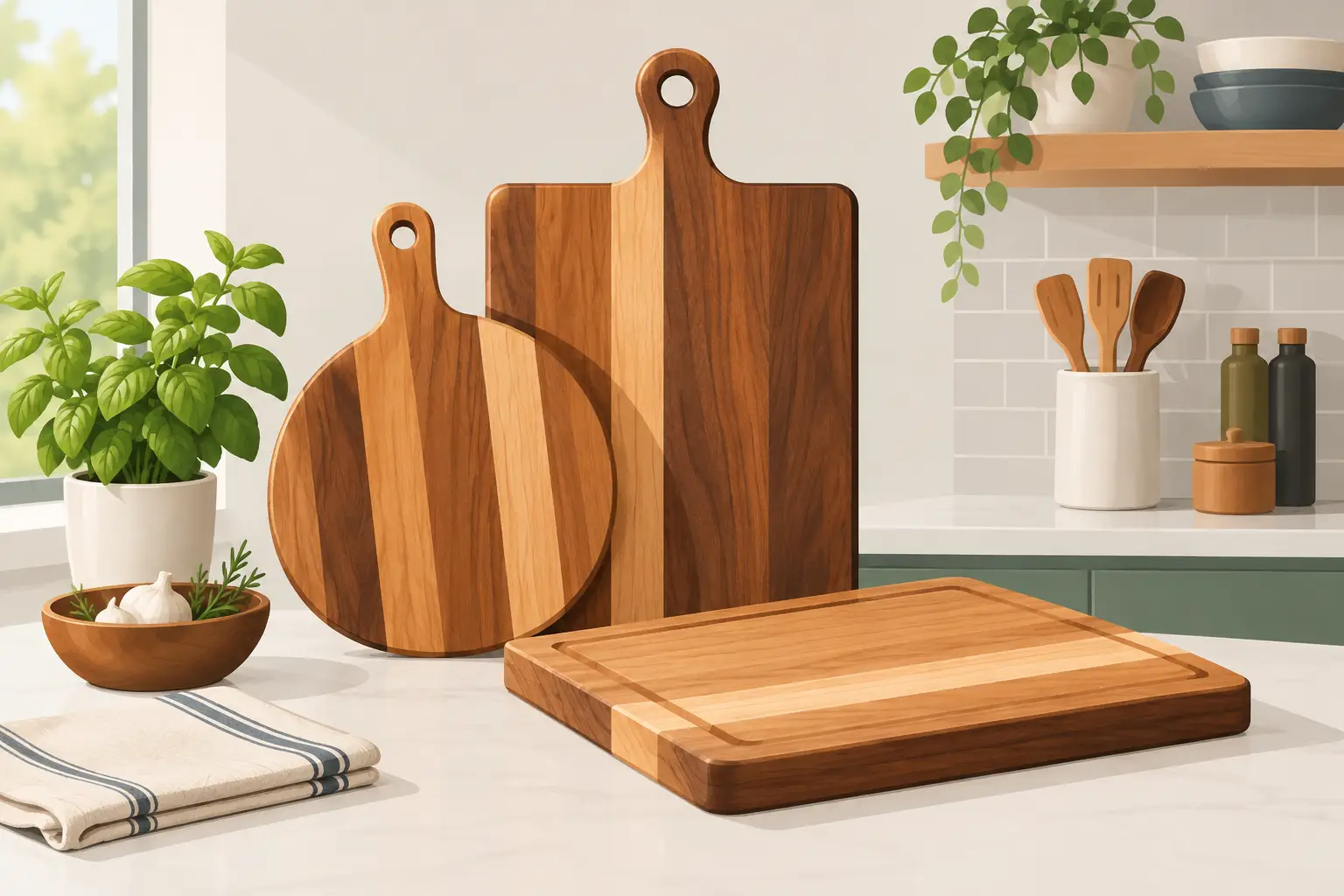
A cutting board earns its place the hard way. It takes the knife marks, catches the juice from a Sunday roast, gives you room to chop dinner, and often stays out on the counter when guests arrive. This homeowner guide to custom cutting boards is built around one simple idea: the right board should fit the way you actually cook, not force you to work around a generic size from a store shelf.
A handmade wood cutting board can be a daily kitchen tool, a serving piece, or both. Custom work lets you choose the dimensions, wood species, grain construction, and details that make sense for your space. Those choices matter because a board that looks great but is too small, too heavy, or poorly matched to its job will spend more time stored away than in use.
Start With How You Will Use the Board
Before choosing a wood or color, think about where the board will live and what happens on it most often. A board for quick weekday prep has different needs than a large carving board used for holidays, or a display-worthy charcuterie board brought out when friends visit.
For everyday chopping, counter space is usually the best starting point. Measure the clear area where you normally prep food, then leave enough room around the board to move comfortably. A board that is 18 by 12 inches is a useful everyday size for many kitchens, while a larger 20 by 15 inch or 24 by 18 inch board gives home cooks more room to organize ingredients and handle bigger jobs.
If you regularly carve brisket, turkey, or roasts, a larger board with a juice groove is worth considering. The groove helps keep meat juices off the counter, though it does reduce the flat cutting area slightly and takes a little more attention to clean. For a board that will mainly hold bread, cheese, fruit, or appetizers, a groove may not be needed at all.
Thickness affects both feel and function. A thinner board is easier to lift, wash, and store. A thicker butcher block-style board feels substantial, stays planted during prep, and makes a stronger visual statement. It also weighs more. For a board you plan to move from cabinet to sink every day, the best choice is often the one you will genuinely be comfortable handling.
Choosing Wood That Fits Your Kitchen
Hardwoods are the standard for quality cutting boards because they stand up to repeated knife use while remaining gentler on blades than glass, stone, or ceramic. The grain, color, hardness, and natural character of each species create a different look and working feel.
Maple is a classic choice for good reason. Its light, clean color works in traditional and modern kitchens, and its tight grain makes it a dependable surface for everyday chopping. Walnut offers a darker, richer appearance that pairs especially well with black hardware, deep cabinet colors, and warm wood interiors. Cherry begins with a reddish tone and deepens beautifully over time, creating a board with an inviting, lived-in character.
You may also prefer a mixed-wood design for contrast. A strip of walnut through maple, for example, can tie together different finishes in the kitchen while keeping the board practical for regular use. Natural variation is part of solid wood craftsmanship. No two boards have identical grain, mineral streaks, or color shifts, which is exactly what gives a handmade piece its one-of-a-kind look.
Wood choice should not be based on appearance alone. Very soft woods can show knife marks quickly, while extremely hard exotic woods may be harder on knives and can add cost without improving everyday performance. For most homeowners, a well-built board in maple, walnut, cherry, or a thoughtful combination of domestic hardwoods offers the right balance of durability, beauty, and value.
Edge Grain, End Grain, and Face Grain
Grain construction changes the board’s appearance, price, and performance. Edge-grain boards are made by joining boards on their sides, creating long parallel grain lines across the surface. They are durable, attractive, and a practical choice for everyday kitchens.
End-grain boards show the cut ends of wood fibers in a block-like pattern. Because the knife edge moves between the fibers rather than cutting across long grain, end grain is often favored by serious cooks who want a forgiving prep surface. It is also thicker, more labor-intensive to build, and typically more expensive. The trade-off is worthwhile for a dedicated chopping block, but it may be more than a casual cook needs.
Face-grain boards use the broad face of a board as the cutting surface. They can showcase dramatic grain and make beautiful serving boards, but they are generally best reserved for lighter cutting and presentation use rather than heavy daily chopping.
The Details That Make a Board Feel Custom
Custom sizing gets most of the attention, but smaller design choices can make the difference between a board that is merely nice and one that becomes part of your routine. Rounded corners soften the look and make a large board more comfortable to carry. Integrated handholds or finger grooves help with lifting, especially on thicker boards. Non-slip feet can be helpful for a board that stays on the counter, although a flat board may be preferable when you want to use both sides.
A juice groove is practical for carving and messy ingredients, but it is not required for every board. If you want one surface for everything from vegetables to serving cheese, a reversible design can be a smart solution. Use the grooved side for meat and the flat side for chopping, pastry work, or presentation.
Personalization can also be meaningful without becoming overly decorative. A family name, date, monogram, or short message turns a quality board into a wedding, housewarming, or holiday gift with real staying power. Keep placement in mind. Engraving is often best along an edge or on the back so the primary cutting surface remains clean and easy to use.
Care Is Part of Owning Solid Wood
A custom cutting board is made to work, and good care is straightforward. Wash it by hand with mild soap and warm water, then dry it promptly on edge so both sides can breathe. Never put a wood board in the dishwasher or leave it soaking in the sink. Extended water exposure is what causes unnecessary swelling, warping, and stress at glue joints.
Conditioning matters, too. Food-safe mineral oil helps prevent the wood from drying out and keeps the surface looking rich. The exact schedule depends on your home’s humidity and how frequently you wash the board, but a board that looks dry or dull is asking for oil. Apply a generous coat, let it absorb, then wipe away any excess. A board conditioner that combines mineral oil with natural wax can add extra protection between treatments.
Knife marks are normal. They show that the board is doing its job. Over time, light scratches can often be refreshed with gentle sanding and a fresh coat of oil. Deep cracks, persistent movement, or separation at a joint are not normal and should be addressed early. Choosing a carefully built board from quality hardwoods gives you the best foundation, but proper care is what keeps it looking good for years.
Ordering With Confidence
When you order a custom board, provide the measurements that matter most: overall length, width, thickness, and any limits created by a drawer, shelf, or counter area. If you are trying to match cabinets, floors, or other wood surfaces, photos taken in natural light can help communicate the look you are after. Remember that wood will vary naturally, and that variation is a feature of handcrafted work rather than a flaw.
It also helps to be honest about the board’s main job. A maker can guide you toward a manageable thickness for daily use, suggest a grain style that suits your budget, and recommend features that will serve your kitchen instead of simply adding cost. At Tooill Cabinets, that made-to-order approach is central to building wood pieces that feel right at home from the first use.
The best custom cutting board is not necessarily the largest, darkest, or most detailed one. It is the board you reach for without thinking – built to your measurements, comfortable in your hands, and ready for the meals and gatherings that make a house feel like home.