
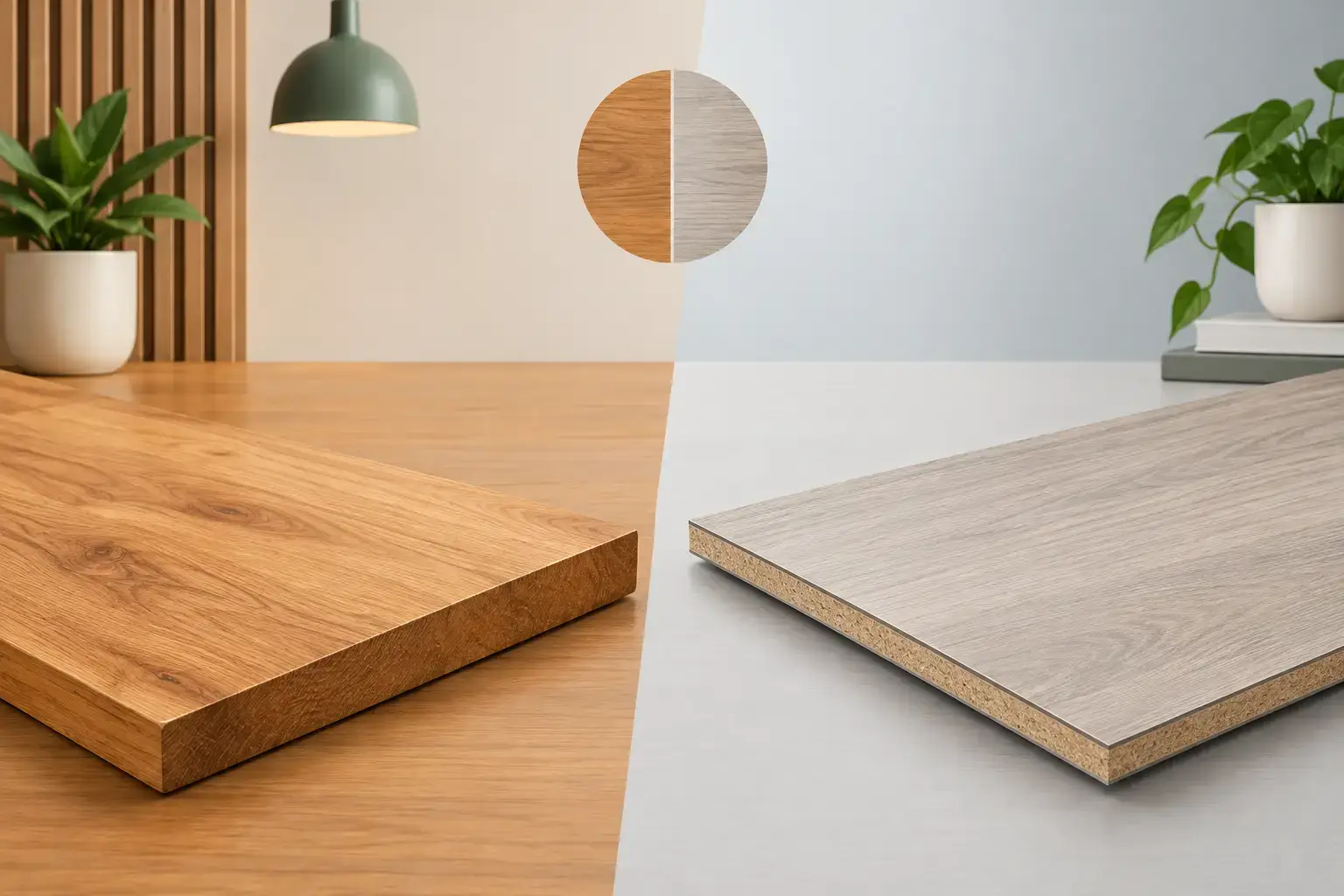
A kitchen island top can look great on installation day in almost any material. The real difference shows up months later, when a pan comes out of the oven, a chair scrapes the edge, or a busy family starts using the surface every day. In the wood versus laminate decision, the right answer depends less on what is universally “best” and more on how you want the piece to work, wear, and feel in your home.
For a made-to-order countertop, floating shelf, dining table, or cutting board, material is not a minor detail. It affects the dimensions you can order, the way the surface ages, the maintenance it needs, and whether a future repair is possible. Here is a practical look at where solid wood shines, where laminate makes sense, and what to consider before committing.
Wood Versus Laminate at a Glance
Solid wood is a natural material cut from real lumber and assembled into a finished surface. Butcher block countertops, hardwood tables, and custom shelves are common examples. Every board has its own grain, color variation, knots, and character. A skilled builder can select, arrange, shape, sand, and finish that lumber to create a piece made for a specific space.
Laminate is a manufactured surface. Decorative paper printed with a wood, stone, or solid-color pattern is bonded to layers of resin and a composite backing, usually particleboard or MDF. Modern laminate comes in a wide range of looks, including convincing wood patterns, and it can be an efficient choice for certain projects.
The biggest practical distinction is this: solid wood has material depth. If it gets scratched, stained, or worn, it can often be sanded and refinished. Laminate has a finished face over a core. When that face is damaged, repair options are more limited.
Appearance: Real Grain Has Depth
A laminate surface can give a room a clean, consistent appearance. If you need a uniform color or want to coordinate a large project on a tighter budget, that consistency can be useful. Some wood-look laminates are convincing from a distance, especially in low-traffic areas.
Still, a photograph and a finished room are not the same thing. Solid wood has depth that comes from actual grain, changing tones, and the way light moves across the surface. Maple feels bright and clean. Walnut brings rich contrast. Oak offers visible texture and traditional character. Each species responds differently to stain and finish, which gives homeowners more control over the final look.
Wood also develops a lived-in patina. Small marks may become part of its story rather than a reason to replace it. That does not mean every dent is welcome, but it does mean the material tends to age with more grace than a printed surface that begins to peel or chip.
Durability Depends on the Type of Wear
There is no honest material comparison without talking about how the surface will be used. Laminate is generally resistant to everyday moisture and easy to wipe down. It can handle ordinary household use well when the seams and edges are protected. For a laundry-room folding counter, a desk surface, or a low-impact utility area, it may offer good value.
Its weak points are heat, edges, seams, and deep damage. Hot cookware can scorch or bubble laminate. Standing water can find its way into a seam or exposed edge, causing the particleboard core to swell. A deep chip cannot simply be sanded out because sanding removes the decorative top layer.
Solid wood is not indestructible, either. It can dent, scratch, and react to moisture when neglected. Wood expands and contracts with seasonal humidity, so it needs to be built and installed with that natural movement in mind. A properly made wood top should have an appropriate finish, sound joinery, and mounting that does not trap the wood so tightly that it cannot move.
The advantage is long-term repairability. Light scratches can often be blended or refinished. Water marks may be addressed rather than accepted as permanent damage. A heavily used butcher block can be sanded back to fresh wood years down the road. For homeowners who prefer to maintain and keep a quality piece rather than replace it, that matters.
Heat and water in the kitchen
Neither surface should be treated as a landing pad for a hot skillet. Use trivets on both wood and laminate. With wood, wipe up spills promptly and avoid letting water sit around a sink cutout or seam. With laminate, pay especially close attention to edges and joints, because moisture damage to the core can be difficult or impossible to reverse.
For a kitchen countertop, a durable film finish can provide added protection while preserving the warmth of the wood. A food-safe oil or wax finish is better suited to a true chopping surface, but it requires regular reapplication. The right finish follows the job the surface needs to do.
Care: Easy Cleaning Versus Restorable Craftsmanship
Laminate wins the day-to-day maintenance contest for many households. A soft cloth, mild soap, and water are usually enough. There is no oiling schedule, and the finish does not need to be renewed in normal use. The trade-off is that care is mostly preventative. Avoid damage because there is less you can do once it happens.
Wood asks for more awareness, but not necessarily a complicated routine. Finished wood countertops and tables should be cleaned with a damp cloth and mild soap, then dried. Avoid abrasive scrubbers and harsh cleaners. Oil-finished cutting boards and butcher block prep surfaces need periodic conditioning to keep the wood from drying out.
That maintenance is part of what makes wood feel personal. You are caring for a real material that can stay in service for decades. For some buyers, that is a welcome part of owning a handcrafted surface. For others, especially in a rental or a highly demanding commercial-style workspace, low-maintenance laminate may be the practical call.
Cost and Custom Sizing
Up-front price is one of laminate’s strongest arguments. It is widely available, fast to source, and often less expensive than solid hardwood. Standard-size laminate counters can make sense when budget and speed are the top priorities.
Solid wood costs more because the material and labor are different. Lumber must be selected, milled, joined, sanded, finished, and carefully packed for shipping. Custom dimensions, edge profiles, thicknesses, sink cutouts, and finish choices add hands-on work. Yet a custom wood surface can also prevent the compromises that come with forcing a standard product into an unusual nook, oversized island, or specific wall-to-wall measurement.
When comparing quotes, look beyond the price per square foot. Ask what is included: species, thickness, finish, edge treatment, cutouts, mounting considerations, and shipping protection. A lower initial price can lose its appeal if the surface is difficult to repair or must be replaced sooner than expected.
Where Each Material Makes Sense
Laminate is a sensible fit for temporary updates, budget-conscious utility spaces, rental properties, or areas where a consistent printed look matters more than natural material. It can also work well when the project calls for a surface that is simple to clean and unlikely to see heavy heat or edge wear.
Solid wood is especially compelling for kitchen islands, dining tables, open shelving, desk tops, butcher block counters, and statement pieces where people will see and touch the surface every day. It is also the clear choice for cutting boards and food-prep blocks designed to be used as wood, not merely to look like it.
For custom work, measure carefully before ordering. Record the overall length and width, wall conditions, overhang needs, appliance clearances, and the location of any cutouts. A handmade top should fit the room and the way you live in it, not ask you to adjust your plans around a stock size.
Choose for the Life You Want the Surface to Have
The wood versus laminate choice is not just about getting a certain look for less or more money. It is about whether you want a surface that stays visually consistent with minimal attention, or one with natural character that can be renewed as it earns its place in your home.
If you choose wood, choose a builder who understands grain, movement, finishing, and the details that make custom work last. Tooill Cabinets builds handmade wood surfaces to the measurements and vision of the people who will use them. The best material is the one that suits your daily routine, but a well-built wood piece gives you something rare: a surface that can keep becoming yours long after installation day.