
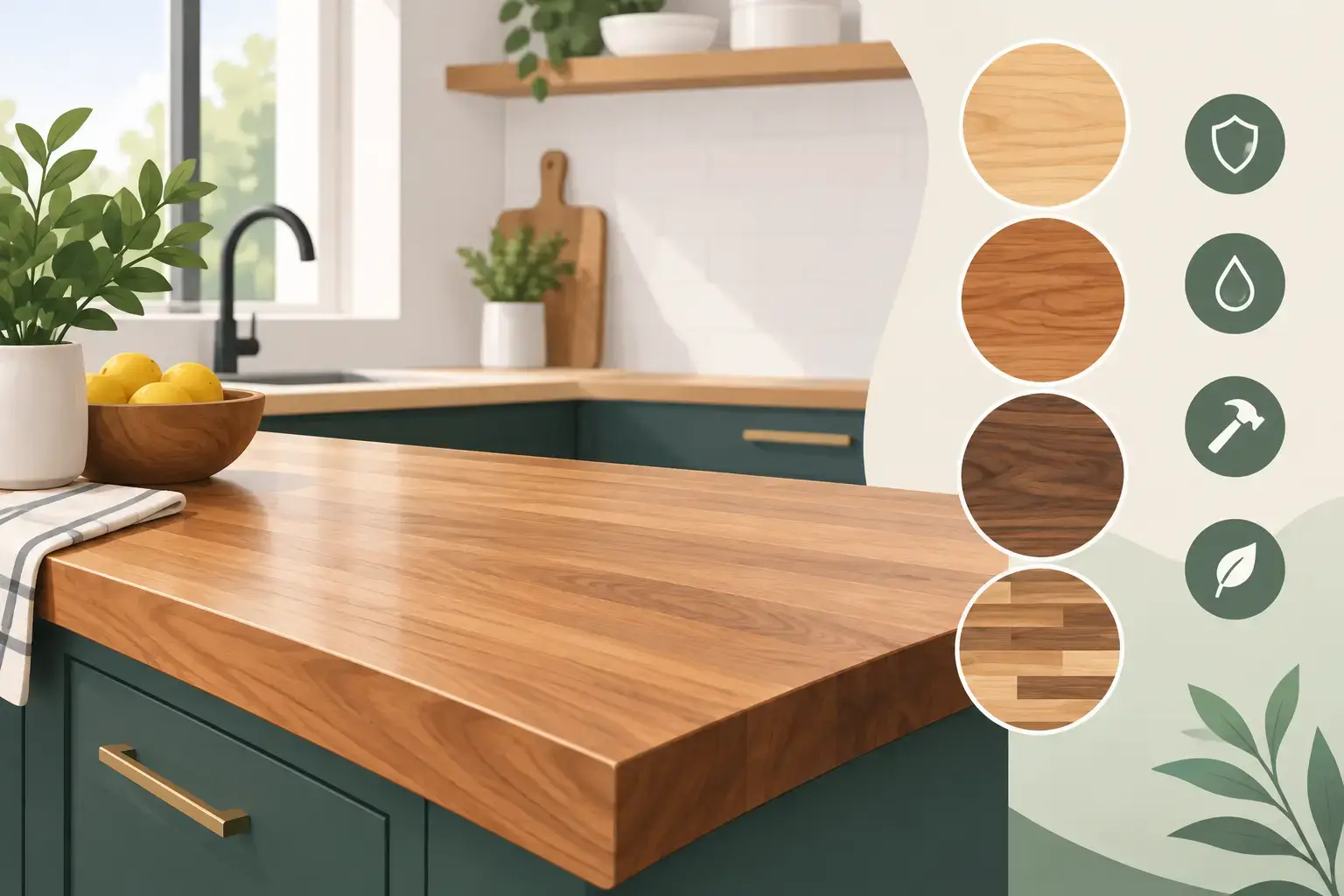
A countertop gets touched more than almost any other surface in a home. It catches grocery bags, hot coffee mugs, homework, dough, keys, and the occasional water spill that sits too long. That is why wood countertops are not just a design choice. They are a working surface, and the right one brings warmth, strength, and a custom-built feel that stone and laminate cannot quite duplicate.
For a kitchen island, coffee bar, desk, laundry room, or full counter run, solid wood can be made to your exact dimensions and finished for the way you actually use the space. The best choice comes down to a few practical decisions: wood species, construction, thickness, finish, installation, and the level of upkeep you are comfortable giving it.
What Makes Wood Countertops Worth Choosing?
Wood has a look that is hard to manufacture. Every board has its own grain, color shifts, and natural character, so a finished countertop feels personal rather than pulled from a warehouse shelf. It can warm up white cabinetry, soften a modern kitchen, or add contrast to painted cabinets and metal fixtures.
It is also repairable. A scratched laminate top usually stays scratched. Small dents, knife marks, and light stains on a solid wood surface can often be sanded and refinished instead of forcing a full replacement. That matters in busy homes where a countertop is meant to be lived on, not protected like a museum piece.
Customization is another major advantage. Standard retail tops can leave you trimming edges, adding filler strips, or accepting an awkward overhang. A made-to-order wood top can be built for a narrow pantry cabinet, a large island, an L-shaped desk, or a deep laundry counter. You can choose the length, width, thickness, edge profile, wood species, and finish to match the project.
There are trade-offs. Wood needs a proper finish and occasional attention, especially near sinks. It can move slightly with seasonal humidity changes. It can dent if a heavy cast-iron pan is dropped on it. For many homeowners, those are reasonable trade-offs for a surface that can be renewed and gains character over time.
Choosing the Right Wood for Your Countertop
The best wood species depends on the look you want, how hard the surface needs to work, and whether you prefer an even grain pattern or more dramatic variation.
Hard maple for a clean, durable look
Hard maple is a classic choice for butcher block countertops. It is dense, durable, and typically has a lighter, more uniform appearance than many other domestic hardwoods. Maple works especially well in bright kitchens, modern spaces, and homes where the countertop will see frequent food prep.
Its subtle grain gives it a clean, refined look, though it may show everyday wear differently than darker woods. A quality finish helps protect it, but no wood countertop is completely immune to marks from hard use.
Walnut for depth and contrast
Walnut is known for its rich brown tones and flowing grain. It makes a strong statement on an island, bar top, or furniture-style counter where the wood itself is meant to stand out. Walnut is softer than hard maple, so it may show dents a little more readily in a high-impact workspace. In return, it brings a depth of color that few woods can match.
Walnut often works beautifully with white, cream, black, or deep green cabinetry. It can also make a small counter area feel more intentional, turning a simple coffee station or desk into a focal point.
Oak, cherry, and mixed hardwood options
Oak offers pronounced grain and dependable strength, making it a natural fit for traditional, rustic, and transitional interiors. Cherry begins lighter and deepens to a warmer reddish-brown with age and light exposure. Mixed hardwood tops create more color variation and a less uniform appearance, which can be ideal when you want a handmade, one-of-a-kind feel.
There is no single best species. A hardworking prep island may favor hard maple, while a walnut desk top or oak bar top may better fit the room. Looking at real wood samples before committing is often worth the extra step because grain and color are difficult to judge from a screen alone.
Construction and Thickness Matter More Than You Think
Most solid wood countertops are made by joining individual hardwood boards into a stable panel. The board orientation affects the final appearance. Edge-grain construction shows long, continuous strips of wood across the surface and is popular for countertop runs and islands. End-grain construction shows the ends of the boards in a checkerboard pattern and is commonly used for cutting blocks because it is especially forgiving on knife edges.
For most countertops, edge-grain construction is the practical choice. It offers the clean lines people expect from butcher block while providing excellent strength and a more approachable cost than end grain.
Thickness changes both the look and the function. A 1 1/2-inch top is a familiar, substantial choice for kitchen counters and islands. Thinner material can work well for desks, shelves, and lighter-duty applications. A thicker top creates a bolder furniture-grade appearance, but it also adds weight and may require more planning for cabinet height, appliance clearance, and support.
Do not choose thickness by appearance alone. Measure the finished counter height, account for the cabinet base, and consider whether an overhang needs brackets or legs. A large island top can be extremely heavy, so confirm that the cabinets and floor structure can support it.
Pick a Finish Based on How You Will Use the Surface
Finish is where appearance and maintenance meet. The right finish protects the wood from moisture while preserving the feel you want under your hands.
A penetrating oil finish gives wood a natural, low-sheen appearance and is easy to refresh in high-use areas. It is a popular option for surfaces intended for direct food preparation, provided the product and care routine are appropriate for that use. The trade-off is that oil-finished tops need regular reapplication, particularly around sinks and frequently cleaned areas.
A film-forming finish, such as certain polyurethane or conversion varnish systems, creates a more sealed protective layer. This can be a practical choice for a desk, bar, bathroom vanity, or countertop where water resistance and lower routine maintenance are priorities. It is not the best choice for cutting directly on the surface because knives can damage the finish.
Hardwax oil finishes sit between those approaches, offering a natural appearance with stronger surface protection than simple oil. They are widely used on furniture-style wood surfaces and can often be spot-repaired, though every finish has its own care instructions.
Be honest about the intended use. If you want to chop vegetables directly on the counter every day, plan for a food-prep-friendly finish and regular maintenance. If you prefer easy cleanup and will use a separate cutting board, a sealed furniture-style finish may be the better fit.
Plan for Water, Heat, and Seasonal Movement
Wood and water can coexist, but details matter. A properly finished countertop can perform well near a sink, yet standing water should always be wiped up. Pay close attention to sink cutouts, faucet holes, seams, and the underside of the top. Those areas need to be sealed carefully because exposed end grain absorbs moisture quickly.
Use trivets under hot pans. Wood is more forgiving than some hard surfaces, but extreme heat can damage finishes, leave marks, or cause localized drying. Likewise, avoid placing a dripping dish rack in the same spot day after day unless that area is well protected.
Solid wood also expands and contracts across its width as indoor humidity changes. A qualified installer should allow for that movement instead of fastening the top so tightly that it cannot shift. Slotted mounting hardware, proper clearances at walls, and thoughtful attachment methods help prevent splitting or warping over time.
Care That Keeps a Wood Top Looking Good
Day-to-day care is simple. Wipe up spills promptly with a soft cloth, clean with mild soap and water when needed, and dry the surface afterward. Avoid harsh chemicals, abrasive scrubbers, and cleaners that leave a heavy residue.
Use cutting boards for routine chopping, especially on a finished countertop. Keep wet towels, plant pots, and soap dispensers from sitting in one place for long periods. If your countertop has an oil-based finish, refresh it when the wood begins to look dry or absorbs water instead of letting it bead on the surface.
Minor damage is part of owning real wood. Light scratches can often be blended with a maintenance coat or a gentle sanding and refinish. Deep gouges, burn marks, or water damage may require more involved repair, but solid wood gives you options that many manufactured surfaces do not.
When Custom Is the Better Buy
Custom fabrication makes the most sense when standard sizes create compromises. That could mean a wall that is not square, an island with an unusual overhang, a built-in desk between cabinets, or a countertop that needs to match a specific stain and edge detail.
A custom order also gives you a chance to discuss the details before production begins: final dimensions, grain direction, cutouts, thickness, finish, shipping, and installation needs. At Tooill Cabinets, handcrafted wood surfaces are built around those real-world choices rather than asking customers to make a stock-size product work.
A wood countertop should fit the room, the cabinets, and the way your household uses it. Choose a species you will enjoy seeing every day, give it the protection its location requires, and let the natural marks of a well-used home become part of its story.