
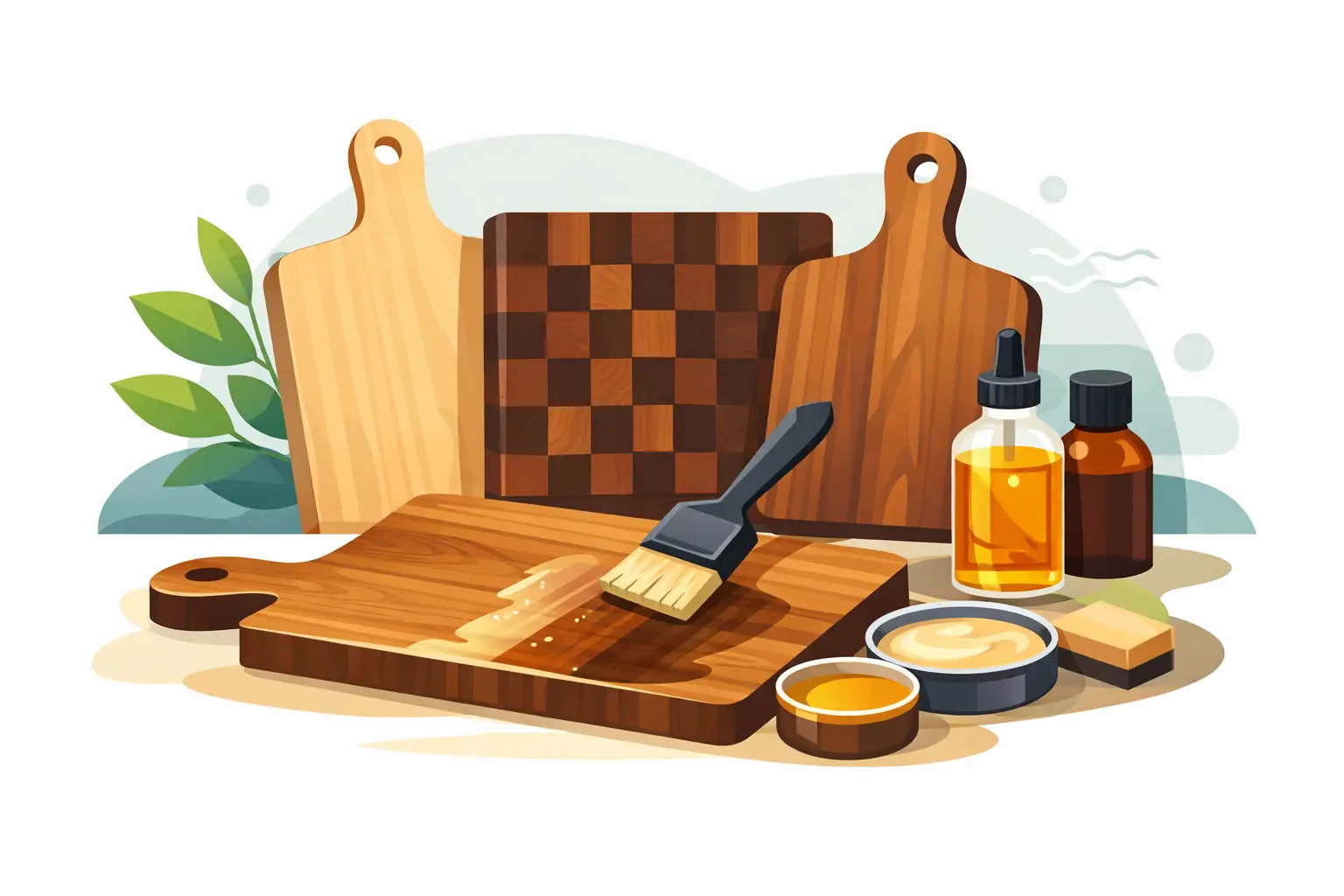
A cutting board can look perfect on day one and still fail fast if the finish is wrong. That is why the best finishes for cutting boards are not about adding shine for the showroom. They are about protecting the wood, keeping the surface food-safe, and making sure the board still feels solid and smooth after real use in a busy kitchen.
If you are buying a handmade board, maintaining one you already own, or choosing a finish for a custom wood piece, it helps to know one simple truth first: cutting boards do not need a hard film finish. In most cases, they need a penetrating, food-safe treatment that can be refreshed easily.
What makes the best finishes for cutting boards?
A good cutting board finish has to do three jobs well. It should slow down moisture movement, help prevent the surface from drying out and cracking, and stay safe around food contact. Just as important, it should be easy to renew after washing and daily wear.
That last part matters more than many people expect. A cutting board is not like a dining table or a floating shelf. It gets cut, scrubbed, rinsed, and dried over and over. Any finish that forms a brittle surface layer is likely to wear unevenly, chip, or peel. Once that happens, the board looks rough and becomes harder to maintain.
This is why experienced woodworkers usually favor oil and wax systems over polyurethane, lacquer, or other thick topcoats for boards that are actually used for prep.
Mineral oil is the standard for a reason
If you ask what finish is most commonly used on wood cutting boards, the answer is food-grade mineral oil. It is clear, odorless, affordable, and dependable. More importantly, it penetrates the wood rather than creating a hard surface film.
Mineral oil helps reduce moisture swings that can lead to warping or checking. It also brings out the natural color and grain without making the board look plastic or overfinished. For homeowners who want a board that feels natural and is easy to care for, this is usually the right starting point.
There is one trade-off. Mineral oil is not permanent. It will wash out gradually, especially if the board is cleaned often or lives in a dry kitchen. That is not really a flaw – it is part of the system. The board stays in good shape because the finish can be reapplied whenever needed.
For most cutting boards, regular mineral oil treatment is the most practical answer.
Mineral oil and beeswax is even better for many boards
If mineral oil is the foundation, a mineral oil and beeswax blend is often the upgrade. This combination gives you the same food-safe penetration along with a little more surface resistance. The wax helps the board shed water better and gives it a smoother, richer feel in the hand.
This is one of the best finishes for cutting boards when you want protection plus a more polished look. It is especially useful on serving boards, butcher block style boards, and gift-quality pieces where appearance matters along with durability.
Even so, it is still not a one-and-done finish. The wax layer wears with use, and it should be refreshed periodically. The upside is that touch-ups are simple. You do not have to sand the whole board back or strip a failing finish. You just clean it, let it dry, and reapply.
What about pure beeswax by itself?
Pure beeswax alone can add a nice feel, but on its own it is usually not enough for a working cutting board. Wax sits closer to the surface and does not soak in the way mineral oil does. That means it can help with water resistance, but it does not condition the wood as deeply.
For that reason, beeswax works best as part of a blend rather than as the main finish. If someone likes the soft luster and feel of wax, pairing it with mineral oil gives better real-world performance.
Walnut oil can work, but it depends
Walnut oil is a popular option in some woodworking circles because it is a natural oil that can cure over time. On paper, that sounds appealing. In practice, there are a few things to think through.
First, allergy concerns are worth mentioning. While fully cured walnut oil is often considered safe by many makers, some buyers are understandably cautious around nut-based products in the kitchen. Second, not every oil sold as walnut oil is appropriate for cutting boards. You need a version intended for food-contact wood care, not just any finishing oil from the hardware shelf.
Walnut oil can be a solid choice for some households, but it is not as universal or as low-risk as food-grade mineral oil. If you are making or buying a board for broad household use, mineral oil remains the more straightforward option.
Tung oil and linseed oil are where confusion starts
People often hear that tung oil or linseed oil are natural and food-safe once fully cured. That can be true in very specific forms, but this is where labels matter.
Pure tung oil is different from many “tung oil finish” products, which often contain solvents and additives. Raw linseed oil is different from boiled linseed oil, which commonly includes drying agents that are not suitable for cutting boards. This is where a lot of DIY mistakes happen.
Even when you are dealing with a pure version, these oils are slower, pickier, and less forgiving than mineral oil. They take longer to cure and require more confidence in application. For a hardworking kitchen board, that usually makes them less practical for the average homeowner.
They are not automatically wrong. They are just not the easiest answer, especially when simpler and proven options exist.
Finishes to avoid on cutting boards
If the board will be used with knives and food prep, hard film finishes are generally the wrong fit. That includes polyurethane, varnish, lacquer, shellac, and most surface-building coatings.
The issue is not only food contact. It is also wear behavior. Knife marks break the film, moisture gets underneath, and the finish starts looking patchy or damaged. Once a board gets to that point, maintenance becomes a chore.
The same caution applies to many vegetable oils from the pantry. Olive oil, corn oil, and similar cooking oils may seem natural, but they can go rancid over time. That leaves the board with an unpleasant smell and a sticky feel.
A finish for a cutting board should be chosen for wood care, not just because it is edible.
How to choose the right finish for your board
The best choice depends on how the board will be used. If it is a daily prep board that sees constant chopping, food-grade mineral oil is usually the best fit. It is simple, reliable, and easy to maintain.
If the board also serves at the table or you want a richer hand-finished feel, a mineral oil and beeswax conditioner is often the better choice. It adds a little more water resistance and a more finished appearance without creating the problems of a hard topcoat.
If you are buying a handmade board as a gift, this matters too. A beautiful board should not require complicated care instructions. The easier the finish is to maintain, the more likely the recipient is to actually enjoy using it.
How often should you reapply finish?
That depends on the wood species, the dryness of your home, and how often the board is washed. A new board may absorb finish more often at first. Later, maintenance usually settles into a simpler rhythm.
A good rule is to reapply when the wood starts looking lighter, duller, or dry. If water no longer beads slightly and instead sinks in quickly, the board is ready for oil. The surface may also feel a little rougher when it needs attention.
In many homes, once a month is a reasonable habit for a frequently used board. In drier conditions or heavier use, it may need more. In lighter use, less.
A few care habits matter as much as the finish
Even the best finishes for cutting boards cannot make up for poor care. Never leave a wood board soaking in water. Do not put it in the dishwasher. Clean it promptly, dry it well, and store it where air can move around it.
If one side gets wet more often than the other, moisture imbalance can lead to cupping or warping. That is why quality construction and regular maintenance work together. A well-made board with the right finish will hold up much better over time.
At Tooill Cabinets, that same thinking applies across handmade wood surfaces. Good material selection matters. Good finishing choices matter. And products built for real homes need to be maintainable, not just attractive on arrival.
When in doubt, keep it simple. A cutting board does not need a complicated finish system. It needs a food-safe treatment that protects the wood, respects how the board is actually used, and can be refreshed without fuss. That is usually what keeps a good board looking good years later, not just the day it comes out of the box.