
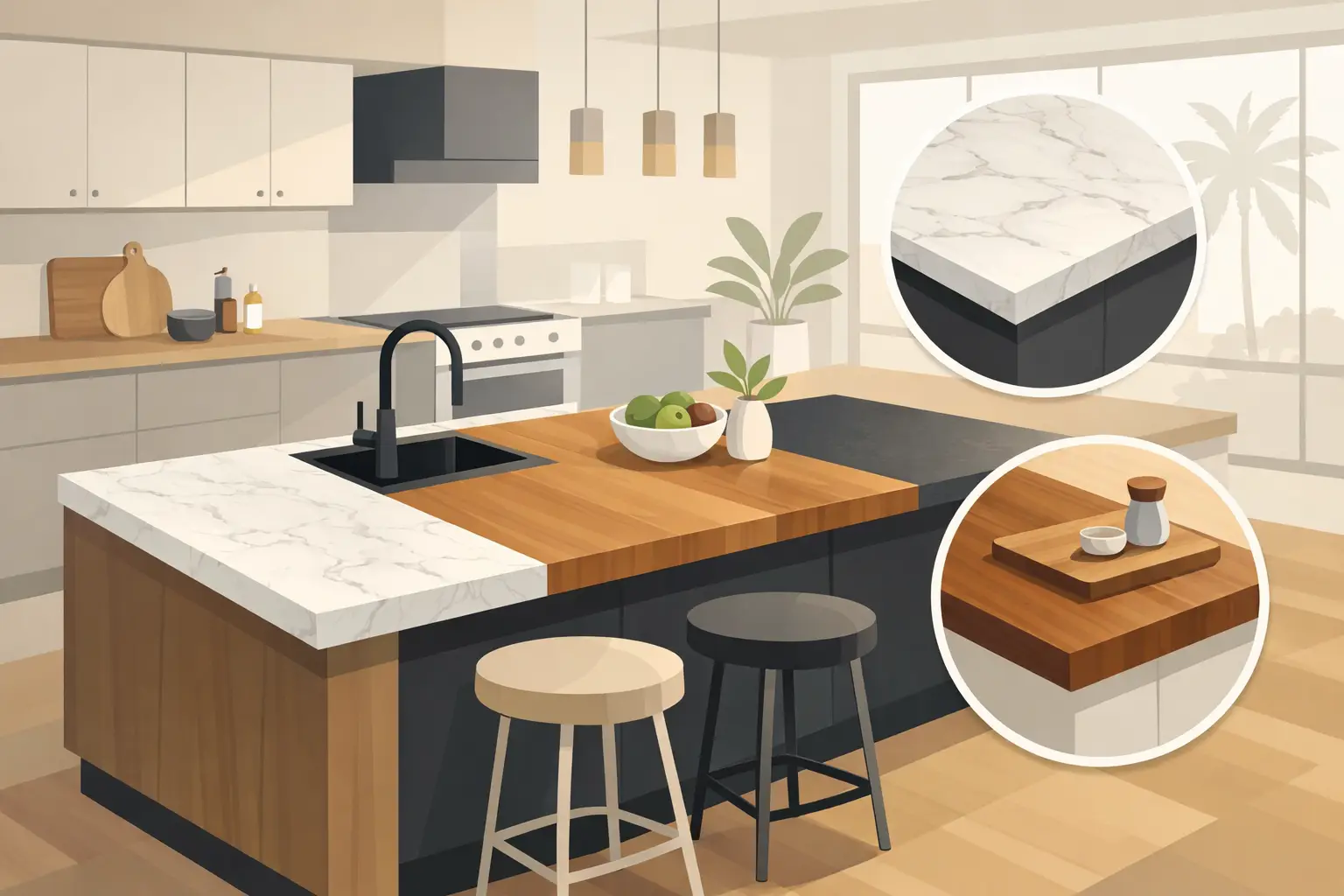
The right island top can fix a problem you feel every day. Maybe your kitchen island is too small to prep on comfortably, maybe the overhang never worked with your stools, or maybe the whole room feels close to finished except for that one surface that still looks like a compromise. This guide to custom island tops is built for homeowners who want the piece to fit the room, the way they cook, and the look they have in mind.
A custom island top is not just a slab cut to size. It is a working surface, a visual anchor, and in many homes, the place where people gather first. That means the best choice is rarely about looks alone. Size, wood species, thickness, edge profile, finish, and installation details all matter, and each one affects how the top performs over time.
What a guide to custom island tops should help you decide
Most buyers start with one question – what size do I need? That is a good place to begin, but it is not enough on its own. A custom top needs to suit the cabinet base, fit the traffic flow around the island, support the seating layout if you have stools, and hold up to daily use.
It also needs to reflect how your kitchen actually works. A family that cooks every night will use an island differently than someone designing more for entertaining. If the top will see heavy prep, occasional spills, and constant wipe-downs, material and finish become more than style decisions. They become durability decisions.
Start with dimensions that match the room
Accurate measurements are the foundation of a good custom order. Measure the cabinet base first, then determine how much overhang you want on each side. A flush fit creates a cleaner, furniture-like look, while an overhang can soften the visual weight and add practical space.
For seating, overhang matters quite a bit. Too little and stools feel cramped. Too much without proper support and you may need brackets or other reinforcement. If your island includes seating on one side, think about legroom, how many stools you want, and whether people need space to turn and move comfortably behind them.
Thickness changes the look as well. A thicker island top reads more substantial and can make a large island feel appropriately scaled. A slimmer top can work well in a lighter, more modern kitchen. Neither is automatically better. It depends on the cabinet style below it, the size of the island, and how much visual weight you want in the room.
Choosing the right wood species
Wood choice affects color, grain, hardness, and overall character. It also changes how formal or relaxed the kitchen feels.
Maple is a favorite for good reason. It is durable, clean-looking, and versatile across a wide range of kitchen styles. Walnut brings deeper color and a richer, more dramatic appearance. Oak offers strong grain movement and a classic warmth that works well in traditional, rustic, and transitional spaces. Other species can be a great fit too, especially when the goal is to match existing wood tones or create contrast.
There is always a trade-off between uniformity and natural character. Some homeowners want a calm, consistent surface. Others want knots, variation, and grain shifts that make the piece feel more organic and one of a kind. Neither approach is wrong, but it helps to be clear about your preference before ordering. Custom work is strongest when the expectations are specific.
Edge grain, face grain, and the look of the top
Not every wood island top looks the same because not every top is built from the same grain orientation. Edge grain tops often show a tighter, more linear pattern and are a popular choice for butcher block style surfaces. Face grain tops reveal broader cathedral grain and tend to feel more like furniture.
That distinction matters if the island is meant to be a visual centerpiece. If you want the wood movement to stand out from across the room, face grain often gives you more of that. If you prefer a cleaner pattern with a hardworking, classic butcher block feel, edge grain may be the better route.
Finish matters as much as the wood
A beautiful wood top still needs the right finish for the job. If the island will be used for food prep, homework, serving, and everyday family life, the finish needs to support that reality.
Some homeowners prefer a more natural, low-sheen look that keeps the wood feeling close to its raw character. Others want a stronger protective finish that resists moisture and daily wear more aggressively. The best choice depends on how the top will be used and how much maintenance you are comfortable with.
This is one of the biggest it-depends decisions in any guide to custom island tops. A lower-maintenance finish can be the right move for busy households. A finish with a more natural appearance may appeal to buyers who do not mind periodic care. What matters most is choosing with your actual use in mind, not just the showroom look.
Don’t overlook edge profiles and corners
Edge details seem minor until you see the finished top in the kitchen. A simple eased edge keeps things clean and timeless. A more shaped edge can feel traditional and decorative. Square corners look crisp, while slightly eased or rounded corners can feel softer and more forgiving in high-traffic spaces.
If kids are regularly moving around the island, corner treatment is worth some thought. If the island is more of a statement furniture piece, profile becomes a design feature. Small details like this are where custom work separates itself from off-the-shelf options.
Plan for real-life use
A kitchen island often does more than one job. It may be prep space in the morning, a lunch spot at noon, and a serving station at night. That means you should think beyond dimensions and ask how the top will wear.
Will you place hot pans on it occasionally? Will there be bar stools pulled in and out every day? Is the island near a sink where water splash is common? Will the top be used gently, or is it the busiest surface in the house?
The answers influence wood selection, finish choice, and even design details like overhang and thickness. A family kitchen usually benefits from decisions that lean practical first. A showpiece island in a lower-use space gives you more room to prioritize visual impact.
Installation and support are part of the build
A custom island top should be ordered with installation in mind. Large tops are heavy, and the base below needs to be level, square, and capable of supporting the weight properly. Overhangs may also need added support depending on their depth and the overall span.
This is where custom craftsmanship really matters. A top can be beautifully made, but if the measurements are off or the support plan is overlooked, the final result suffers. Good planning protects the investment and helps the finished piece sit right, wear right, and last.
Shipping also deserves respect, especially for large solid wood pieces. Proper packaging is not an extra. It is part of delivering quality. When a top is built to order, the expectation should be that it arrives protected and ready for the next step.
Why custom beats settling for standard sizes
Stock tops work when your island base happens to match standard dimensions and your design goals are flexible. That is not most kitchens. Many homeowners are trying to solve for a specific width, a nonstandard depth, a seating overhang, or a certain visual proportion that big-box inventory simply does not cover.
Custom lets you build around the room instead of forcing the room to work around the product. It also gives you control over the details that change the finished look the most – wood species, thickness, grain style, edge profile, finish, and exact sizing.
That control is especially valuable when the island is the centerpiece of the kitchen. A made-to-order top looks intentional because it is intentional. At Tooill Cabinets, that is the point of custom work in the first place: building a solid wood piece that fits your home instead of asking you to settle for close enough.
What to have ready before you request a quote
The process goes more smoothly when you know your basic dimensions, preferred wood species, approximate thickness, and whether you want seating overhang. It also helps to know the cabinet base size and whether the top will sit in a tight space near walls or appliances.
Photos of the kitchen, finish preferences, and a sense of how you plan to use the island can also help shape the recommendation. Sometimes the right answer is not the thickest top or the darkest wood. It is the one that best fits the room, the traffic, and your daily habits.
A good custom island top should feel right the day it is installed and still feel right years later. If you take the time to think through size, wood, finish, and use before ordering, you are far more likely to end up with a piece that does exactly what a great island top should do – work hard, look better with age, and make the whole kitchen feel finished.