
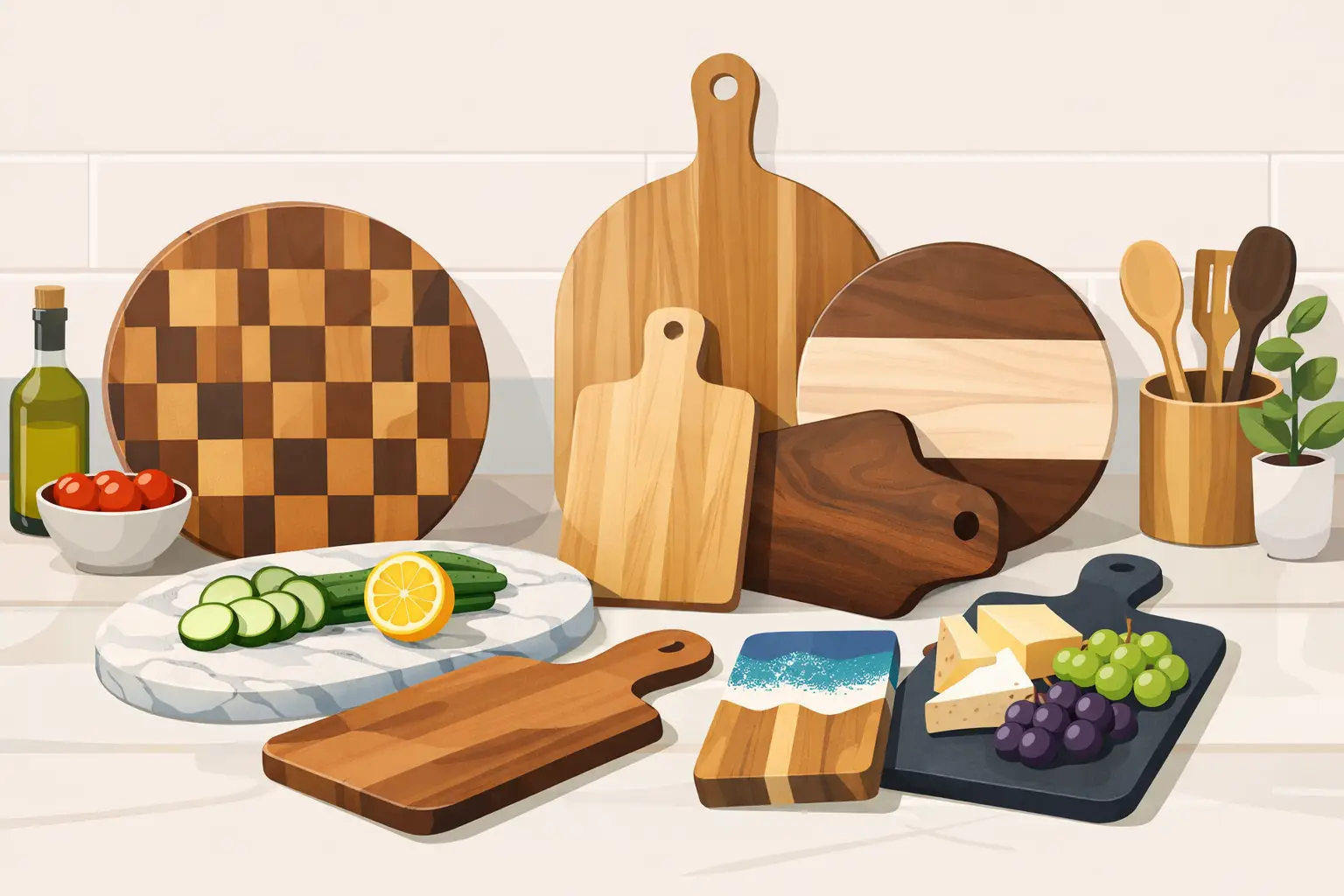
A cutting board earns its place on the counter by doing more than looking good. The best cutting board design ideas account for how you prep, where you store it, what you cook, and whether the board will live out in the open between meals. A well-made solid wood board can be a hardworking prep surface, a serving piece, and a warm visual anchor in a kitchen full of stone, steel, and painted cabinetry.
The right design is rarely about adding every possible feature. It is about choosing the details that make sense for your kitchen and your routine. Here are ten directions worth considering before selecting or ordering a handcrafted board.
1. Start With the Right Board Shape and Size
A board that is too small creates a frustrating prep area. One that is oversized may be heavy, difficult to wash, and awkward to store. For daily chopping, a rectangular board around 12 by 18 inches gives most home cooks enough room for vegetables, herbs, and proteins without taking over the counter.
If you regularly cook family meals, work from a large island, or want a board that can double as a serving surface, stepping up to 15 by 20 inches or larger can be worthwhile. Measure the counter space where you actually prep, not just the cabinet where you hope to store it. Custom sizing is especially useful when a board needs to fit a specific drawer, appliance garage, or kitchen cart.
2. Choose End Grain for a Statement Work Surface
End-grain boards show the ends of wood fibers in a block-like pattern. They have a classic butcher block look and a substantial feel under a knife. Because the knife edge works between fibers rather than cutting straight across them, end grain is often gentler on quality knives when properly maintained.
This construction takes more labor and material, so it is usually a premium choice. It is also heavier than a thin edge-grain board. For a board that will stay on the counter, serve as a kitchen focal point, and handle serious prep, that weight can feel like a benefit. For a board you will pull from a high shelf every day, a lighter construction may suit you better.
3. Use Edge Grain for Everyday Versatility
Edge-grain boards display long, continuous strips of hardwood. The look is clean and timeless, from quiet single-species layouts to more varied striped patterns. They are durable, practical, and generally easier to lift, which makes them a strong option for daily cooking.
An edge-grain board does not have to be plain. Varying strip widths creates movement without making the surface too busy. A simple walnut board feels rich and tailored, while maple offers a brighter, more traditional kitchen look. Combining the two can add contrast while keeping the design grounded in natural materials.
4. Let Wood Color Do the Design Work
Solid hardwood brings character that painted or printed surfaces cannot duplicate. Maple is light, clean, and versatile. Walnut runs darker, with deep brown tones that pair well with black hardware, warm metals, and modern kitchens. Cherry develops a richer reddish-brown color over time, giving a board a lived-in appearance that many homeowners appreciate.
Mixed hardwood designs can be striking, but restraint matters. A strong contrast border, a center stripe, or a repeating pattern often looks more intentional than a board made from too many species. Think about the surrounding kitchen, too. A pale maple board can brighten dark counters, while walnut provides welcome depth against white quartz or marble.
5. Add a Juice Groove Only When It Has a Job
A perimeter juice groove is one of the most useful functional details for carving meat, slicing ripe tomatoes, or cutting citrus. It catches runoff before it reaches the counter and makes cleanup less stressful when you are serving a crowd.
That said, a groove reduces the completely flat area available for chopping and adds a channel that needs attention during washing. If the board will mostly be used for bread, cheese, vegetables, or casual serving, a flat surface may be the better design. Many households benefit from two boards: one grooved board for proteins and one smooth board for everyday prep and presentation.
6. Consider Reversible Cutting Board Designs
A reversible board gives you two useful surfaces without demanding more storage. One side can include a juice groove for roasts and juicy fruit, while the opposite side stays flat for chopping, kneading dough, or building a charcuterie spread.
This design also helps separate tasks during meal prep. Use one side for raw proteins, wash and sanitize the board correctly, then switch to the other side for finished foods when appropriate. A reversible board is a practical choice for kitchens where every cabinet inch matters.
7. Build in Handles That Feel Natural
Handles should make a heavy board easier to carry from counter to sink or table. Routed handholds on the underside keep the top surface clean and uninterrupted. They are a smart fit for a board meant to double as a serving tray or sit out as part of the kitchen decor.
Cutout handles through the board can work well on thinner boards, but they take away usable surface area and expose more edges to moisture. The best option depends on thickness, weight, and the intended use. If a board is large enough to need handles, choose a design that supports a secure grip rather than adding a decorative feature that is hard to use.
8. Make a Serving Board Part of the Plan
Not every wood board needs to be built for hard chopping. A long, narrow board for bread, a round board for pizza, or a paddle-style board for cheese can bring more personality to casual gatherings. These pieces work especially well when their proportions relate to the way you entertain.
For example, a wide serving board gives room for cheeses, fruit, crackers, and a small bowl of olives without crowding. A long board can run down the center of a dining table for shared appetizers. Choose hardwood and a finish safe for food contact, but save delicate serving boards from heavy cleaver work so they stay attractive longer.
9. Match Thickness to the Way You Cook
Thickness changes both performance and presence. A thinner board is lighter and easier to move, while a thicker board feels substantial and resists shifting during vigorous chopping. For a large butcher block-style board, extra thickness also creates the solid, furniture-quality profile many homeowners want on an island or countertop.
More thickness means more weight and a higher material cost. It can also take longer for a board to dry fully after washing. There is no universal best choice. A compact board for quick weekday prep may be ideal at a lighter thickness, while a statement board made for a permanent prep station can justify more mass.
10. Plan for Care Before You Fall for a Pattern
A cutting board is not a disposable kitchen accessory. Its design should support years of use, and that means respecting the material. Solid wood should be hand-washed, dried promptly, and never left soaking in water or put through a dishwasher. Regular food-grade mineral oil helps prevent dryness and keeps the grain looking its best.
If you love the look of a highly detailed patterned board, remember that every hardwood species can age a little differently. That is part of the appeal of real wood. Expect a handcrafted board to develop subtle changes through use, conditioning, sunlight, and the meals prepared on it. Those marks are not a failure of the design. They are evidence that the piece is being used as intended.
A Board Should Fit Your Kitchen, Not Just the Trend
The strongest cutting board designs begin with real questions: How much counter space do you have? Do you carve large cuts of meat? Do you want a board that stays displayed? Are you looking for a gift, a daily workhorse, or both? Once those answers are clear, details like wood species, groove placement, handles, and thickness become easier to choose.
At Tooill Cabinets, we believe the difference is in building a board around those answers instead of asking you to settle for an off-the-shelf size or style. Choose a design you will be glad to reach for on an ordinary Tuesday night, because that is when good craftsmanship proves its value.