
A dining table can look perfect in a showroom and still be the wrong table for a busy home. The real question behind solid wood versus veneer furniture is not which material is automatically better. It is whether the piece is built for the way you live, the size you need, and the years you expect it to serve your family.
For a statement dining table, a kitchen island top, or a surface that will see daily use, material choices matter. They affect how the furniture wears, what it can handle, whether it can be repaired, and how it looks after the first scratch, spilled drink, or moved chair.
What Solid Wood Furniture Really Means
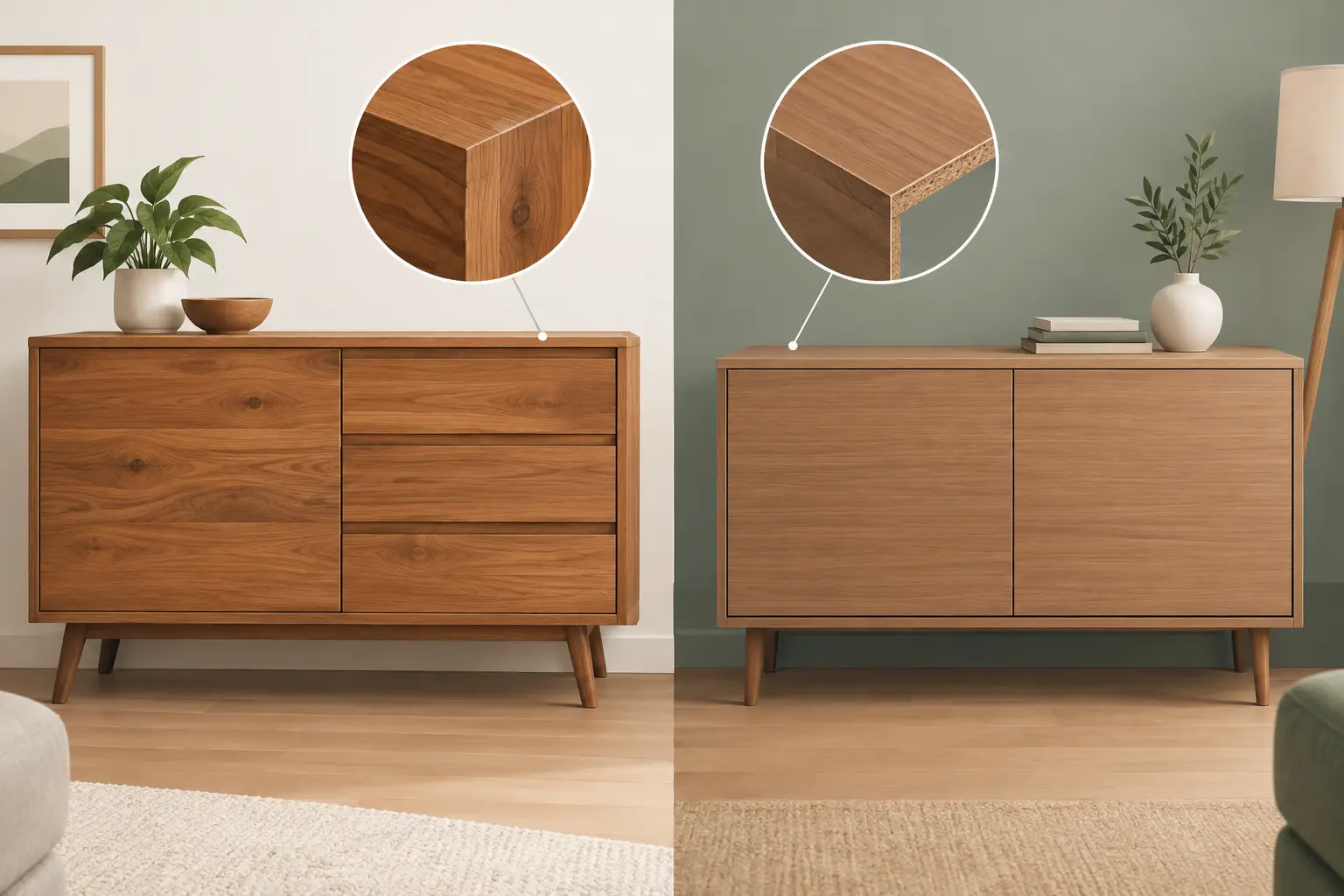
Solid wood furniture is made from lumber cut directly from a tree. A maple tabletop, for example, may be built from multiple solid maple boards glued edge to edge. That is normal and desirable construction. It is still solid wood because the material runs through the full thickness of the top.
Common hardwoods for furniture and work surfaces include maple, walnut, cherry, oak, and hickory. Each has its own grain pattern, color, hardness, and personality. Natural variation is part of the appeal. No two boards are identical, which means a well-made solid wood piece has a look that cannot be printed or repeated exactly.
Solid wood is especially well suited to pieces that take real use: dining tables, butcher block countertops, island tops, desks, benches, and floating shelves. It has thickness, weight, and the ability to be worked on years later rather than simply replaced.
That does not mean solid wood is maintenance-free. Wood responds to humidity, so it expands and contracts through seasonal changes. Skilled construction accounts for that movement with the right joinery and attachment methods. A quality finish and reasonable care also go a long way toward keeping the surface looking its best.
What Veneer Furniture Is Made Of
Veneer furniture uses a thin layer of real wood over a core material. That core may be plywood, MDF, particleboard, or another engineered panel. Quality veneer is not fake wood. A good veneer can show beautiful, genuine walnut, oak, or cherry grain at a lower cost than a thick solid-wood build.
The difference is in the construction beneath the surface. A veneer layer may be only a fraction of an inch thick. That makes it possible for manufacturers to create broad, consistent-looking panels and use high-end wood species more efficiently.
Veneer can be a sensible choice for cabinet panels, decorative furniture, and large case goods where stability and budget matter more than future refinishing. Plywood-core veneer, in particular, can be more stable across wide spans than a single solid board. The trouble starts when shoppers assume every veneered piece is built to the same standard. They are not.
A furniture-grade veneer over a stable plywood core is very different from a paper-thin wood-look layer over particleboard. Both may be marketed with similar words, but their durability, repair options, and long-term value can be miles apart.
Solid Wood Versus Veneer Furniture: The Differences That Matter
The best choice depends on the piece, but a few practical differences should guide the decision.
Durability and daily wear
Solid wood is generally the stronger choice for high-contact surfaces. A solid maple or walnut tabletop can take the ordinary marks of family life and still have plenty of material beneath the finish. Small dents, scratches, water rings, and worn areas can often be sanded and refinished by a professional or capable homeowner.
Veneer can hold up well with careful use, but its thin face layer gives it less room for repair. Sand too aggressively and you can cut through the veneer, exposing the core underneath. Once that happens, the repair is more involved and may never disappear completely.
For a dining table that hosts homework, holiday meals, and everyday dinners, solid wood earns its price through repairability. For a bedroom dresser that will mostly be admired rather than worked on, a well-built veneer piece may be perfectly practical.
Appearance and character
Solid wood has depth. Its grain, color shifts, knots, and mineral streaks are part of the material itself, not a surface treatment. As it ages, many species develop a richer tone and a lived-in patina that homeowners value.
Veneer can offer a more controlled appearance. Since veneer sheets can be selected and arranged as matching patterns, a large cabinet face or tabletop may look more uniform. That polished consistency works well in certain contemporary spaces.
Neither look is universally better. If you want a surface with natural variation and handmade character, solid wood usually delivers it more honestly. If you prefer a highly coordinated grain pattern across several panels, veneer may fit the design better.
Cost and value over time
Veneer furniture is often less expensive because it uses less premium hardwood. It can be a smart way to bring the look of walnut or white oak into a room without paying for thick lumber throughout the entire piece.
Solid wood costs more upfront because material selection, milling, joinery, sanding, and finishing take more labor. Custom sizing adds another layer of work, but it also solves a problem that off-the-shelf furniture cannot: getting a piece that actually fits your room.
The better value depends on how long you plan to keep it. A veneer piece may be the right answer for a short-term furnishing plan or a low-use room. A solid wood tabletop, shelf, or island top is often the better long-term investment when it will become part of the home for decades.
Weight, movement, and construction
Solid wood is usually heavier, which can be a benefit for a dining table or freestanding island that needs to feel anchored. It also moves with changing humidity, so it must be built by someone who understands wood movement. A poorly built solid wood piece can cup, crack, or split.
Veneered panels are often lighter and more dimensionally stable, especially when built over quality plywood. This can make veneer useful for broad cabinet panels and certain furniture designs. Still, stability in the panel does not make weak hardware, poor edge treatment, or low-grade cores any more durable.
When comparing pieces, look beyond the surface label. Ask about the core material, veneer thickness, joinery, edge construction, finish, and whether the manufacturer can explain how the piece is made.
Where Solid Wood Is Usually Worth It
Solid wood makes the most sense where hands, dishes, tools, and chairs meet the surface every day. Kitchen counters, butcher block worktops, dining tables, island tops, cutting boards, desks, and substantial floating shelves all benefit from real thickness and repairability.
It is also worth considering when dimensions are unusual. A standard 72-inch tabletop may be close, but close is not the same as right when you are planning walkways, seating, overhangs, or a kitchen renovation. A made-to-order solid wood piece can be built around your measurements, wood species, edge profile, and finish preferences instead of forcing your space to adapt to retail inventory.
At Tooill Cabinets, that practical fit is a major reason customers choose custom wood surfaces. A carefully built top should not just look good on delivery day. It should feel like it belonged in the room all along.
When Veneer Is the Sensible Choice
Veneer deserves a fair evaluation. It can be an excellent option when the furniture is decorative, the budget is firm, or a large matching set is more important than a single heirloom piece. It can also make rare or expensive wood species accessible without using thick stock throughout.
Choose veneer with open eyes. Favor a quality plywood core over particleboard when possible, inspect edges and corners closely, and ask whether the piece can be repaired if it is damaged. Avoid treating a low-cost veneered table like a solid butcher block surface. Coasters, placemats, prompt cleanup, and gentle cleaning matter more.
How to Buy With Confidence
Before buying, ask a simple question: what will this furniture need to survive? A console table in a quiet entry has different demands than a kitchen table used three times a day. Match the construction to the job, not just the photo.
For solid wood, ask what species is used, how the boards are joined, what finish protects the surface, and how to care for it. For veneer, ask what is under the veneer, how thick the veneer is, and whether edges are solid wood or simply covered to match. Clear answers are a good sign that the maker or seller stands behind the construction.
The piece you choose does not need to be the most expensive one in the room. It needs to be honest about what it is built to do. Choose solid wood where durability, custom sizing, and a surface that can grow with your home matter most. Then give it the care a well-made piece deserves, and let the everyday marks become part of its story.