
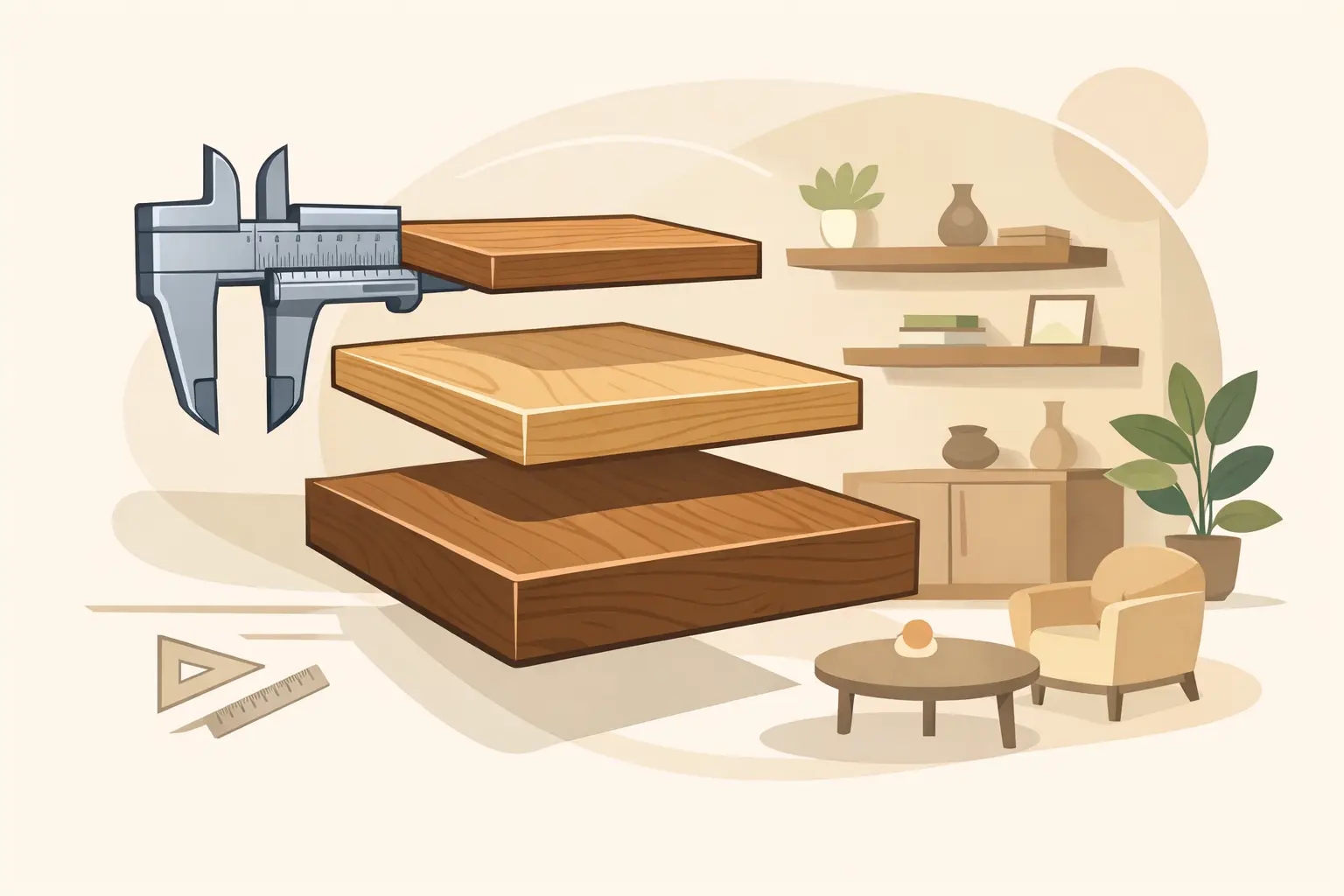
A floating shelf that looks perfect on paper can feel wrong the minute it goes on the wall. Too thin, and it can look cheap or out of proportion. Too thick, and it may feel bulky, heavy, or out of place in the room. If you’re wondering how to choose floating shelf thickness, the answer comes down to four things working together: shelf length, expected weight, visual style, and the type of wall it’s being mounted to.
A lot of people start with appearance alone. That makes sense because shelf thickness has a big effect on the final look. But good shelf design is never just about looks. Thickness also affects strength, bracket options, and whether the shelf feels balanced once you add dishes, decor, books, or daily-use kitchen items.
How to choose floating shelf thickness for your space
The most common floating shelf thicknesses are 1 1/2 inches, 2 inches, and 3 inches. Each one can work beautifully, but not in the same situations. A thinner profile usually feels cleaner and more modern. A thicker profile tends to look more substantial and can make a stronger statement, especially in kitchens and larger rooms.
For many homes, 1 1/2 inches is a solid starting point. It gives you the floating look people want without adding too much visual weight. This thickness often works well for shorter shelves, lighter decor, and spaces where you want the wood grain to show without making the shelf the dominant feature.
At 2 inches, you start getting a more substantial look. This is one of the most versatile options because it balances clean design with a stronger presence. In kitchens, laundry rooms, coffee bars, and bathrooms, 2-inch shelves often feel right because they look custom and substantial without going oversized.
A 3-inch shelf is more of a statement piece. It can look excellent in larger kitchens, over long backsplash runs, around range hoods, or in rooms with chunky beams, thicker countertops, or bold trim. But in a small bathroom or a tight nook, that same thickness can feel too heavy.
Shelf length changes everything
If there is one factor that deserves more attention than most buyers give it, it’s span. The longer the shelf, the more thickness matters.
A short shelf, say 24 to 30 inches long, can often look good and perform well at 1 1/2 inches if it’s mounted properly and not overloaded. Once you get into medium spans like 36 to 48 inches, 2 inches often starts to make more sense, both visually and structurally. For long floating shelves stretching 60 inches or more, extra thickness is often the safer and better-looking choice.
This is where proportion comes in. A 72-inch shelf with a thin face can sometimes look undersized even if the wood itself is strong enough. It may technically hold the load, but visually it can seem flimsy. A thicker front edge gives long shelves the right presence and helps them feel built for the space instead of added as an afterthought.
That does not mean every long shelf must be thick. It depends on the species, construction method, hidden bracket system, and what the shelf will carry. But when customers ask what thickness looks most natural on a long wall, the answer is usually not the thinnest option.
Think honestly about what the shelf will hold
Some floating shelves are mostly decorative. Others have to work for a living.
If your shelf will hold framed photos, a small plant, or a few lightweight accents, you have more flexibility. If it needs to support stacks of plates, mixing bowls, cookbooks, pantry jars, or heavy serving pieces, thickness becomes more than a design preference.
A thicker shelf often allows for a stronger internal support system and can better handle the visual expectation of carrying weight. Even when the hidden bracket does most of the structural work, people instinctively trust a thicker shelf more when it is loaded with real household items.
Kitchen shelves are a good example. Open shelving near prep areas tends to collect everyday dishes, oils, mugs, canisters, and serving pieces. In that setting, 2 inches is often a comfortable middle ground. It looks custom, supports a broad range of uses, and usually feels in scale with cabinetry and countertops. If the shelf is especially long or intended for heavier items, going thicker may be the better call.
Bathrooms are different. Towels, toiletries, and small decor are typically lighter, and the room itself is often tighter. A thinner shelf may be enough there, especially if you want a clean, less bulky look.
Match the thickness to the room’s visual weight
Floating shelf thickness should relate to the rest of the room. That is where many good shelves become great ones.
If your home has slim trim, shaker cabinets, simple lines, and a lighter overall style, an overly thick shelf can feel out of sync. A 1 1/2-inch or 2-inch shelf usually sits better in that kind of space.
If the room includes heavier wood elements, thick island tops, exposed beams, rustic hardware, or a bold range hood, a thicker shelf often looks more intentional. The shelf should not feel like the only heavy element or the only delicate one. It should belong.
Wood species and finish also affect the way thickness reads. A dark walnut shelf with strong grain can feel visually heavier than a light white oak shelf at the same thickness. A natural finish may feel softer and more organic, while a dark stain can make the shelf appear denser and more substantial. That is why there is no perfect thickness in isolation. Color, grain, and room style all change the result.
Thin shelves look modern, but there is a limit
Many homeowners like the crisp look of a thinner floating shelf, especially in modern or transitional spaces. That look works well when the shelf is short, lightly loaded, and installed in a room with minimal visual clutter.
The trade-off is that very thin shelves can lose the handcrafted, substantial look that many people want from real wood. In some cases, they also limit your mounting options. If your goal is to showcase solid wood craftsmanship rather than imitate a mass-produced shelf, a little more thickness often helps.
Thick shelves add presence, but can overpower a wall
A thicker shelf can look premium and custom-built. It can also help anchor a wall with tall ceilings, wide spans, or large surrounding elements.
But if you go too thick for the scale of the room, the shelf can start to dominate. In a narrow hallway, a compact bathroom, or a small alcove, that extra bulk may make the whole installation feel cramped. This is one of those areas where bigger is not automatically better.
Wall type and mounting matter more than people expect
When figuring out how to choose floating shelf thickness, don’t separate the shelf from the wall it’s going on. Drywall over studs, plaster, tile, masonry, and blocking all affect what is realistic.
A floating shelf is only as reliable as its mounting system. Longer rods, better bracket support, and strong stud attachment can make a huge difference. In many cases, thickness is partly determined by what the hidden hardware requires. Some bracket systems need enough shelf depth and face height to house the internal support correctly.
That means the right thickness is not only about the front profile you like. It is also about what gives you safe, stable installation. If a shelf is going in a kitchen and will be used daily, this matters even more. Nobody wants a shelf that looks great empty but starts sagging once it is actually used.
This is one reason custom sizing can be worth it. A shelf built to the exact length, depth, and thickness for your wall and intended load usually performs better and looks more intentional than forcing a stock option to work.
A practical way to choose the right thickness
If you want a simple rule of thumb, start by asking three questions. How long is the shelf? What will it hold most days? How heavy do you want it to look in the room?
For short decorative shelves, 1 1/2 inches often works well. For everyday-use shelves in kitchens, mudrooms, laundry rooms, and larger bathrooms, 2 inches is often the safest all-around choice. For long spans, heavier storage, or rooms with bold architectural elements, 3 inches may be the better fit.
If you’re between sizes, do not just default to the thinnest one. Think about the room five years from now, not just on install day. Shelves tend to gather more weight over time. What starts as styled decor often becomes real storage.
At Tooill Cabinets, we see this all the time with custom wood pieces. Customers often come in focused on the cleanest profile, then realize the right build is the one that balances style, strength, and proportion. That is usually what holds up best in a real home.
The best floating shelf thickness is the one that still looks right after the dishes, baskets, books, and everyday life move in.