
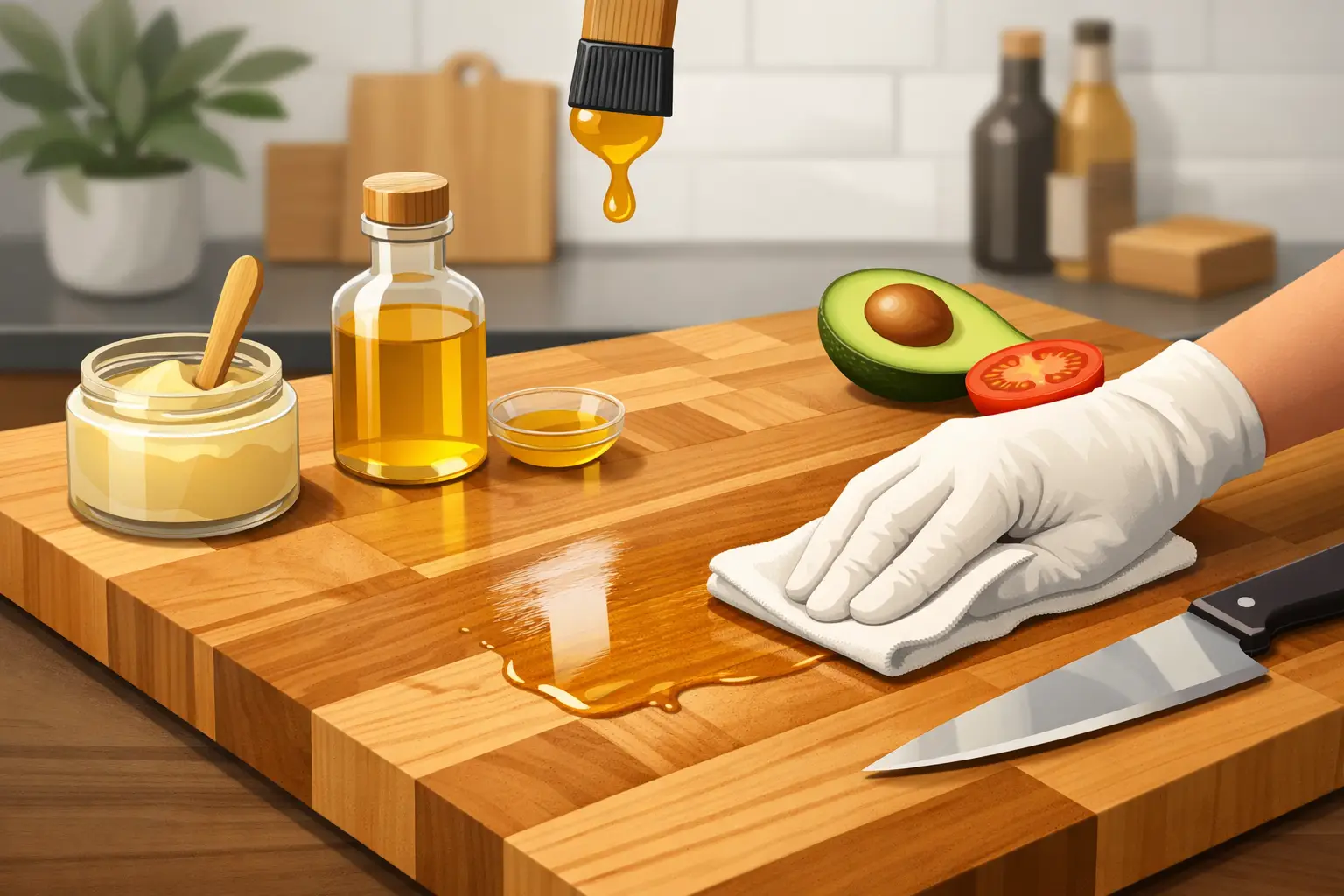
A butcher block can look perfect on install day and still disappoint six months later if the finish is wrong. That is why choosing the right food safe finish for butcher block matters just as much as choosing the wood species, thickness, or edge detail. The finish affects how the surface feels, how it handles moisture, how often it needs maintenance, and whether it makes sense for a cutting surface or a display top.
For most homeowners, the real question is not simply what is food safe. It is what is food safe and practical for the way you actually use the piece. A kitchen island that gets daily meal prep needs something different from a walnut dining table, and a cutting board needs something different from a countertop around a sink.
What food safe finish for butcher block really means
The phrase gets used loosely, and that is where confusion starts. Some finishes are considered food safe after they fully cure. Others are safe for incidental food contact but are not ideal for surfaces that will be cut on directly. Then there are finishes made specifically for repeated food-contact use, such as mineral oil and beeswax blends.
If you are talking about a true work surface where knives will touch the wood, the safest and most common choice is a penetrating oil and wax system. These finishes soak into the wood rather than building a hard film on top. That matters because a film finish can get scarred by knife cuts, and once that happens, the surface is harder to keep clean and harder to repair neatly.
If you are talking about a butcher block countertop that will be used more like a counter than a chopping station, the options open up. In that case, many homeowners prefer a more protective cured finish because it offers better resistance to spills, staining, and day-to-day wear.
The best options for a food safe finish for butcher block
There is no single best finish for every butcher block. There is a best finish for the job the surface needs to do.
Mineral oil and beeswax
For cutting boards, chopping blocks, and butcher block tops used for direct food prep, this is the classic choice. Food-grade mineral oil penetrates the wood, helps slow moisture exchange, and is simple to reapply. Beeswax adds a bit more water resistance and gives the surface a smoother feel.
The biggest advantage is repairability. If the surface gets scratched, dry, or dull, you clean it and apply more finish. There is no stripping, no sanding back a failing topcoat, and no patchy edge where a hard finish wore through. For customers who want a butcher block to stay functional for years, that ease of maintenance is a major plus.
The trade-off is upkeep. Mineral oil is not a once-and-done finish. It needs regular refreshing, especially early on and especially in dry homes or busy kitchens. It also offers modest protection against standing water, wine, oil splatter, and acidic spills.
Hardwax oil
Hardwax oils sit in the middle ground. They penetrate the wood but also leave behind a cured protective layer. Some are marketed for countertops, furniture, and interior wood surfaces that need a natural look with more protection than straight oil.
This can be a strong choice for butcher block counters that are not being used as giant cutting boards. Hardwax oil keeps more of the natural wood feel than a thick film finish, and spot repairs are often easier than with polyurethane. It also tends to look less plastic and more handcrafted, which matters if you are investing in real wood for its character.
The caution is simple: not every hardwax oil is appropriate for every level of food contact, and not every product labeled natural is equal. You need to read the product specifications carefully and confirm its cured food-contact status. For direct knife work, many woodworkers still prefer mineral oil and wax because the maintenance approach is cleaner and more predictable.
Salad bowl finish and other cured oil-varnish blends
These finishes are often used for wood items that come into food contact but are not intended for heavy chopping. Once fully cured, many are considered food safe. They give better spill resistance than mineral oil and usually last longer between maintenance cycles.
For a butcher block island, coffee station top, or baking surface where appearance and moderate protection matter, these blends can work well. They are less ideal for a surface that will be cut on hard and often, because knife damage breaks the finish layer and makes touch-ups more complicated.
Polyurethane and similar film finishes
This is where a lot of homeowners get mixed messages. Fully cured polyurethane is generally considered safe for incidental food contact, but that does not make it the best butcher block finish across the board. If your butcher block is being used strictly as a countertop and not for chopping, polyurethane can offer strong water resistance and low maintenance.
But if you plan to cut directly on it, skip it. Knife marks will damage the film, the surface will look worn faster, and repairs usually require sanding and refinishing a larger area. On a handmade wood surface, that is not always the look or maintenance path people want.
How to choose the right finish for your space
The easiest way to decide is to be honest about use. A lot of butcher block countertops are installed with good intentions about cooking from scratch and cutting right on the surface. In real life, most people use cutting boards for raw meat, fast knife work, and easier cleanup. If that sounds like your kitchen, a more protective cured finish may be the better fit.
If you want the top to function like a true prep block, choose mineral oil and beeswax and accept the maintenance as part of owning real wood. If you want the warmth of butcher block with easier day-to-day care, consider a finish designed for countertops rather than chopping.
Location matters too. Around a sink, moisture exposure is constant. Next to a range, grease and heat become part of the equation. In a laundry room, coffee bar, or pantry, the demands are lighter. The more water and staining risk a surface sees, the more protective the finish usually needs to be.
Wood species also plays a role. Tight-grained hardwoods can behave differently than open-grained species when absorbing oil or resisting stains. But even the best wood will struggle if the finish does not match the use.
What maintenance actually looks like
Oil-and-wax finishes are simple but recurring. A new butcher block may need several coats up front, then occasional reapplication depending on use, climate, and cleaning habits. If the wood starts to look dry or water stops beading on the surface, it is time.
Hardwax oils and cured countertop finishes need less frequent attention, but they are not maintenance-free forever. They still benefit from gentle cleaning, avoiding standing water, and addressing wear before it becomes damage.
No matter the finish, butcher block should not be soaked, left wet around seams, or cleaned with harsh chemicals. Real wood rewards basic care, but it also makes its needs known pretty quickly.
Common mistakes homeowners make
One of the most common mistakes is choosing a finish based on a label alone. Food safe sounds reassuring, but it does not tell you whether the finish is right for cutting, right for counters, or easy to maintain.
Another mistake is expecting butcher block to behave like quartz. Wood is warmer, more character-rich, and easier to refinish, but it is also a natural material that moves and wears differently. The finish should support that, not fight it.
The last big mistake is underestimating maintenance on an oil-only surface in a busy kitchen. Some people love the ritual of caring for wood. Others want a countertop they can wipe and forget. Neither approach is wrong, but the finish should match the owner.
Our practical recommendation
If you are buying a cutting board or a butcher block surface meant for direct knife use, a food-grade mineral oil and beeswax finish is usually the smartest choice. It is proven, repairable, and well suited to real food prep.
If you are choosing a butcher block countertop for a kitchen, island, or work surface that will not be used as the main chopping station, a more durable cured finish often makes better sense. You get easier cleanup, better stain resistance, and less frequent maintenance while still keeping the warmth of solid wood.
At Tooill Cabinets, that balance matters because custom wood surfaces should fit the way a home is actually used, not just how they look in a photo. The best finish is the one that respects the material, protects the investment, and makes daily life easier.
If you are stuck between two options, start with one honest question: will this surface be cut on, or lived on? That answer usually tells you exactly where to go.