
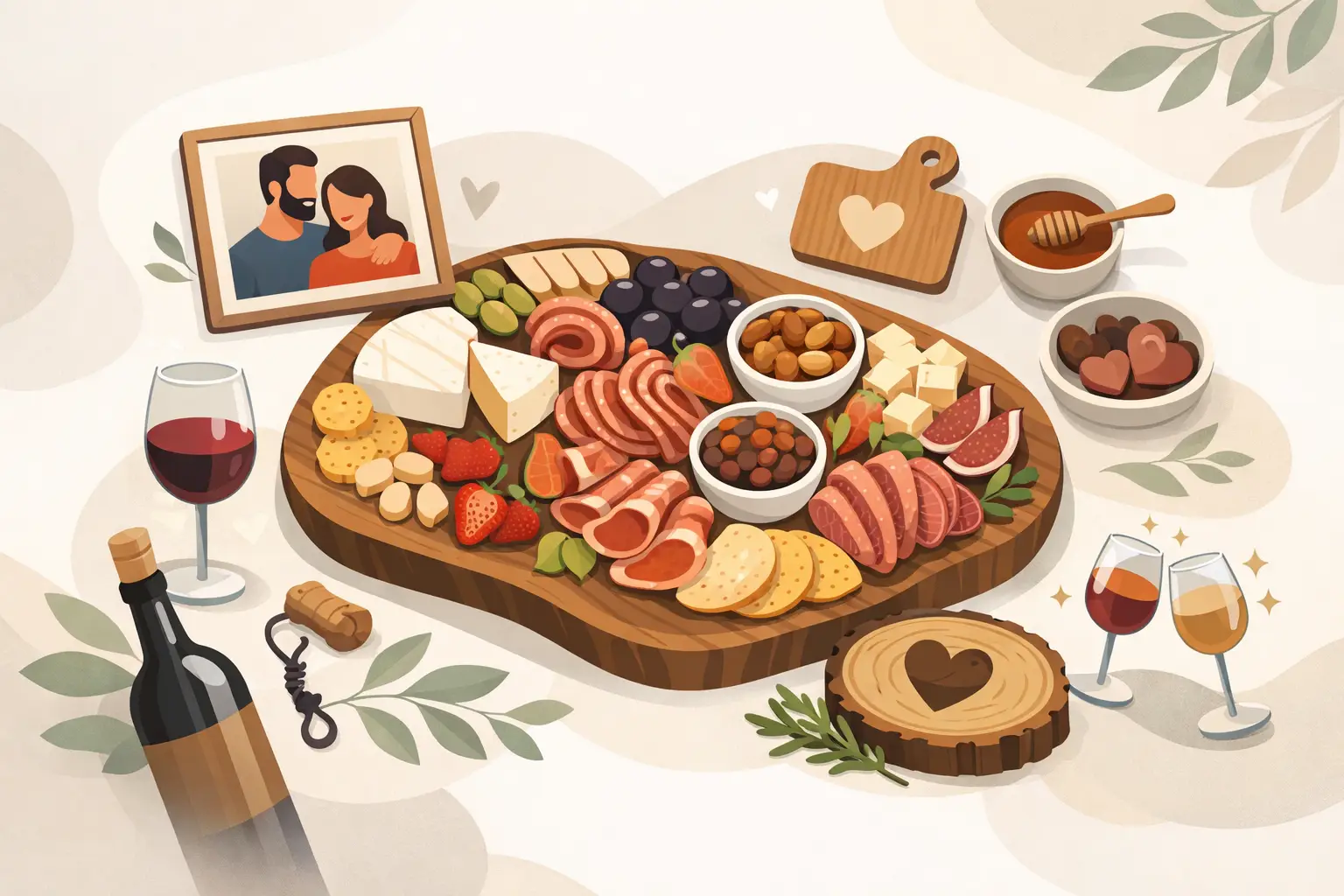
A charcuterie board gets remembered when it feels like it belongs to the people gathered around it. The best custom charcuterie board ideas start with that simple goal: make a useful serving piece that reflects your kitchen, your hosting style, or the person receiving it as a gift.
A handmade wood board has more presence than a tray pulled from a cabinet at the last minute. It can become the surface for holiday appetizers, game-night snacks, birthday desserts, and the quiet Friday-night cheese plate that needs no special occasion. Choosing the right details makes the difference between a board that is merely attractive and one that becomes part of the home.
Start With the Right Board Size
Size is the first decision because it determines how the board will actually be used. A smaller board is practical for two people, small gifts, or a countertop display. A larger board gives a host room for cheeses, cured meats, fruit, crackers, spreads, and serving utensils without crowding everything together.
For a couple or a compact kitchen, a board around 12 by 18 inches is often a comfortable everyday size. A 15 by 20-inch or 18 by 24-inch board makes a better fit for family gatherings and entertaining. If the board will live on a kitchen island or dining table, measure the surface before ordering. A board should feel generous without swallowing the table or becoming awkward to carry.
Thickness matters, too. A thinner board is lighter and easier to store, while a thicker solid wood board feels more substantial and makes a strong statement on a buffet or island. For a gift board, balance appearance with the recipient’s real habits. Someone who hosts often may love a larger, heavier piece. Someone in an apartment may get more use from a refined, easy-to-store size.
Custom Charcuterie Board Ideas by Wood Species
The wood sets the visual tone before a single piece of cheese reaches the board. Each species brings its own color, grain, and personality, so it helps to choose based on the room as well as the board’s purpose.
Walnut for a rich, classic look
Walnut is a favorite for charcuterie boards because of its deep brown color and naturally elegant grain. It works especially well in kitchens with black hardware, darker cabinets, warm brass accents, or traditional furniture. A walnut board can make even simple foods look more intentional.
Because walnut is dark, a lighter engraving or a contrasting inlay can stand out nicely. It also pairs well with pale cheeses, crackers, and colorful fruit. If the board will stay on display between gatherings, walnut has the furniture-like character many homeowners want.
Maple for a clean, bright kitchen
Maple has a lighter, more understated appearance. It suits modern, farmhouse, Scandinavian-inspired, and light neutral kitchens. Its clean color gives food plenty of contrast, especially berries, olives, salami, and dark chocolate.
A maple board is a smart choice when the goal is a personal engraving that is easy to read without overpowering the design. It can feel polished and special while still being relaxed enough for everyday use.
Mixed hardwoods for more visual movement
A striped or mixed-species board brings in more contrast and a custom furniture feel. Combining light and dark woods can complement a kitchen island, dining table, or floating shelves already in the room. The trick is restraint. Two or three wood tones usually look more timeless than a busy mix of many colors.
For a board that will mostly be used for serving, decorative grain patterns can take center stage. If it will also see regular knife work, choose a construction and finish made for real kitchen use, then maintain it with food-safe board oil as needed.
Make the Edges Work Harder
The edge profile is a small detail that changes both comfort and appearance. Rounded corners and softened edges feel friendly in a casual kitchen. A crisp square edge has a more architectural look and can complement clean-lined cabinetry. A gently eased edge is a dependable middle ground because it is comfortable to hold and still looks tailored.
Handles are another practical design choice. Cutout handles make a larger board easier to lift from a counter or carry to the table. Metal handles can add a more decorative serving-tray style, but they may not be the best choice if the board is also intended for chopping. For a piece that will do both jobs, integrated handholds are usually the more useful option.
Consider whether you want feet. Small non-slip feet can keep a serving board stable and lift it slightly off the table, creating a finished presentation. On the other hand, a flat board is easier to flip, stack, and use on either side. There is no universal right answer. It depends on whether the board is primarily a display and serving piece or a working cutting surface.
Add Personalization With a Light Touch
Engraving turns a well-made board into a meaningful gift, but the best designs do not try to say everything. A family name and established date, a set of initials, a favorite short phrase, or the coordinates of a meaningful place can be enough.
For wedding and housewarming gifts, a last name with a simple date is a classic choice. For a retirement, anniversary, or holiday gift, a short message on the back preserves the serving surface while still making the piece personal. For a family that entertains often, an engraved name along one edge can feel custom without taking attention away from the food.
Placement is just as important as wording. Center engravings have a formal look, while a small mark in one corner is quieter and more flexible. If you want the board to stay useful for years, avoid oversized graphics that leave the owner hesitant to put food on it. Personalization should support the craftsmanship, not cover it up.
Build a Board Around How You Host
The strongest custom charcuterie board ideas come from real routines. Think about what comes out when friends arrive at your house. If you like casual grazing, a wide rectangular board gives everyone easy access. If you serve bread, dips, and small bowls, choose a board with enough depth to prevent the arrangement from feeling cramped.
A long, narrow board works well down the center of a dining table or kitchen island. It is especially useful for a bread-and-butter spread, a row of desserts, or a simple meat-and-cheese arrangement before dinner. Round boards create a softer, more social presentation and work nicely on a coffee table or small gathering table, though they offer less straight-edge space for crackers and utensils.
For larger events, consider a matched set rather than one oversized board. Two or three coordinating boards can separate meats, cheeses, desserts, and gluten-free options while still looking intentional. They are also easier to store and carry than one massive piece of wood.
Choose Details That Will Age Well
A charcuterie board should look better after years of use, not become too precious to enjoy. Solid hardwood, a food-safe finish, and proper care give the board its staying power. Wood will develop small signs of use over time. That is part of its character, especially on a board that earns its place at family gatherings.
Avoid soaking a wood board or putting it in the dishwasher. Wash it by hand with mild soap, dry it promptly, and refresh it with a food-safe mineral oil or board conditioner when the surface starts to look dry. Regular conditioning helps preserve the wood and brings out the grain.
If the board is intended only for serving, you can lean further into decorative details. If it will be used for slicing and prep, keep the design functional: smooth surfaces, comfortable edges, and a size that fits the sink and drying area. A skilled custom maker can help match those choices to how the board will be used instead of asking you to settle for a one-size-fits-all option.
At Tooill Cabinets, custom woodwork is built around that practical kind of personalization: dimensions that fit the space, hardwood character that fits the home, and details made to be enjoyed rather than just admired.
A good charcuterie board does more than hold food. Choose the size, wood, and personal details with the people around the table in mind, and it can become the piece everyone reaches for when there is something worth sharing.