
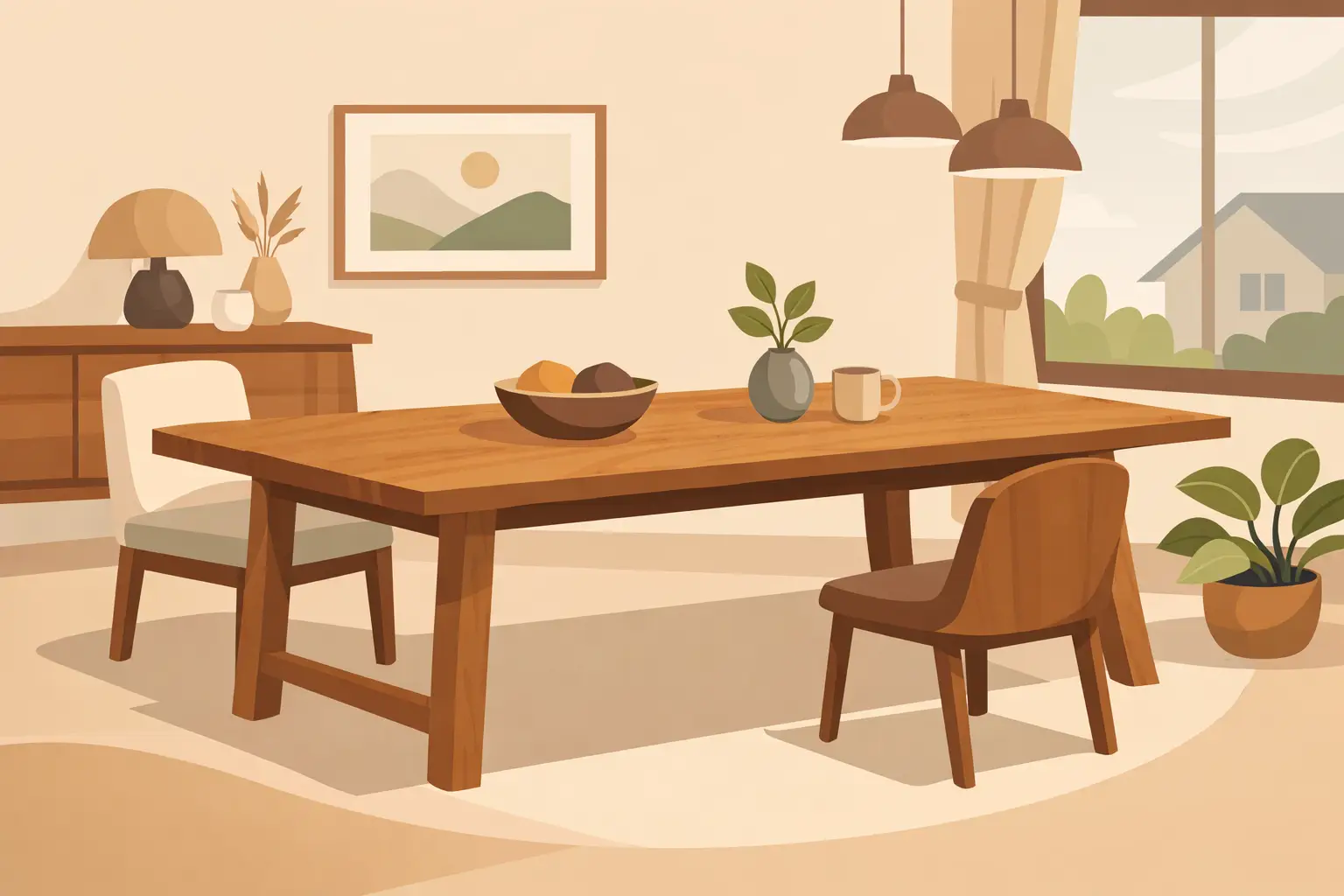
A dining table gets judged long after delivery day. It gets judged by a hot takeout container, a child’s homework, a chair bumped into the apron, and the years of meals that leave their mark. This solid wood table review looks at what separates a table that merely looks good online from one that feels right, fits the room, and earns its place in a real home.
A well-made solid wood table is not about chasing perfection. Wood has grain variation, natural color shifts, and the ability to move slightly with seasonal humidity. Those characteristics are part of the material, not defects. The question is whether the table has been designed and built to handle them honestly.
Solid Wood Table Review: Start With the Build
The first thing to verify is simple: is the top actually solid wood? A solid wood top is made from real lumber boards joined together, rather than a thin wood veneer applied over particleboard, MDF, or plywood. Veneer furniture can have a place in a budget-conscious room, but it cannot be refinished the same way, and damage can expose the substrate beneath the surface.
With a solid wood table, small scratches, water marks, and ordinary wear are usually repairable. Depending on the finish and the depth of the damage, the surface can often be cleaned, lightly sanded, touched up, or eventually refinished. That serviceable lifespan is a major part of the value.
Look underneath the table, too. The base should support the top without preventing natural wood movement. A tabletop expands and contracts across its width as humidity changes. A builder who rigidly fastens it in every direction may create stress that can lead to splitting, cupping, or loose joints over time. Proper attachment methods allow the top to move while keeping it secure.
Joinery matters most where the table takes daily force: at the base, legs, aprons, and any extension components. Thick, stable parts and well-fitted connections tend to hold up better than lightweight pieces held together with minimal hardware. That does not mean every quality table has to be bulky. It means the construction should match the size, weight, and intended use of the piece.
The Wood Species Changes More Than the Color
The species you choose affects appearance, hardness, grain pattern, and long-term maintenance expectations. There is no universal best choice. The right wood depends on how your household uses the table and what kind of character you want to see every day.
Maple is a strong choice for a clean, light look. Its grain is generally subtle, making it a natural fit for modern kitchens, Scandinavian-inspired rooms, and spaces where the cabinetry or flooring already has a lot of visual movement. It is hard enough for daily use, though no wood surface is completely scratch-proof.
Oak offers pronounced grain and a familiar, grounded look that works across farmhouse, traditional, and contemporary interiors. It takes stain well, but a clear finish can also highlight its natural texture. White oak and red oak have distinctly different color tones, so samples are especially useful when matching existing woodwork.
Walnut brings rich brown color and a refined grain pattern. It can make a table feel like a focal point without adding ornament. Walnut is softer than maple or oak, so it may show dents more readily in a busy household. For many owners, that gentle wear becomes part of the table’s story. For others, especially those who want the most forgiving surface for active kids or heavy use, maple or oak may be the better fit.
Cherry is another warm, classic option that deepens in color as it ages. Its change over time is one reason people love it, but it is worth understanding before ordering. Freshly made cherry will not look exactly the same several years from now.
A Good Finish Protects Without Hiding the Wood
A table finish should fit the way you live. A hard film finish offers strong resistance to moisture, food spills, and routine cleaning. It is often a practical choice for a dining table that will see frequent use. The look can range from low-sheen and natural to more polished, depending on the product and application.
Oil finishes create a warmer, more hand-rubbed feel and make it easier to spot-repair small areas. They also ask more of the owner. Many oil-finished tables benefit from periodic reapplication, particularly when the surface begins to look dry or absorbs moisture quickly. This is not a deal-breaker, but it is a maintenance commitment worth making on purpose.
Finish sheen deserves attention as well. A glossy surface reflects light and can look formal, but it may make fingerprints and fine scratches more visible. A satin or matte sheen is often more forgiving in an everyday kitchen or dining room. It lets the grain do the talking while keeping the table easier to live with.
Whatever finish you choose, use coasters for cold drinks, trivets for hot cookware, and a soft cloth for cleanup. Avoid harsh cleaners, abrasive pads, and standing water. Good care is straightforward, but it is still care. Solid wood furniture rewards the owner who treats it like a lasting material rather than disposable decor.
Size Is Where Custom Work Makes a Difference
A beautiful table that crowds the room is not a successful table. Before choosing dimensions, measure the full dining area, not just the empty space where the tabletop will sit. You need room to pull chairs out, walk behind seated guests, and move comfortably around the table.
As a general starting point, leave about 36 inches between the edge of the table and walls, cabinets, or other furniture when the room allows. Tighter spaces can work, but they need a more deliberate chair choice and may be better suited to a bench on one side. Also account for the table’s base. Pedestal bases often give diners more legroom, while four-leg tables can offer a traditional look but may limit where chairs can be placed.
Shape changes the experience. A rectangular table makes efficient use of a long room and works well for larger gatherings. A round table encourages conversation and softens a square space, though its seating capacity is limited by diameter. An oval top can provide some of the flow of a round table while accommodating more people.
This is where made-to-order construction is especially valuable. Instead of settling for a standard retail size that is almost right, you can specify length, width, thickness, edge profile, wood species, finish, and base style around your actual room. At Tooill Cabinets, that approach reflects the point of handcrafted woodwork: the piece should be built for the space and the people using it.
What to Expect From Handmade Wood
Handmade does not mean identical to factory furniture. In fact, the visual variation is one of the reasons to choose it. Boards may show different grain density, mineral streaks, knots, or shifts in tone. A clear finish can make those details more visible, while stain may even out some color differences without eliminating the wood’s character.
Ask for clarity about what is considered natural variation and what the builder will avoid. For example, some customers want clean, consistent boards with minimal knots. Others want a more rustic surface with visible character. Neither preference is wrong, but the order should reflect it before lumber is selected and work begins.
Also consider the practical side of delivery. A solid wood table is heavy, especially with a thick top or large base. Confirm how it will arrive, whether assembly is required, where the delivery team will leave it, and whether you will need help moving it into the room. Careful packaging protects the piece in transit, but planning the path from the front door to the dining room prevents a stressful delivery day.
The Honest Value of a Solid Wood Table
Solid wood tables usually cost more than flat-pack furniture because the material, labor, finishing, and shipping are real costs. The better comparison is not the initial price alone. It is whether the table fits properly, remains stable, can be repaired, and still looks like it belongs in your home after years of use.
A lower-priced table may be the right answer for a temporary space, a rental, or a fast furnishing deadline. But if you are remodeling a kitchen, furnishing a long-term home, or creating a place where family gathers often, solid wood offers something mass-produced furniture rarely does: a surface that can age with you instead of being replaced at the first serious scratch.
Choose the species you enjoy seeing, size the table for the way your household actually gathers, and accept that real wood will gain a little character along the way. The best table is not the one that stays untouched. It is the one that becomes part of the life happening around it.