
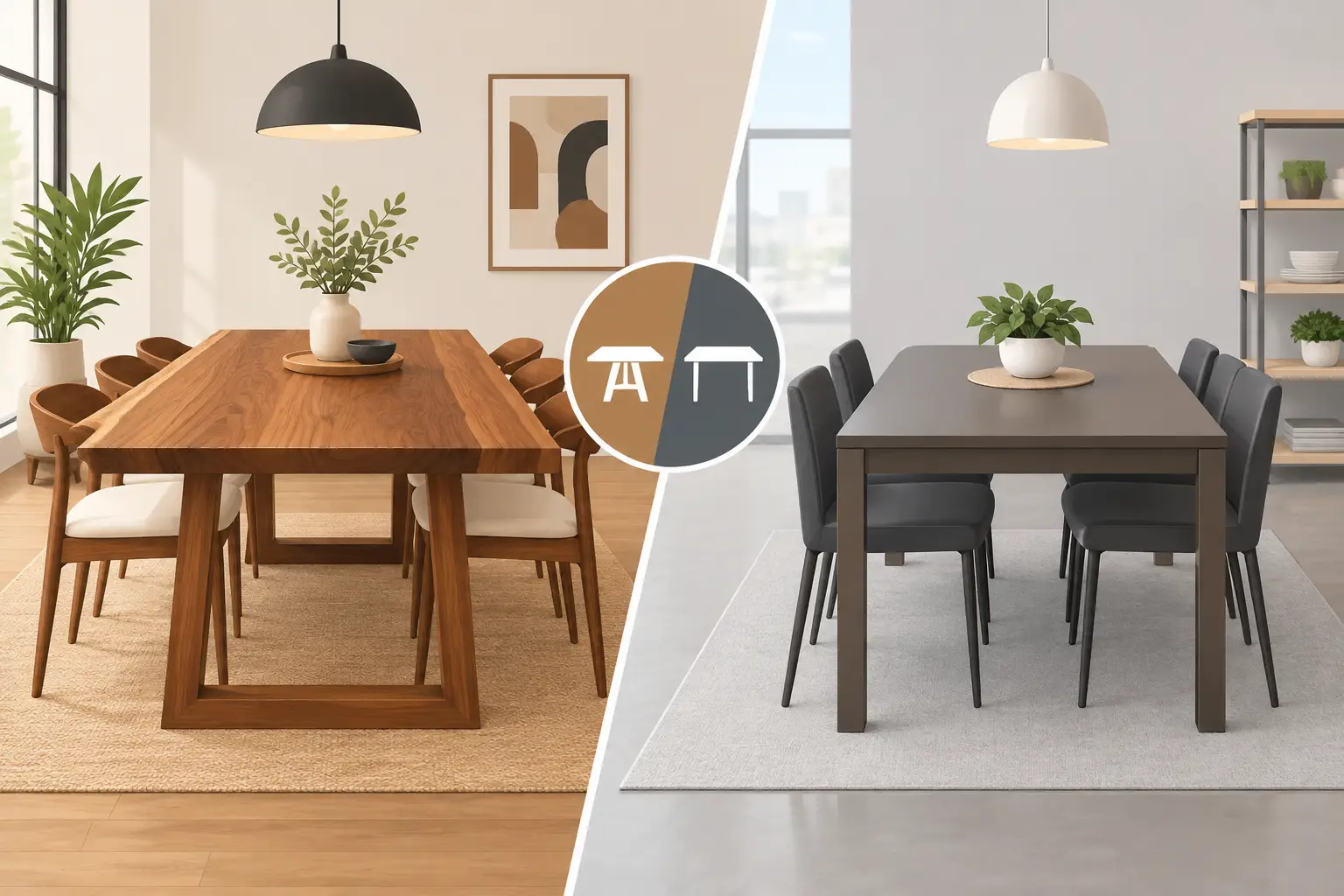
A dining table can look perfect in a showroom and still feel wrong the first time everyone sits down. Maybe it leaves too little room to walk behind the chairs, overwhelms a narrow dining area, or falls short when family comes over. The custom dining table vs store bought decision is really about whether you need furniture that simply fills a space or a table built around the way your home works.
A store-bought table can be a smart, practical choice. A custom solid wood table can be a lasting part of the home. The better option depends on your room, budget, timeline, and expectations for the piece years from now.
Custom Dining Table vs Store Bought: Start With the Fit
Sizing is where standard retail furniture most often asks homeowners to compromise. Big-box and furniture stores stock common dimensions because they need one design to work for many homes. If your room has an unusual footprint, a built-in bench, an open kitchen layout, or limited clearance near a doorway, those standard sizes may not serve you well.
A custom dining table begins with the usable space, not a preset product listing. You can choose the exact length and width, then account for chair depth and circulation around the table. As a general rule, allow about 36 inches between the edge of the table and a wall or major furniture piece where people need to pass. Tighter spaces can work, but that clearance makes everyday meals much more comfortable.
Custom sizing also matters when seating is the priority. A family that eats at the table every night may need room for six without elbows competing for space. Someone who hosts holidays may want a long table that becomes the center of the room. A round, square, or narrow rectangular top can make better use of certain layouts than the standard rectangle found on a sales floor.
Store-bought tables work well when your room matches a common layout and you can find a size that truly fits. If you are furnishing an apartment, staging a home, or need a table quickly, choosing an in-stock option may be the most sensible path. The key is to measure before falling in love with the finish or price tag.
Material Quality Is More Than a Surface Detail
Not all wood furniture is built the same way. Many retail tables use veneer, engineered wood, thin solid-wood components, or mixed materials designed to meet a price point and ship efficiently. That does not automatically make them poor furniture. A well-made veneer table can be stable, attractive, and appropriate for lighter use. But it has limits when it comes to repair, refinishing, and long-term wear.
A handcrafted solid wood dining table offers a different kind of value. The grain has real depth, the edges can be shaped to your preference, and normal signs of life can often be addressed instead of hidden. Small scratches, water marks, and worn finish are part of owning a table that is used. With a quality build and an appropriate finish, solid wood can be maintained for decades.
Wood selection matters, too. Hard maple is clean and bright with a tight grain. Walnut brings rich brown color and a more refined, dramatic look. White oak has strength and a distinctive grain that fits everything from traditional homes to modern spaces. Each species has its own color variation, hardness, and character. With custom work, you are choosing the material as well as the table.
That character is worth considering honestly. Solid wood moves slightly with seasonal changes in humidity. Natural grain variation, knots, and color shifts are not flaws to be eliminated. They are part of what makes a handmade wood surface feel alive rather than printed or manufactured to look identical from one piece to the next.
Price: Compare the Full Value, Not Just the Starting Number
A store-bought dining table usually has the lower upfront price, particularly during sales. That can make it the right choice when the budget is firm or the table is temporary. Retail furniture also makes comparison shopping easy because the price, dimensions, and delivery window are already set.
A custom table costs more because it involves made-to-order labor, solid materials, selected dimensions, finishing work, and careful packaging. It is not competing with the least expensive flat-pack table. It is competing with the cost of replacing furniture that never quite fit, wears out early, or no longer suits the home after a renovation.
Still, custom is not automatically the best financial decision for every household. If you expect to move soon, have not settled on your design style, or need to furnish several rooms at once, spending less on an in-stock table may preserve room in the budget for other priorities. A custom table makes the strongest case when the room is staying put and the table will see real daily use.
When comparing quotes or product prices, look beyond the top-line number. Confirm whether the price includes the size you need, the wood species, finish, edge profile, legs or base, freight protection, and any special details. Two tables that appear similar in a photo can be very different in construction and service.
The Details You Can Control With Custom Work
The biggest advantage of custom furniture is not simply getting a different size. It is getting the small decisions right before the table is built.
A custom top can be tailored to the visual weight of the room. A thicker top has a substantial, grounded presence, while a slimmer profile can keep a compact dining area feeling open. Edge profiles can stay square and clean, take on a softened eased edge, or carry a more traditional shape. The base can be designed to provide legroom where you need it, whether that means four legs, a trestle, or a pedestal-style support.
Finish deserves the same attention. A finish affects the color, sheen, feel, and maintenance needs of the table. A natural look highlights the wood itself. A stain can better coordinate with cabinetry, flooring, or existing chairs. For homes with children, frequent entertaining, or everyday family meals, discuss the level of protection and care the finish requires instead of selecting solely from a color sample.
At Tooill Cabinets, made-to-order woodwork is built around these practical choices: dimensions that fit, real wood selected for the project, and communication before the work begins. That process is especially valuable when a table needs to match an island top, floating shelves, or other wood elements already in the home.
Lead Time and Convenience Are Real Trade-Offs
Retail wins on speed. If a table is in stock, it may arrive within days or be ready for pickup. For a new home, an upcoming event, or a room that needs immediate function, that convenience is hard to beat.
Custom work requires patience. The piece must be built, sanded, finished, cured as needed, inspected, and packed for shipping or delivery. Lead times vary with the design and shop schedule, so ask early if you have a firm deadline. A custom table is a poor fit for a dinner party next weekend, but a strong fit for a planned renovation or a home you are furnishing with intention.
Convenience also includes confidence after the sale. With mass-produced furniture, support can be limited to a return window or a replacement part. With a custom maker, clear communication during planning helps prevent surprises before the wood is cut. You should be able to ask about dimensions, material options, finish expectations, and how the table will be protected in transit.
Which Choice Fits Your Home?
Choose store bought when speed, a lower starting cost, and straightforward shopping matter most. It can be a very good answer for a standard-size room, a short-term home, or a first furnishing phase where flexibility matters more than permanence.
Choose custom when the room has specific constraints, the table needs to coordinate with other woodwork, or you want the durability and character of a solid wood piece made for everyday use. It is also the better route when you have a clear vision but cannot find a retail option that gets the proportions, species, base, and finish right at the same time.
Before making either choice, tape the table dimensions on the floor, pull out the chairs you plan to use, and walk the paths around it. A dining table is where backpacks land, homework spreads out, birthdays gather, and ordinary weeknight meals happen. Pick the one that gives those moments enough room to grow.