
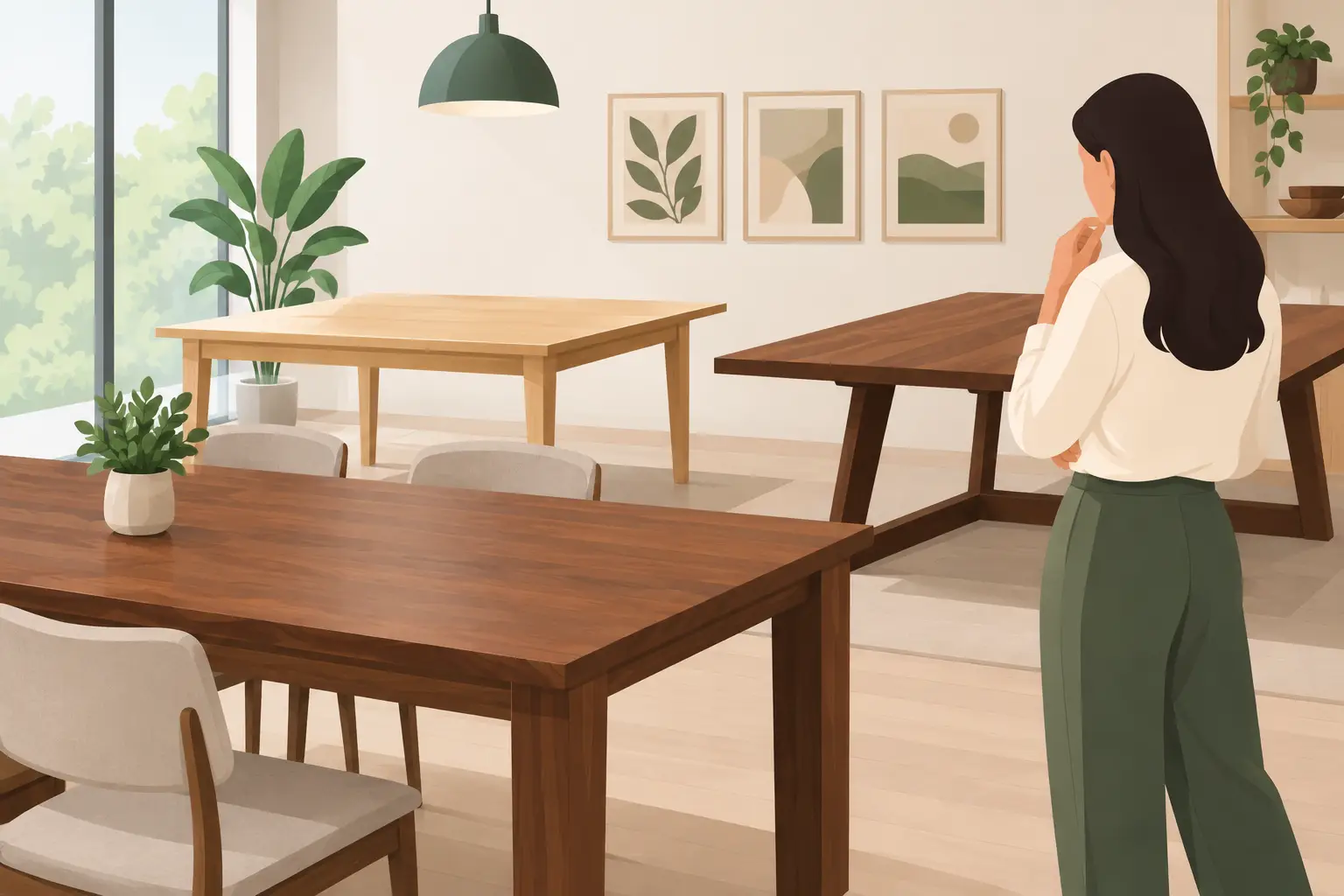
A wood table has to earn its place. It needs to fit the room, handle real meals and daily use, and still look right years after the first delivery pizza, school project, holiday dinner, or coffee ring. This wood table buying guide focuses on the choices that make the biggest difference: dimensions, wood species, construction, finish, and the value of having a table built for your actual space instead of a showroom floor.
Start With Size, Not Style
Most table-buying regrets come down to scale. A table can be beautifully made and still feel wrong if it crowds the room or leaves diners with no elbow room. Before choosing a species or edge profile, measure the full area around where the table will sit.
As a reliable starting point, leave 36 inches between the table edge and walls, cabinets, or other furniture. That allows people to pull chairs out and walk behind someone who is seated. In a tighter room, 30 inches can work, but traffic will feel more restricted. If a buffet, island, or door sits nearby, account for how it functions on a normal day, not just when the room is empty.
Seat count matters, but table shape changes how that seating works. A rectangular table uses a long, narrow dining room well and makes the most sense for larger groups. Round tables encourage conversation and soften a square room, though they need more open floor area as their diameter increases. Square tables work nicely for four people, while an oval top can bring a little more circulation to a compact dining area.
Allow about 24 inches of table width for each diner, with 30 inches feeling more generous. For depth, 36 to 42 inches is a comfortable range for everyday dining because it leaves room for place settings and shared dishes. A narrower table can be the right call in a tight room, but it may be better for casual meals than large gatherings.
Choose a Height That Matches the Seating
Standard dining table height is usually 29 to 30 inches. With most dining chairs, that leaves the comfortable 10 to 12 inches of clearance between the seat and the underside of the top. Counter-height tables generally run 34 to 36 inches, and bar-height tables are taller still. Do not assume a favorite chair will fit under any table. Measure the chair arm height, seat height, and the table apron or support structure before ordering.
If the table will double as a work surface, an island extension, or a family craft station, standard dining height is often the most versatile. If it will serve stools at a kitchen island, build around the finished height of the surrounding counters and the seating you plan to use.
Wood Table Buying Guide: Pick the Right Species
Solid wood has character, and that character is not identical from board to board. Grain variation, mineral streaks, knots, and color shifts are part of what makes a handcrafted table feel genuine. The right species depends on the look you want and how hard the table will work.
Hard maple is a strong choice for clean, light-toned spaces. Its grain is relatively subtle, its surface is hard, and it works well in kitchens and busy family homes. Walnut brings deeper brown color and more dramatic grain, making it a natural fit for a warmer, more refined look. It is durable for furniture, though its darker color and premium appearance usually come with a higher price.
Oak is a dependable option with pronounced grain and classic durability. White oak has a more contemporary, refined look than many people expect, while red oak carries warmer undertones. Cherry starts lighter and grows richer with age and exposure to light. Hickory brings bold contrast and exceptional toughness, but its active grain is a design choice, not a quiet background material.
There is no universally best wood species. A light maple table may suit a bright kitchen better than walnut, while a walnut slab can become the visual anchor in a dining room with simpler finishes. If scratches from kids, pets, or daily use are a concern, remember that wood tables can be repaired and refreshed. A little wear may also be more visible on very dark, very smooth finishes than on a natural wood grain with varied color.
Look Below the Surface: Construction Matters
A thick-looking tabletop is not automatically a well-built table. The way the wood is joined, supported, and allowed to move matters far more over time. Solid wood expands and contracts as indoor humidity changes. A quality table is built to respect that movement rather than locking the top in place and inviting splits, warping, or loose joints.
For a solid wood top, look for properly joined boards, a flat and well-sanded surface, and support that suits the table’s size. Wide tables and long spans may need aprons, stretchers, legs, or a metal support system designed around the top. The goal is not to overbuild every table. It is to create a base that feels solid without interfering with knee room or making chairs difficult to place.
Leg placement deserves close attention. Four corner legs are familiar and sturdy, but they can limit where guests sit. A trestle base often provides more flexible seating along the sides, though the center supports need to work with the chairs you own. Pedestal bases are excellent for round tables because they eliminate corner-leg conflicts, but the base must be sized properly to keep the table stable.
Ask whether the top is solid wood, veneer over a manufactured core, or a mix of materials. Veneer is not automatically poor quality. It can be a practical choice for certain designs and can provide stability in large panels. But buyers who want the depth, repairability, and lasting feel of solid lumber should confirm exactly what they are getting. Clear material details are part of good craftsmanship.
Thickness, Edges, and Everyday Feel
Tabletop thickness affects both appearance and performance. A thicker top has visual weight and can suit large rooms, farmhouse designs, and statement tables. A slimmer top often looks cleaner and lighter in a modern space. Either can be well made when the base and support are designed correctly.
Edge details shape the personality of the table. A square edge feels crisp and modern. A softened edge is comfortable and family-friendly. A beveled or chamfered edge creates a more tailored profile. Live edges highlight the natural contour of the tree, but they are more informal and varied by nature. Choose the edge you want to touch every day, not just the one that photographs best.
Select a Finish for How You Live
Finish is the table’s working shield. It affects color, sheen, stain resistance, and how easily the surface can be renewed. A natural-looking matte finish can preserve the feel of the wood while keeping glare low. Satin offers a slight sheen and is popular for its balanced, practical appearance. High-gloss finishes show more reflection and can reveal fingerprints or scratches more readily.
For an everyday dining table, a durable protective finish is usually the sensible choice. It helps guard against moisture, food spills, and routine cleaning. Oil finishes offer a more natural hand-rubbed look and can be easier to spot-repair, but they often require more regular care. The best answer depends on whether you want minimal maintenance or prefer a finish you can refresh yourself over time.
Color samples are useful, but wood should never be treated like a perfectly uniform paint chip. Lighting changes everything. A wood top may look warmer in afternoon sun, cooler under LED lighting, and darker against black cabinetry. Consider your floors, cabinets, wall color, and metal finishes, then choose a species and finish that complement them rather than trying to match every tone exactly.
When Custom Sizing Is Worth It
Custom work makes the most sense when standard sizes force a compromise. Maybe your dining nook is 74 inches wide, your island needs an overhang for stools, or your room calls for a narrow table that still seats six. Those are not small details. They determine whether a piece feels made for the house or squeezed into it.
A made-to-order wood table also gives you control over species, thickness, edge treatment, base style, and finish. At Tooill Cabinets, that hands-on approach is built around producing solid wood pieces to the dimensions customers actually need. Good custom service begins with clear measurements and continues with real communication before the work is underway.
When requesting a quote, provide the finished length, width, height, preferred species, and details about the intended base or seating. Mention stairways, elevators, narrow hallways, and installation access for larger tops. A table that fits the room still needs to fit through the front door.
Plan for Care Before the Table Arrives
Wood is durable, but it appreciates basic care. Use coasters for wet drinks, place hot serving dishes on trivets, and clean spills promptly with a soft, lightly damp cloth. Avoid harsh chemicals, abrasive pads, and leaving water on the surface. Most tables do not need elaborate maintenance, just consistent common sense.
Keep indoor humidity reasonably stable when possible, especially in dry winters or very humid summers. Seasonal wood movement is normal, and it does not mean something is wrong. A well-built solid wood table is meant to live with those changes.
The best table is not the one that looks perfect for a week. It is the one sized for your home, built for your routines, and made well enough to become part of the stories that happen around it.