
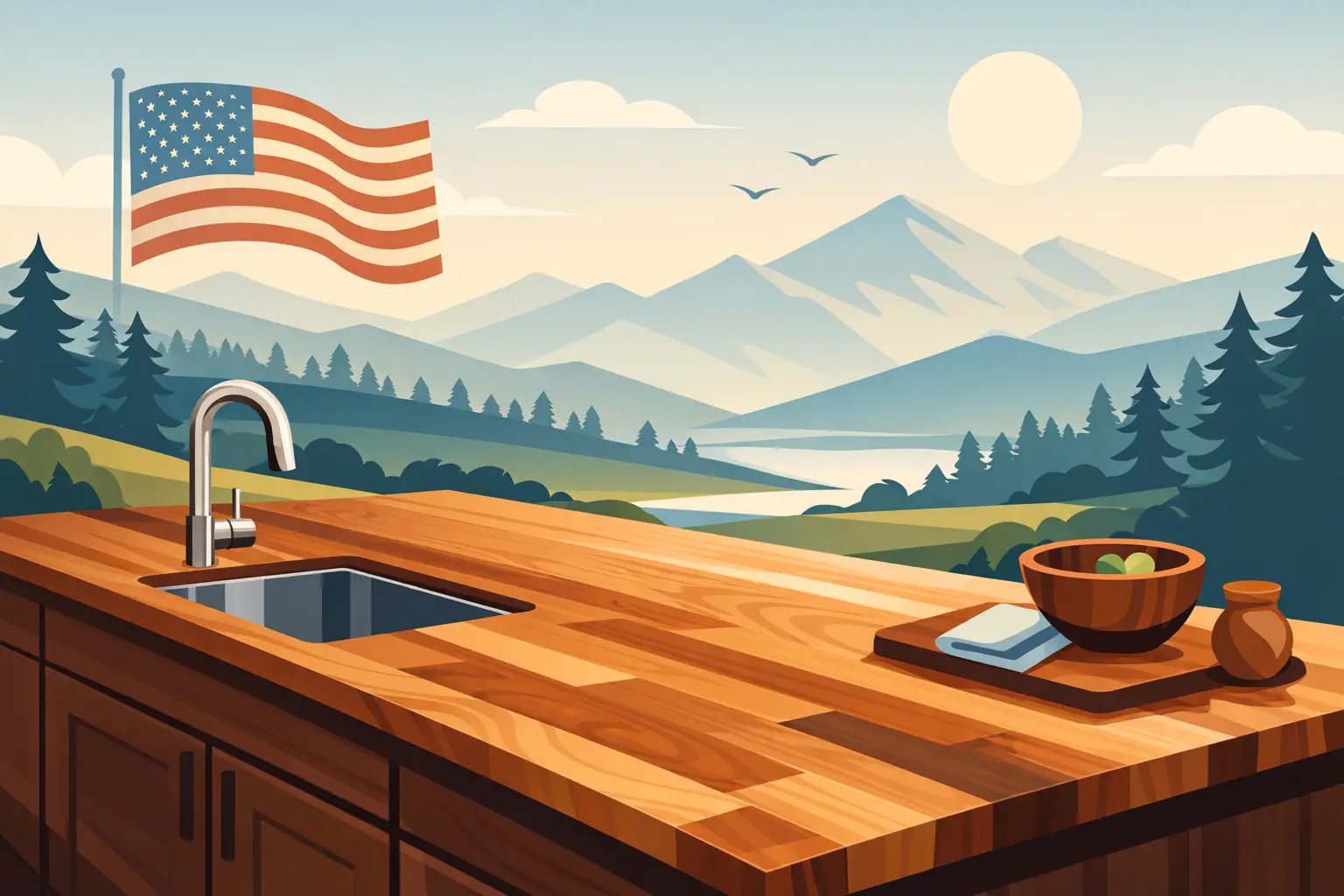
A countertop can look great in a photo and still disappoint the minute it reaches your house. The size is off. The grain feels flat. The finish looks sprayed-on and lifeless. That is usually where american made wood countertops separate themselves from mass-produced options – they are built with the room, the use, and the customer in mind.
For homeowners who want a kitchen island that actually fits, a laundry room worktop that does not feel temporary, or a butcher block with real character, where and how the piece is made matters. Solid wood is not just a surface choice. It is something you live with every day, touch constantly, and expect to hold up through cooking, cleaning, projects, and regular wear. When it is made well, you can feel the difference right away.
Why american made wood countertops stand out
There is a practical side to buying American-made that goes beyond the label. In a custom shop, the focus is usually on fit, material quality, and workmanship rather than pushing out the highest number of identical pieces. That changes the end result.
A well-built wood countertop starts with better control over the process. The wood selection matters. The glue-up matters. The sanding matters. The way the edges are shaped and the finish is applied matters. When those steps are handled by experienced builders instead of a factory line designed for speed, the top tends to look cleaner, feel heavier, and perform better over time.
There is also the communication side, which buyers often underestimate until something goes wrong. Custom dimensions, sink cutouts, thickness choices, edge details, and finish preferences are much easier to get right when you are working with a real US-based maker who understands the order and can answer questions clearly. For many homeowners, that alone removes a lot of the stress from the project.
Custom sizing is often the real advantage
Most people start shopping with a style in mind, but they end up buying based on dimensions. Standard retail sizes work for some spaces, but a lot of kitchens and work areas are not standard. Islands run long. Appliance gaps are awkward. Nooks need a very specific overhang. A bar top may need to line up with existing cabinetry down to the fraction of an inch.
That is where custom-built wood tops make sense. Instead of changing your room to fit the countertop, you get the countertop built to fit the room. That sounds simple, but it is a big difference in both appearance and installation.
A made-to-order top can be sized for kitchen islands, perimeter counters, coffee bars, laundry rooms, mudrooms, desks, workbenches, and table-style installations. It can also be built around your design priorities. Some customers want a thick, statement-making top with visible grain and weight. Others want a cleaner, slimmer profile that fits a more modern space. Neither is wrong. It depends on how the countertop will be used and what kind of visual balance the room needs.
Choosing the right wood for the job
Not every wood species behaves the same way, and not every project needs the same look. This is one of the biggest advantages of ordering from a shop that actually works with wood every day. You are not just choosing a color. You are choosing character, hardness, grain pattern, and overall feel.
Maple is a common favorite for butcher block countertops because it is clean-looking, durable, and versatile across a range of kitchen styles. Walnut brings a darker, richer appearance and tends to feel a bit more furniture-like. Oak has strong grain and a more pronounced visual texture, which some homeowners love and others prefer to avoid.
There is no single best species for every countertop. A busy family kitchen may call for one approach, while a pantry workspace, island top, or decorative serving area may call for another. The right answer usually comes down to use, maintenance expectations, and the kind of look you want every day – not just on install day.
Finish matters as much as the wood itself
A beautiful slab can still underperform if the finish is wrong for the application. This is where homeowners should slow down and ask practical questions.
If the countertop will be used for food prep, an oil finish may appeal to buyers who want a more natural, traditional butcher block feel. If the top will function more like a work surface or statement piece and you want lower day-to-day upkeep, a more protective finish may be the better fit. Each option has trade-offs. Natural oil finishes are easier to refresh, but they require regular maintenance. Harder protective finishes reduce maintenance, but they can change the feel of the wood and may be less forgiving if damaged.
That does not mean one is superior. It means the best finish depends on the real-life use of the space. A family that cooks heavily and likes the look of a working butcher block may make a different choice than a homeowner building a showpiece island with limited direct prep.
What buyers should expect from true craftsmanship
When people say they want quality, they usually mean they want a top that feels solid, looks intentional, and arrives ready to install without surprises. True craftsmanship shows up in small details that add up fast.
You notice it in tight glue joints and a flat surface. You notice it in clean sanding, balanced grain selection, and edges that feel finished rather than rushed. You notice it when the top arrives protected well enough to survive shipping and still looks the way it should when unwrapped.
That last part matters more than many online shoppers realize. Large wood pieces are not easy to ship. Packaging is part of the product experience. A beautiful countertop that arrives damaged creates delays, frustration, and extra cost. A shop that understands how to protect handmade wood surfaces for transit is offering real value, not just convenience.
American made wood countertops for real homes
The best wood countertops are not built just to photograph well. They are built to live in actual homes. That means daily traffic, kids doing homework at the island, dropped utensils, water near the sink, grocery bags sliding across the surface, and all the other normal wear that comes with regular use.
Wood has a warmth that stone and laminate cannot really duplicate, but it also asks for some common-sense care. It is a natural material. It moves with humidity. It can gain character over time. For many homeowners, that is part of the appeal. They do not want a surface that feels sterile or generic. They want one that looks better because it is real.
Still, wood is not for everybody in every application. If you want a completely maintenance-free countertop, wood may not be your best fit. If you are willing to do basic care and you appreciate a surface that develops personality, it can be one of the most rewarding choices in the home.
Why custom beats big-box for many projects
Big-box countertops solve one problem – speed. If your space matches standard dimensions and you are comfortable compromising on species, finish, thickness, and edge detail, that route may work well enough.
But many customers are not looking for well enough. They are looking for the exact size, the right thickness, the right look, and direct communication if they have questions. That is where a custom shop has the edge.
With a made-to-order piece, you are not just purchasing wood. You are buying precision, flexibility, and attention from someone who understands the product. That can make a major difference when your project includes an unusual depth, a specific overhang, or a design goal that off-the-shelf options simply do not meet.
For buyers who care about craftsmanship and fit, american made wood countertops are less about trend and more about getting the job done right. Shops like Tooill Cabinets are built around that idea – real wood, built to order, with the kind of communication and care that helps customers feel confident before, during, and after the purchase.
If you are choosing a wood countertop for your home, start with how you actually use the space. The best piece is not the one with the most hype. It is the one built for your room, your routine, and the way you want your home to feel every time you walk in.