
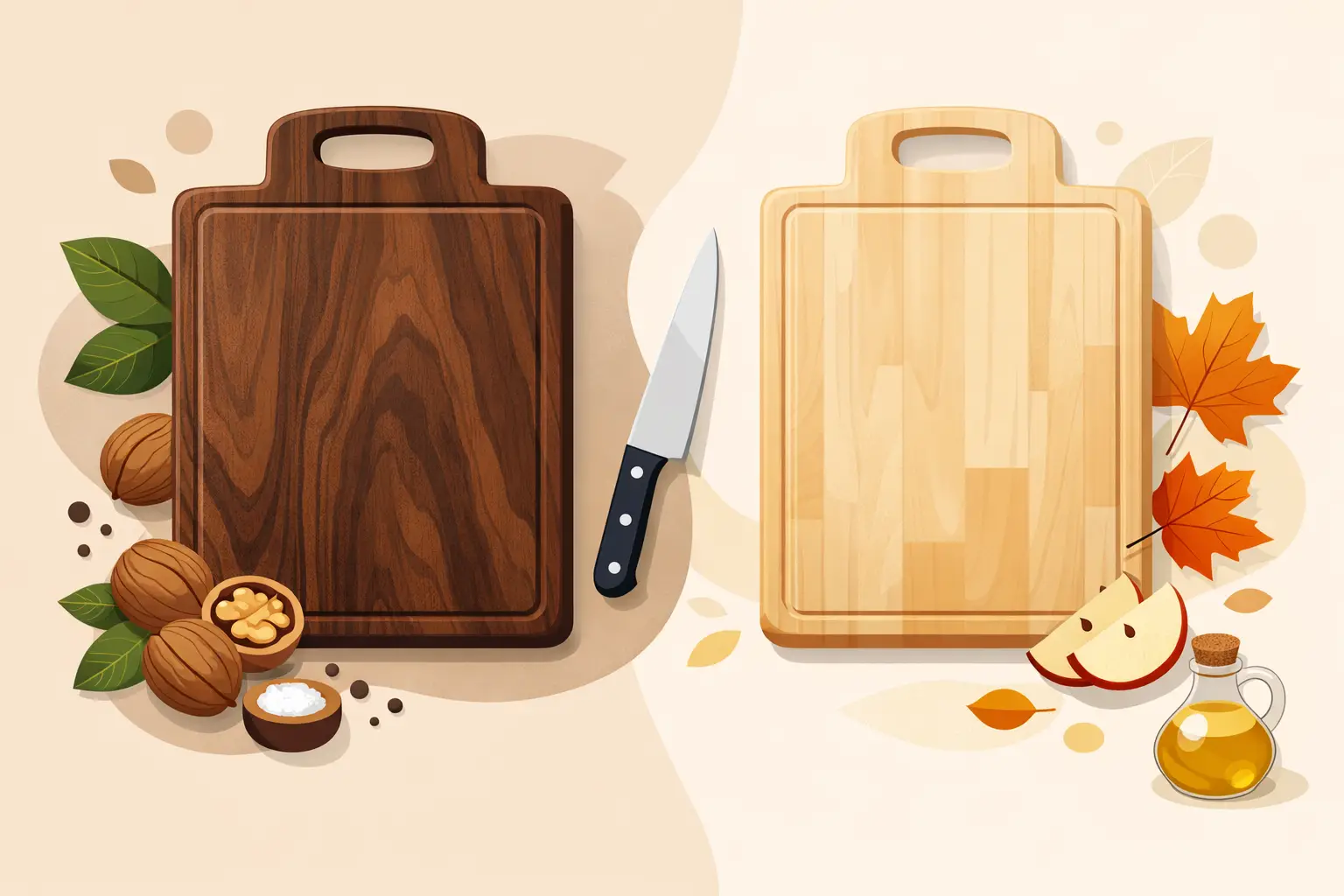
A cutting board gets touched more than almost anything else in the kitchen, so the wood you choose matters. When people compare walnut vs maple cutting boards, they are usually trying to balance three things at once: how the board looks on the counter, how it holds up under daily use, and how much maintenance they are willing to do.
Both woods are excellent choices. Both have long track records in real kitchens. And both can last for years when they are properly built and cared for. The better choice usually comes down to your cooking habits, your style, and whether you want your board to blend in or stand out.
Walnut vs maple cutting boards: the quick answer
If you want a rich, darker board with a premium furniture-grade look, walnut is hard to beat. If you want a classic, lighter board that has a long reputation in butcher blocks and commercial prep spaces, maple is the standard for a reason.
Neither is automatically better in every kitchen. Walnut tends to feel warmer and more distinctive. Maple tends to feel brighter, more traditional, and often a little more forgiving on price. For many buyers, this is less about right and wrong and more about which wood matches the way they live and cook.
How the two woods differ in everyday use
Walnut and maple are both hardwoods, but they do not feel exactly the same once you start chopping, slicing, and cleaning them day after day.
Walnut is generally a bit softer than hard maple. That can be a good thing on a cutting surface because it has a little more give under the knife. Many home cooks like that feel. It can also mean knife marks show up a little sooner, especially on a heavily used face-grain board. That is not necessarily damage in the serious sense. It is the normal wear that gives a wood board character over time.
Maple is denser and harder, especially hard maple, which is one reason it has been a longtime favorite for butcher block tops and cutting boards. It stands up very well to repeated use. Because of that density, many people see maple as the practical workhorse option. It resists deep wear nicely, but it can also show stains and discoloration more clearly because of its light color.
So the trade-off is fairly simple. Walnut may show surface wear from knives a bit earlier, while maple may reveal food stains and color transfer more easily.
Appearance matters more than most people expect
A cutting board is a tool, but it is also part of your kitchen. It sits out on the counter, shows up in serving moments, and often becomes one of those pieces people reach for even when they are not cooking.
Walnut has a deep brown tone that ranges from milk chocolate to a darker espresso look, sometimes with subtle grain variation that makes each board feel one of a kind. It tends to read as warm, custom, and upscale. In kitchens with white cabinets, brass fixtures, or natural stone, walnut often adds contrast and depth.
Maple has a clean, pale appearance that feels fresh and classic. It works especially well in bright kitchens, farmhouse spaces, Scandinavian-inspired interiors, and homes where a lighter wood palette keeps things feeling open. If you like a crisp, clean look, maple usually gets there faster.
This part is personal. Some homeowners want a board that quietly fits the room. Others want one that looks handmade and substantial the second you walk in. Walnut usually makes the stronger visual statement. Maple usually keeps things lighter and more understated.
Knife friendliness and surface wear
People often ask which board is better for knives. The honest answer is that both walnut and maple are considered knife-friendly compared with glass, stone, ceramic, or very hard synthetic surfaces.
What matters just as much as species is how the board is made. End-grain boards tend to be gentler on edges because the wood fibers absorb the cut differently. Face-grain and edge-grain boards are also excellent when they are built well, but they will show wear in different ways.
With walnut, the slightly softer feel can be appealing for cooks who prep often and want a board that feels less harsh under the blade. With maple, the firmer surface gives a solid, dependable chopping feel that many people associate with traditional butcher block performance.
If you are someone who does a lot of heavy prep, either wood can serve you well. What usually makes the bigger difference is board thickness, grain orientation, and whether the board is allowed to dry properly between uses.
Durability and longevity
A well-built walnut board and a well-built maple board can both last a very long time. The weak point is rarely the species alone. More often, it is poor construction, thin stock, bad glue-up work, or neglect after purchase.
Maple has a reputation for toughness, and it earns it. It handles repeated kitchen use very well and has long been trusted in hard-working food prep environments. Walnut is also durable, but it brings a slightly different strength to the table. It remains stable, ages beautifully, and develops a worn-in look that many people actually prefer over time.
If you want a board that may hide aging more gracefully, walnut has an edge because its darker color can make everyday marks less obvious. If you want a proven classic with a very strong durability record, maple is hard to argue against.
Moisture, staining, and maintenance
No wood cutting board is maintenance-free. That includes walnut, maple, and every other hardwood worth owning. They all need basic care: hand washing, prompt drying, and occasional oiling.
Maple is often praised for its tight grain structure, which is one reason it has been a staple in cutting surfaces. Walnut also performs well with proper finishing and care. In practical use, both should be kept out of the dishwasher, never left soaking in water, and reconditioned with food-safe oil or board cream as they dry out.
The visible maintenance story is a little different. Maple can show beet juice, berries, turmeric, and meat juices more easily simply because the surface is so light. Walnut is better at masking those everyday kitchen encounters. On the other hand, if walnut dries out too much, the surface can start to look dull faster, and that tends to be more noticeable on a dark board.
For busy households, there is no wrong answer here. It is just a question of what bothers you more: visible stains on a lighter board or visible dryness on a darker one.
Price and value
In many cases, maple cutting boards come in at a lower price point than walnut. That makes maple attractive for buyers who want a serious hardwood board without stepping too far into premium territory.
Walnut usually costs more because the material itself tends to be priced higher and because the visual character of walnut is part of what people are paying for. That does not mean walnut is overpriced. It means the value calculation includes appearance as much as function.
If your main goal is getting a dependable, hard-working board at a strong value, maple often makes sense. If you want a board that feels more custom, more furniture-grade, and more visually distinctive, walnut often justifies the extra spend.
Which one fits your kitchen best?
The walnut vs maple cutting boards decision gets easier when you stop looking for the universally better wood and start looking for the better fit.
Walnut makes sense if your kitchen leans warm, if you want a gift-worthy board that feels elevated, or if you plan to leave the board out on display. It is especially popular with homeowners who see kitchen tools as part of the design of the room.
Maple makes sense if you want a traditional prep surface, a brighter look, or a board that connects naturally with classic butcher block style. It is also a strong choice if function comes first and you want a clean, timeless material that has earned its place in working kitchens.
For some households, the answer is not either-or. A maple board for daily prep and a walnut board for serving or display can be a smart combination.
Custom sizing changes the decision
One thing buyers often overlook is that wood species is only part of the equation. Size, thickness, juice grooves, handles, grain direction, and finish can all change how a board performs and how often you reach for it.
A smaller walnut board might be perfect for charcuterie and quick prep. A thicker maple board might be the better fit for serious daily chopping. If your kitchen has a specific prep station, island overhang, or storage slot, getting the dimensions right can matter just as much as choosing between the two woods.
That is where handcrafted work stands apart from off-the-shelf options. A board built for your space and your habits usually gets used more, maintained better, and appreciated longer.
At Tooill Cabinets, that is how we look at it. The best board is not just made from good wood. It is built well, sized right, and meant to live in a real kitchen.
If you are choosing between walnut and maple, trust your eyes as much as the specs. You are going to use this piece often, see it every day, and hopefully keep it for years. Pick the wood that fits the way your kitchen works and the way you want it to feel.