
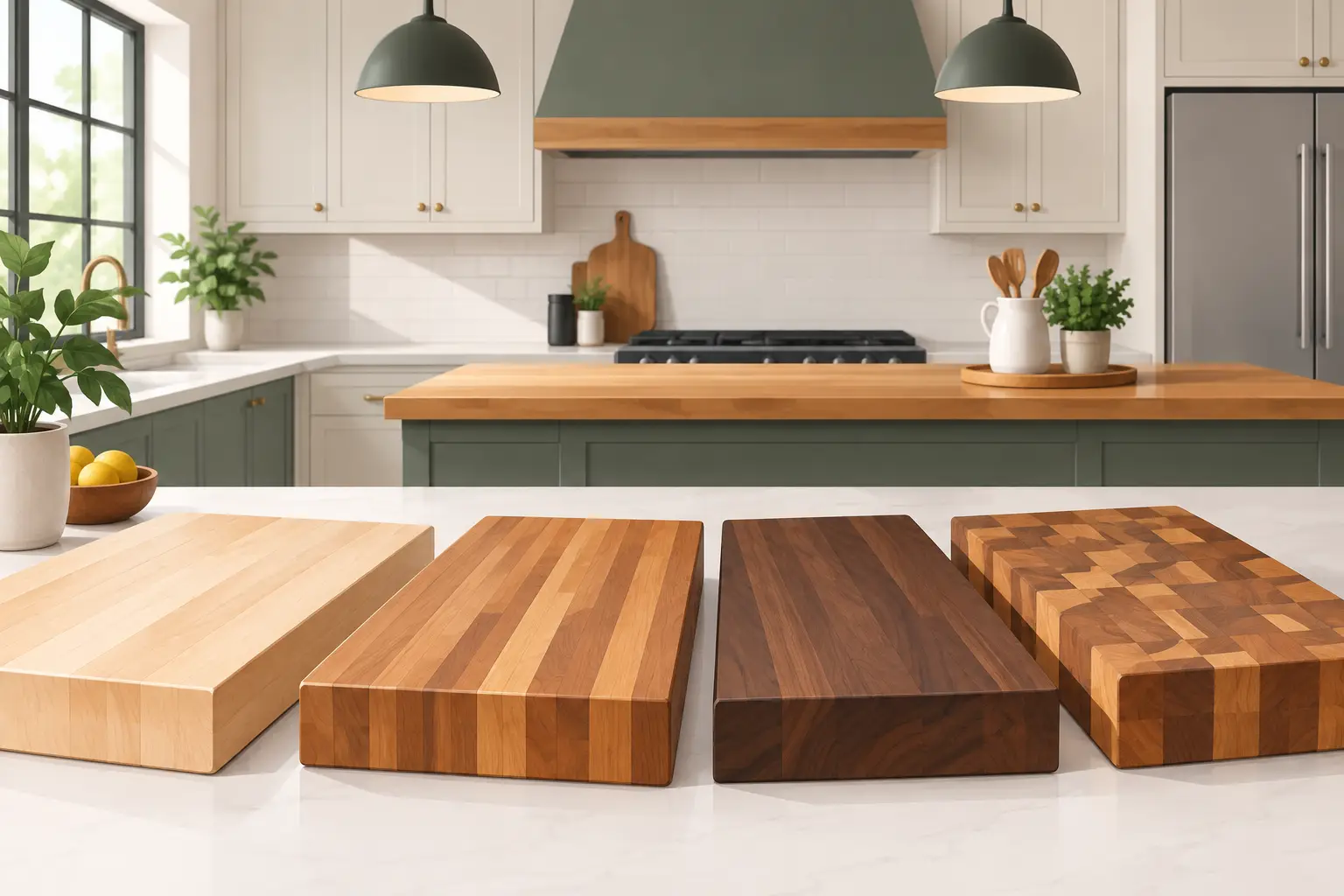
A butcher block is never just a work surface. It is where morning coffee lands, where vegetables get chopped, where kids do homework, and where guests gather around the island. The right butcher block styles can make a kitchen feel warmer, more finished, and more personal – but choosing one comes down to more than picking a wood color.
Grain direction, wood species, thickness, edge profile, and finish all affect how a butcher block looks and performs. A light maple top may suit a bright, hardworking family kitchen, while a walnut island top can bring depth and contrast to a more tailored space. The best choice is the one that fits your room, your habits, and the exact dimensions of the job.
Start With How the Surface Will Be Used
Before choosing a species or grain pattern, decide what the butcher block needs to do. A countertop beside the range handles a different kind of wear than a dining table, floating shelf, or decorative island overhang. This matters because some surfaces are meant to be cut on directly, while others are built to look their best with a protective finish and a cutting board used on top.
For a food-prep surface, a traditional oil finish is a practical option. It is food-safe, easy to refresh, and allows the wood to be maintained over time. It does require regular care, especially near sinks and high-moisture areas. For countertops, bar tops, tables, and desks, a durable protective finish can reduce everyday maintenance and help guard against spills. The trade-off is simple: a sealed surface is easier to wipe clean, but it is not intended to be cut on directly.
Custom sizing also belongs in this first decision. Standard retail slabs often force homeowners to adjust their plan around what is in stock. A made-to-order butcher block can be built for an exact cabinet run, island base, appliance opening, wall-to-wall desk, or table footprint. That means fewer awkward fillers and a more intentional finished look.
The Main Butcher Block Styles by Grain
The term butcher block describes solid wood pieces joined together into a larger surface. The direction of those pieces creates the visual style and changes how the top wears over time.
Edge-Grain Butcher Block
Edge-grain construction places long wood strips on their sides so the narrow edges create the top surface. It produces the familiar linear pattern many people picture when they think of a butcher block countertop. The grain runs the length of the top, creating a clean, consistent appearance that works well in kitchens, laundry rooms, workspaces, and dining areas.
This style offers a strong balance of durability, cost, and visual character. Because the strips are typically narrower than those used in a wide-plank top, edge grain can create an even, tailored look without hiding the natural variation of the wood. It is a popular choice for long countertops and islands where the grain direction can visually stretch the room.
End-Grain Butcher Block
End-grain butcher block is made by turning smaller wood blocks so the cut ends of the grain face upward. The finished surface has a distinctive checkerboard or mosaic pattern. It is the traditional choice for serious chopping blocks because the knife edge slips between wood fibers rather than repeatedly cutting across them.
End grain is beautiful, substantial, and exceptionally functional for dedicated food prep. It also requires more material and labor to build, which generally makes it a higher-priced option. It is usually best suited to cutting boards, butcher block islands, or smaller prep areas rather than a full kitchen counter run. Like any real wood surface, it needs sensible care around standing water and frequent conditioning when finished with oil.
Face-Grain or Wide-Plank Style
Face-grain construction shows the broad face of each board. Rather than a tight strip pattern or blocky end-grain grid, this style highlights longer, wider runs of natural wood grain. It feels more like furniture than a traditional commercial butcher block.
A face-grain top is an excellent fit for dining tables, island seating areas, desks, bar tops, and statement countertops. It lets the wood’s cathedral grain, mineral streaks, knots, and color shifts take center stage. Because each board reads more clearly, this style has a more organic, less uniform appearance. That is a benefit for someone who wants character, but it may not suit a buyer looking for a perfectly consistent pattern.
Choose a Wood Species That Fits the Room
The species sets the color, grain movement, hardness, and overall personality of the surface. There is no single best wood for every project.
Maple remains a dependable choice for classic kitchens. It is light in color, fine in grain, and hard enough for daily use. Maple works especially well in spaces with white cabinets, painted cabinetry, or a clean modern look where a warm but subtle wood tone is wanted.
Walnut brings rich brown color and a more dramatic grain pattern. It is a favorite for dark islands, dining tables, shelves, and accent tops where the wood itself should make a statement. Walnut can vary from lighter brown to deep chocolate tones, and those natural shifts are part of what makes each top one of a kind.
Cherry starts with warm reddish-brown tones and deepens beautifully with age and exposure to light. It has a refined, furniture-grade feel that works well in traditional homes, craftsman interiors, and dining spaces.
Oak offers pronounced grain and a classic American look. It is a strong option when you want visible texture and a surface that feels grounded and familiar. Other species may be right for a specific color or design goal, but the key is to choose real wood variation rather than expecting a printed, uniform pattern.
Thickness Changes More Than the Look
A thicker butcher block has visual weight. A 1 1/2-inch top is a familiar choice for kitchen countertops and provides a solid, substantial edge. Thicker tops can make an island or table feel more furniture-like, while thinner material may be appropriate for shelves, desk surfaces, or applications where weight and clearance matter.
Consider the whole installation, not just the slab. Countertop thickness affects finished counter height, appliance alignment, seating clearance at an island, and how the edge looks against cabinet faces. For a custom project, measuring twice before ordering is worth the extra time. Include overhangs, wall irregularities, sink cutouts, and any support requirements for extended spans.
Details That Make a Custom Top Feel Finished
The edge profile is a small choice with a major visual effect. A square edge gives a crisp, modern feel. A softened eased edge is comfortable and versatile for almost any kitchen. Roundovers bring a gentler, more traditional look, while a thicker built-up edge can create the appearance of a heavier slab.
Grain direction deserves attention too. On a long galley counter, lengthwise grain can emphasize the run of the room. On a wide island, grain running across the shorter direction may create a more balanced look. There is no universal rule, but the grain should support the proportions of the space rather than fight them.
Natural features should be discussed before production. Knots, color variation, mineral streaks, and grain changes are signs of authentic lumber, not defects. A handcrafted top can be made with a cleaner, calmer selection or with more visible character depending on the desired style. Clear expectations make the final piece feel intentional from the moment it is unboxed.
Match the Finish to Your Maintenance Routine
Wood rewards basic care, but it is not maintenance-free. An oil-finished cutting surface should be reconditioned when it looks dry or feels thirsty. Wipe up water promptly, especially around sink areas, and avoid leaving wet dishcloths, planters, or spills sitting on the surface.
A protective finish is usually the easier choice for tables and countertops where convenience is the priority. Use mild soap and water for routine cleaning, avoid harsh abrasives, and protect the top from extreme heat with trivets. Wood moves naturally with seasonal humidity, so proper installation and room for expansion are part of long-term performance.
Tooill Cabinets builds handcrafted wood surfaces to the dimensions and details real homes require. Whether you need a practical maple counter, a rich walnut island top, or a distinctive end-grain prep block, custom work lets the material serve the space instead of asking the space to settle for a standard size.
A well-chosen butcher block should feel right years after the remodel is finished. Choose the style you will enjoy using, the species you want to live with, and the construction that suits the way your household actually works. That is how a wood surface becomes part of the home rather than just another countertop.