
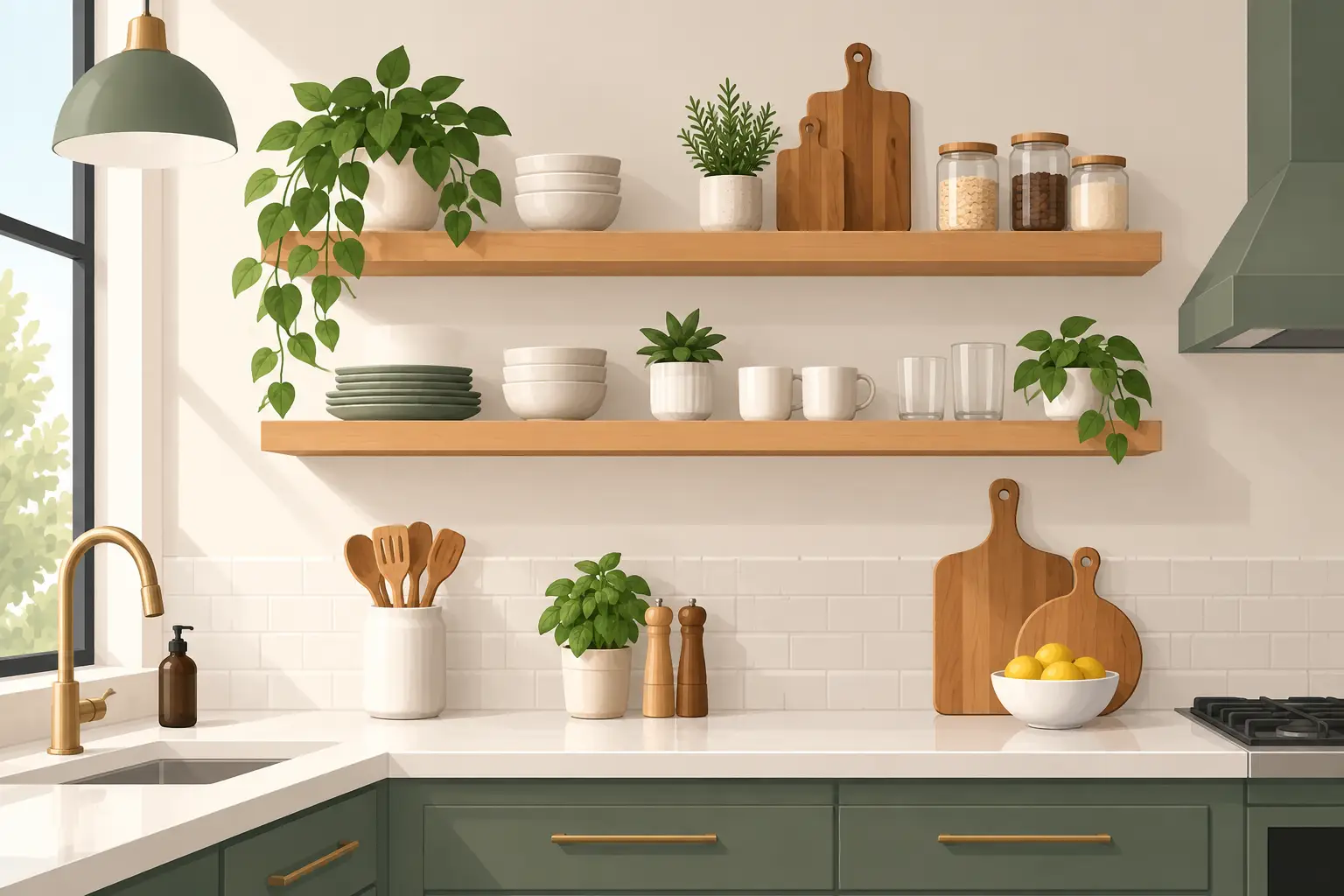
A kitchen shelf earns its place when it does more than fill an empty wall. It should hold the everyday pieces you reach for, make the room feel more open, and look right with the cabinets, counters, and hardware already in place. The best kitchen floating shelves are not just a style choice. They are properly sized, solidly supported, and built from material that can handle real use.
For homeowners planning a remodel or refreshing one wall at a time, floating shelves offer a practical alternative to more upper cabinetry. They can soften a heavy cabinet layout, create storage around a range or window, and put favorite dishes, glasses, or pantry staples within easy reach. The key is choosing shelves that suit your kitchen rather than copying a photo that was never designed for your walls or storage needs.
What Makes the Best Kitchen Floating Shelves?
The best choice depends on what the shelves will carry, where they will sit, and how much visual weight the room can handle. A pair of narrow shelves for coffee mugs has very different requirements than a long shelf holding stacked dinnerware, cookbooks, and serving bowls.
Start with solid construction. Real hardwood or a well-built solid wood shelf has a depth, grain pattern, and strength that hollow, lightweight alternatives cannot imitate. Wood also gives you more flexibility when matching existing elements. A warm walnut shelf can bring contrast to white cabinets, while maple, oak, or a lighter finish can keep a small kitchen feeling bright.
Just as important is the support system. True floating shelves use concealed hardware, but concealed does not mean unsupported. The mounting method must match the shelf length, thickness, wall construction, and intended load. A beautiful shelf that is installed into drywall alone may look fine on day one, then sag or pull away from the wall once it is loaded with plates.
A well-made shelf should feel purposeful from every angle: square edges, a smooth finish, clean grain selection, and a thickness that looks proportional to the space. Those details are what make a shelf feel like a built-in part of the kitchen rather than an afterthought.
Choose Wood for Daily Kitchen Use
Wood species affects appearance, but it also affects durability, grain character, and how the shelf works with the rest of the room. There is no single right answer. The best material is the one that fits your design and the level of wear you expect.
Maple is a strong, clean-looking option with a light tone and subtle grain. It works especially well in modern kitchens, Scandinavian-inspired spaces, and rooms where darker wood would feel too heavy. Oak brings more visible grain and a traditional texture that pairs naturally with painted cabinetry, black hardware, and warm neutral finishes.
Walnut makes a stronger statement. Its rich brown color can ground a white or light-gray kitchen, especially when repeated in bar stools, a range hood detail, or a butcher block island top. Because walnut is naturally darker, it often works best when the shelves have enough open wall around them to stand out.
For kitchen shelving, avoid thinking of wood as purely decorative. Finished properly, solid wood is made for everyday living. A quality protective finish helps resist moisture and makes routine cleaning simple. Still, no wood shelf should be treated like a countertop beside a sink. Wipe up splashes, avoid leaving wet glassware in one spot, and do not expose the shelf to direct heat or steam for long periods.
Finish should support the room, not fight it
A natural or clear finish lets the wood do the talking. It is a dependable choice when you want the shelf grain to coordinate with a wood countertop, cutting board collection, or dining table without trying to match every tone exactly.
Stained finishes can work well, but samples matter. Wood absorbs color differently from board to board, and lighting changes everything. A finish that looks medium brown in a workshop may read much darker beside cool white cabinets or under warm pendant lights. When ordering custom shelves, share photos of the room and nearby wood surfaces so the finish can be selected with the full space in mind.
Get Shelf Dimensions Right Before Ordering
Standard sizing can be convenient, but kitchens rarely have standard walls. Outlets, windows, trim, backsplashes, vent hoods, and cabinet placement all affect what will actually fit. Custom dimensions are often worth considering because even a small adjustment in length or depth can make an installation look intentional.
Depth is the first practical measurement. Shelves around 6 to 8 inches deep work well for spice jars, glasses, small bowls, and decorative pieces. For dinner plates, large canisters, mixing bowls, or cookbooks, 9 to 12 inches is usually more useful. Deeper is not always better, especially in a narrow kitchen where a shelf could crowd the work area or interrupt sightlines.
Length should relate to the wall and nearby cabinetry. A shelf that ends neatly in line with cabinet edges or a window frame often looks more finished than one that falls short by a few inches. Long shelves create a strong, clean statement, but they demand stronger mounting and thoughtful styling. If the wall is very wide, two shorter runs may be more balanced and easier to use.
Thickness is largely a visual decision, though it has structural implications too. A thicker shelf feels substantial and can suit rustic, farmhouse, and transitional kitchens. A slimmer profile can look crisp and modern. The right proportion depends on shelf depth, ceiling height, cabinet scale, and the weight you plan to store.
Leave enough room to use the shelves
Open shelving should not create a daily obstacle. Above a countertop, leave enough clearance to comfortably use appliances, prepare food, and clean the surface. Shelves above a coffee station may sit lower for easy reach, while display shelves can sit higher if they hold less frequently used items.
If you are installing shelves near a range, check the appliance manufacturer’s clearance guidance and local code requirements. Steam, grease, and heat are real considerations. A shelf near the cooking zone can be useful for oils and seasonings, but it will need more frequent cleaning than one near a breakfast nook or beverage area.
Support and Installation Are Where Quality Shows
A floating shelf is only as dependable as its attachment to the wall. Before ordering, identify whether your wall has accessible studs and where they fall. Stud-mounted installation is the preferred approach for shelves carrying dinnerware, cookware, or multiple heavy serving pieces.
The hardware should be selected for the particular shelf, not treated as a one-size-fits-all add-on. Shelf length, wood thickness, depth, and expected load all influence the support design. For a long solid wood shelf, concealed steel rods or a hidden bracket system can provide the clean floating look while transferring weight securely into the framing.
Do not guess at load capacity. A few ceramic bowls, stacks of plates, and glassware add up quickly. If you want shelves for functional storage rather than just a few display items, say so when requesting a quote. A craftsman can help match the shelf build and mounting plan to how your kitchen actually works.
Installation is also the time to be precise. Use a level, mark stud locations carefully, and account for any backsplash thickness or uneven wall surface. If the project involves tile, plaster, masonry, or uncertain framing, hiring an experienced installer may save you from cracked finishes, loose hardware, and a shelf that never sits quite right.
Style Open Shelves Without Making Them Feel Crowded
The most inviting kitchen shelves look used, not staged. Start with the pieces that earn everyday access: drinking glasses, favorite mugs, small plates, coffee supplies, or a few attractive pantry jars. Then add a limited amount of personality through a small framed piece, a plant away from heat, or a handmade bowl.
Color repetition helps. If your dishes are white, add warmth through wood, a few amber glasses, or a neutral ceramic collection. If your kitchen already has bold tile or colorful cabinets, keep the shelf styling quieter so the room does not become visually busy.
It also helps to leave some empty space. Open shelves are not meant to replace every closed cabinet. Their strength is accessibility and display, while drawers and cabinets handle the less attractive essentials. This balance keeps a kitchen practical without making it feel cluttered.
When Custom Shelves Are the Better Buy
Custom floating shelves make the most sense when you need an exact fit, want a particular wood species or finish, or have a wall that deserves more than an off-the-shelf solution. They are especially worthwhile around a range hood, between cabinets, above a long backsplash, or on a wall with unusual measurements.
At Tooill Cabinets, handcrafted wood shelves can be made to suit the dimensions and look of your kitchen rather than forcing your kitchen to fit a preset size. That is valuable when matching a butcher block counter, working around existing trim, or creating a shelf run that lines up cleanly with cabinet edges.
There is a trade-off: custom work takes more planning than grabbing a shelf from a big-box store. You will need accurate measurements and a clear idea of your preferred wood and finish. In return, you get a piece built for the wall you have, not the average wall in a warehouse catalog.
Measure twice, think honestly about what you want to store, and choose a shelf that can carry that job for years. The right floating shelves make the kitchen feel more personal every time you reach for a glass, set out a favorite bowl, or see the character of real wood against the wall.