
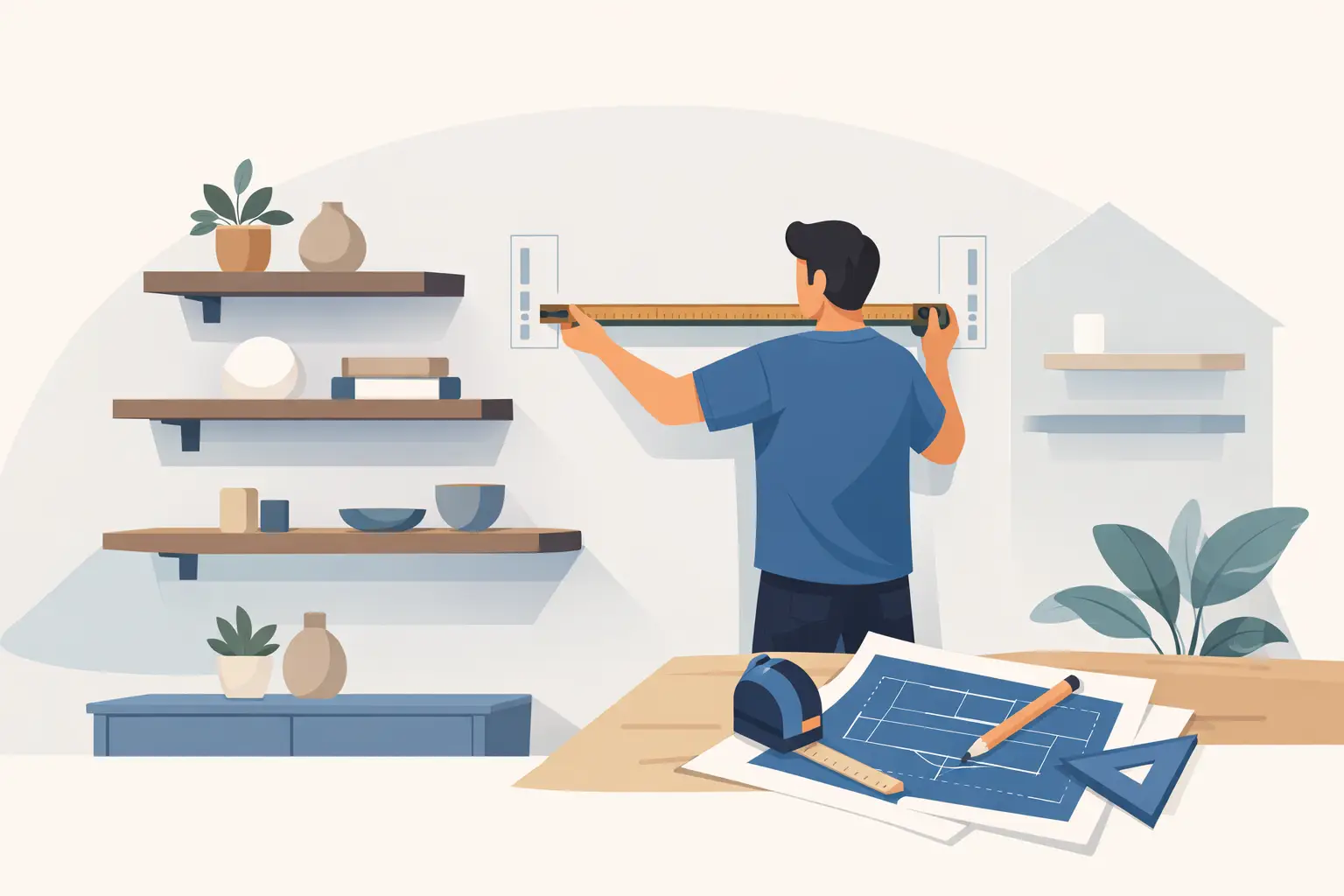
A shelf that is off by even half an inch can make a finished room look unfinished. That is usually the moment homeowners realize standard options are not built for real spaces. Custom floating shelves solve that problem by giving you the exact length, depth, thickness, wood tone, and overall look your wall actually needs.
They also do something stock shelves rarely do well – they feel intentional. Instead of trying to work around awkward stud spacing, narrow niches, uneven walls, or a cabinet run that needs a clean finishing touch, you can order shelves built for the job. When the size is right and the wood is made well, the whole room looks more settled.
Why custom floating shelves make more sense than stock sizes
Big-box shelving works if your wall happens to match the few dimensions on the shelf tag. Most of the time, it does not. Kitchens have backsplashes, window trim, vent hoods, and cabinet layouts that create tight measurement requirements. Bathrooms have compact walls where every inch matters. Laundry rooms, bars, mudrooms, and offices often need storage that lands in a very specific zone.
That is where custom work earns its value. You are not forced to choose between a shelf that is too short, too deep, too thin, or the wrong color. You can build around the room instead of compromising the room to fit the shelf.
There is also a quality difference. A handcrafted wood shelf is not just decor. It is part storage, part finish work, and part furniture. If it is holding dishes, cookbooks, plants, framed photos, or daily-use items, you want more than a hollow box with weak hardware hidden inside.
What to decide before ordering custom floating shelves
The best custom shelves start with a few clear decisions. Length is usually the first one, but it should not be the only one. Depth changes both function and appearance. A shallow shelf can keep a room feeling open, while a deeper shelf is better for bowls, baskets, or larger decor.
Thickness matters too. Thicker floating shelves read as more substantial and furniture-like. Thinner shelves can feel cleaner and lighter, especially in small spaces. Neither is automatically better. It depends on whether you want the shelf to disappear into the design or make more of a visual statement.
Wood species and finish are just as important. Some homeowners want warm, natural grain that softens a white kitchen. Others want a darker stain that adds contrast against light walls or tile. If the shelf is near existing cabinets, counters, or flooring, the goal is usually coordination, not perfect matching. Real wood has variation, and that variation is part of what makes a custom piece feel authentic.
The last big decision is use. A shelf holding coffee mugs above a coffee bar has different demands than a shelf displaying framed artwork in a hallway. If weight capacity matters, that should be part of the conversation from the beginning, because bracket design, wall construction, and shelf dimensions all affect performance.
Where custom floating shelves work best
Kitchens are the most common choice, and for good reason. A well-placed wood shelf can break up a heavy cabinet wall, open up a smaller kitchen, or create a cleaner look around a range hood or sink wall. Open shelving only works when it looks built-in, though. If the proportions are wrong, it can feel like an afterthought fast.
Bathrooms are another strong fit, especially over toilets, beside vanities, or inside narrow alcoves. Standard shelves often miss these spaces by just enough to look awkward. Custom sizing fixes that. It also helps when you are trying to keep a smaller bathroom functional without adding bulky storage.
Living rooms, home offices, entryways, and laundry rooms benefit for a different reason. In those spaces, floating shelves often need to do both visual and practical work. They might hold books and baskets, display family pieces, or fill a wall that needs warmth without adding a full cabinet or console.
Then there are the tricky spaces that usually get ignored – under a soffit, between two windows, over a built-in bench, or in a recess where nothing off the shelf will fit. Those are often the best places to go custom because the shelf can turn an unusable spot into one of the most finished-looking parts of the room.
The trade-offs to think through
Custom work is not the cheapest route, and it should not pretend to be. You are paying for exact sizing, real materials, hand-built production, and a result that is made for your home rather than for a warehouse shelf rack. For buyers who care about fit and durability, that cost usually makes sense. For a temporary setup or a low-use space, it may not.
There is also a lead time trade-off. Stock shelves can be bought the same day. Custom shelves take planning, building, finishing, and packing. That extra time is part of getting something made right, but it helps to go in with realistic expectations.
Installation matters too. Floating shelves look simple once they are on the wall, but they depend on solid mounting and accurate measurements. Stud location, wall material, and shelf length all affect how clean the final install will be. In some homes, installation is straightforward. In others, especially older homes with imperfect walls, it takes a little patience and adjustment.
How to measure for a better result
The easiest way to get a custom shelf wrong is to measure too casually. Always measure the actual wall space in more than one place, especially if the shelf will fit between cabinets, walls, or trim. Homes are rarely perfectly square, and a gap that looks small on paper can stand out once the shelf is installed.
Think about surrounding features as well. Outlets, switches, tile edges, faucets, mirrors, and cabinet doors all affect placement. If the shelf is going in a kitchen, consider what will sit on it and how easy it will be to reach. A beautiful shelf that is mounted too high or too deep for everyday use tends to become decorative storage instead of practical storage.
Photos help. So do simple sketches with width, depth, and nearby obstacles marked clearly. The more real information you can provide, the easier it is to get a piece that feels like it belongs there from the start.
Why material and craftsmanship matter more than most people expect
Floating shelves get judged up close. People see the front edge, the corners, the grain, the finish, and how the shelf meets the wall. That is why material quality matters so much. Real wood has depth, texture, and character that manufactured alternatives struggle to copy.
Craftsmanship shows up in smaller details too. Clean sanding, consistent finish work, solid construction, and reliable mounting design all change how the shelf performs over time. A shelf can look good in a product photo and still disappoint once it is carrying weight in a busy kitchen.
That is one reason homeowners often come to a custom wood shop instead of settling for mass retail. They want a shelf that feels built, not stamped out. Tooill Cabinets serves that kind of buyer well because the process is centered on made-to-order woodwork, real communication, and building pieces that hold up in everyday homes.
Custom floating shelves should look natural, not forced
The best shelf is not always the biggest one or the thickest one. It is the one that fits the wall, suits the room, and handles the way you actually live. Sometimes that means a bold wood shelf with visible presence. Sometimes it means a quieter piece sized precisely enough that the room simply looks better and nobody can quite tell why.
That is the value of going custom. You are not buying a generic shelf and hoping it works. You are choosing a wood piece that answers the real conditions of your space – your measurements, your style, your storage needs, and your standards for quality.
If you are already picturing the wall where a shelf should go, that is usually a sign worth paying attention to. The right custom shelf does not just fill empty space. It makes the room feel finished.