
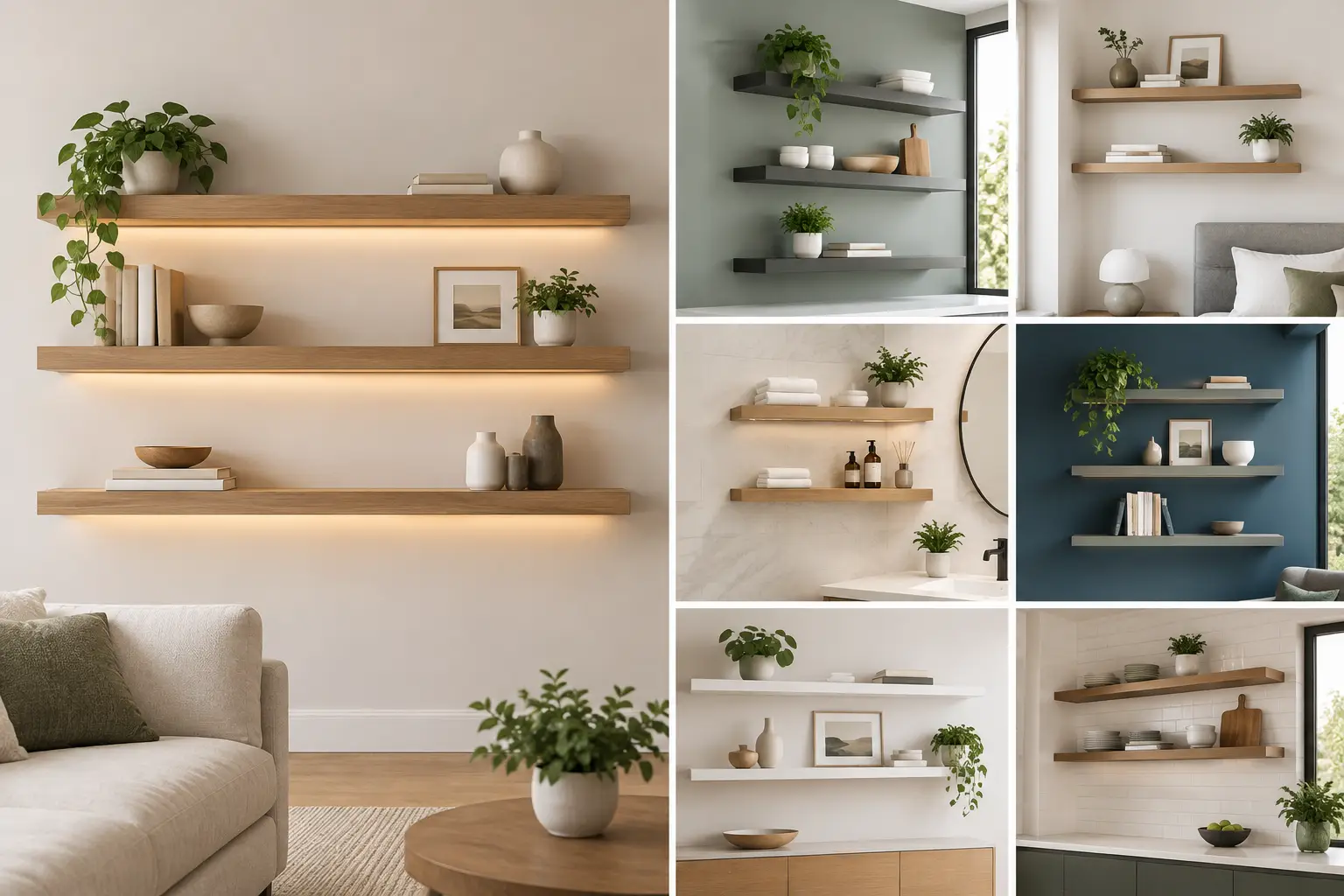
A floating shelf can solve a frustrating blank wall without adding the visual weight of another cabinet or bookcase. The best floating shelf ideas do more than fill space: they create a useful landing spot, highlight materials already in the room, and make a home feel intentionally finished. Solid wood is especially well suited to the job because its grain, thickness, and edge profile can be selected to fit the room rather than forcing the room to fit a standard shelf.
Floating Shelf Ideas for Rooms That Need More Function
1. Frame a kitchen range with matching wood shelves
Open shelves on one or both sides of a range give everyday dishes, glassware, and cooking staples an easy home. Match the shelf species or finish to a butcher block island top, table, or cutting board accents for a connected look. Keep the display practical: sturdy bowls, frequently used mugs, and a few pieces that add color are easier to maintain than a shelf packed with decoration.
In a busy kitchen, depth matters as much as style. A shelf around 8 to 10 inches deep works well for plates and bowls, while a narrower shelf can hold spice jars or oils without crowding the cooking zone. Be mindful of heat and grease if the shelves sit close to the range.
2. Turn an awkward pantry wall into storage
A shallow pantry wall often has more potential than a bulky freestanding organizer. Custom floating shelves can run from wall to wall and make dry goods, baskets, and serving pieces visible at a glance. This works particularly well in older homes, where the available width may not match standard shelving.
Choose a durable finish that is easy to wipe down, and leave enough vertical clearance for cereal boxes, canisters, or the items your household actually buys. A beautiful pantry should still make Tuesday night dinner easier.
3. Build a coffee station that earns its counter space
A pair of floating shelves above a coffee maker can hold mugs, beans, tea tins, and the small tools that otherwise drift across the kitchen counter. Wood shelves add warmth to tile, painted cabinets, and stone backsplashes without requiring a full cabinet installation.
For a more tailored look, use shelves that align with the width of the lower cabinet or counter section. If the coffee station is in a tight nook, a custom length prevents the awkward gaps that can make an otherwise polished space look unfinished.
4. Use one long shelf as a kitchen display rail
Rather than several short shelves, install one substantial shelf along a backsplash or above a window. It can hold cookbooks, framed family recipes, pottery, and a few useful kitchen items. The horizontal line also makes a narrow kitchen feel wider.
This is a good place to let the wood make a statement. A thicker shelf with a clean square edge feels substantial and modern, while a softened edge brings a more relaxed, handcrafted character. The right choice depends on the cabinetry, hardware, and overall architecture of the room.
5. Create a living room gallery without a crowded wall
Floating shelves give framed art, small plants, and collected objects room to breathe. Try two or three long shelves arranged with consistent spacing instead of a wall full of small ledges. Keeping the shelf finish close to the room’s other wood furniture helps the display feel anchored.
Do not treat every inch as storage. A little open space around a favorite ceramic piece or framed print is often what makes the arrangement look considered. If you want to display heavy books, plan for the load before choosing shelf thickness and mounting hardware.
6. Add a low-profile media shelf
A floating shelf beneath a wall-mounted television can hide some of the empty-wall effect while giving remotes, a soundbar, or a small streaming device a proper place. A wide, solid wood shelf is more durable and visually balanced than a thin laminate board that disappears under the television.
Cable management needs attention early. Decide where cords will enter the wall or travel behind the shelf before installation. The cleanest-looking media wall is usually the one planned around the equipment, not adjusted after everything is mounted.
7. Make an entryway feel organized from the first step inside
A floating shelf over a small bench, shoe cabinet, or set of hooks creates a drop zone for keys, mail, sunglasses, and seasonal decor. In a narrow entry, even a shelf 5 to 7 inches deep can be enough. Add a tray to keep small items from spreading across the wood surface.
This is also an ideal place for a shelf made to an exact wall width. Custom sizing makes the entry look built in, especially when the shelf lines up with trim, a bench, or the edge of a nearby closet.
8. Replace a bulky bedside table in a compact bedroom
A floating nightstand shelf leaves floor space visible, which can make a small bedroom feel less cramped. Install it at the height that works for your mattress, then choose a depth that accommodates a book, phone, and glass of water without becoming an obstacle.
A single shelf is simple and airy. Two stacked shelves provide extra room for reading material or a charging basket. If outlets are nearby, plan the shelf placement so charging cables do not become the room’s most noticeable feature.
9. Give a bathroom more storage without a vanity remodel
Bathrooms often need a little more storage but have limited floor area. Floating shelves above the toilet, beside a vanity, or in an unused corner can hold folded towels, tissue, toiletries, and a small plant. A warm wood tone helps balance the hard surfaces common in bathrooms.
Because bathrooms are humid, use a properly sealed wood shelf and wipe standing water quickly. Avoid mounting shelves where they will be constantly splashed unless the finish and location are suited to that use.
10. Fill a laundry room wall with useful storage
Laundry rooms benefit from shelves that are straightforward and hardworking. Install them above machines for detergent, baskets, stain treatments, and folded towels. A deeper shelf may hold baskets, but do not make it so deep that it is hard to reach the back or interferes with appliance lids and doors.
Wood shelves bring a finished furniture-like feel to a utility room that might otherwise feel temporary. They are a small upgrade with a big daily payoff.
11. Add shelves in a home office for work and personality
A desk wall needs storage, but it should not feel like a supply closet. Floating shelves can hold reference books, file boxes, and a few personal pieces without the bulk of upper cabinets. Use a shelf depth based on what you need to store, not just what looks good in a photo.
For heavy books or equipment, discuss the intended load before ordering. Shelf thickness, internal support, wall construction, and mounting method all work together. A well-built shelf is only as secure as the structure it is fastened to.
12. Build a reading ledge in a child’s room
Forward-facing picture book shelves make books easy for young children to see and choose. They also turn colorful covers into wall art. Keep these shelves shallow, mount them securely, and position them at a height appropriate for the child.
Solid wood is a strong choice for spaces that get real use. Minor marks can become part of the character over time, while a quality finish helps the shelf stand up to regular cleaning.
13. Use a corner shelf where nothing else fits
Corners are often ignored because standard shelves rarely fit them well. A custom L-shaped floating shelf can turn that dead space into a display for plants, barware, cookbooks, or collectibles. In a small room, it provides function without adding a piece of furniture to the floor.
The key is keeping the proportions calm. A corner shelf that is too deep can feel intrusive, while one sized to the wall and intended use looks purposeful.
14. Create a simple home bar wall
A floating shelf above a bar cart or buffet gives glassware and bottles a natural place to live. Use a deep, sturdy shelf for decanters and heavier bar tools, then add a second shelf only if the wall needs the height. Fewer, better pieces often look more refined than an overstocked bar display.
A rich walnut-toned finish can make the setup feel classic, while lighter maple or oak complements a clean, modern room. Wood selection is not only about color. Grain pattern can be quiet and uniform or bold enough to become the focal point.
15. Run shelves across a dining room feature wall
Long floating shelves in a dining room can display serving bowls, art, and pieces with personal history. They are especially useful when a room lacks a built-in hutch but needs somewhere for entertaining essentials. Aligning the shelves with a dining table or sideboard creates a composed, furniture-quality arrangement.
Getting the Details Right Before You Order
The most successful floating shelf ideas begin with measurements, not inspiration photos. Measure the full wall width, note outlets and trim, and decide what the shelf must hold. A shelf intended for a few framed photos has different requirements than one expected to carry stacks of cookbooks, dinnerware, or a row of cast-iron pans.
Wood species and finish deserve the same consideration. Maple offers a clean, bright appearance; walnut brings deeper color and contrast; oak provides recognizable grain and a classic feel. No single choice is best for every home. The right species is the one that works with your lighting, existing wood tones, and the amount of visual movement you want on the wall.
Mounting is where good-looking shelves become dependable shelves. Fasten into studs whenever possible, use hardware rated for the planned load, and account for the shelf’s own weight. If you have metal studs, masonry, unusually uneven walls, or a heavy display in mind, get guidance before installation. Custom shelves from a hands-on shop such as Tooill Cabinets can be made to your dimensions, but accurate measurements and a realistic use plan are what turn custom work into a confident final fit.
A floating shelf should look simple after it is installed. That simplicity comes from thoughtful sizing, solid materials, and a plan for how the shelf will serve your home every day.