
A cutting board takes more daily abuse than most kitchen tools. It catches knife marks, moisture, hot pans set down in a hurry, and the occasional forgotten mess at the end of a long meal. When comparing acacia versus maple cutting boards, the right choice is less about naming a universal winner and more about choosing the wood, construction, size, and look that fit how you actually cook.
Both woods can make beautiful, long-lasting boards. Both need basic care. The difference is in their character: acacia brings dramatic color variation and serious hardness, while maple offers a classic, clean look with a long track record in hardworking kitchens. Here is what matters before you bring one home.
Acacia Versus Maple Cutting Boards at a Glance
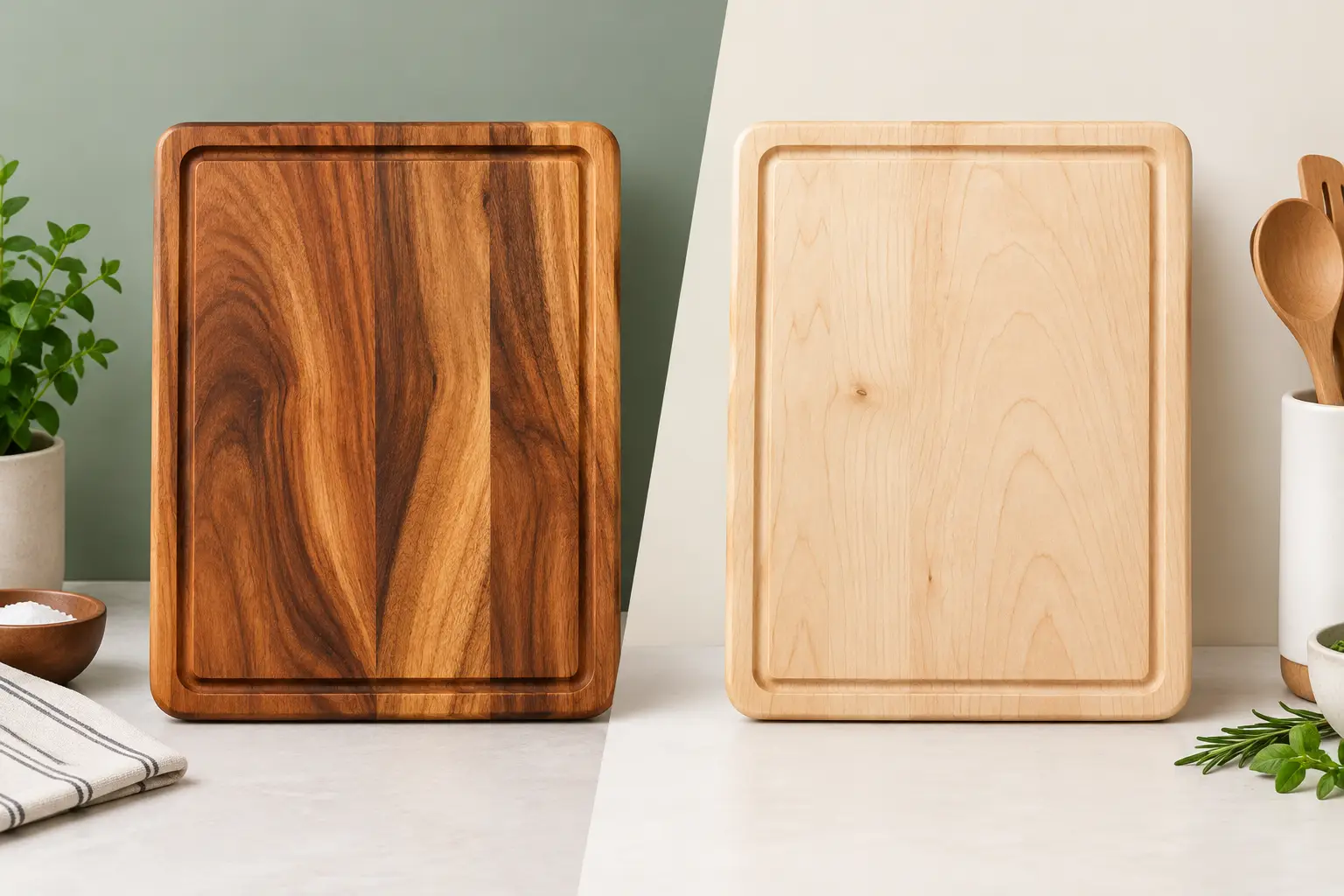
Maple is the traditional workhorse. Hard maple, often called sugar maple, is a favorite for butcher blocks and cutting boards because it is dense, fine-grained, and light in color. It has a quiet, uniform appearance that works with almost any kitchen, from farmhouse to modern.
Acacia is a broader category. Several species may be sold under the acacia name, so color, grain, and density can vary more from board to board. Its appearance is usually bolder than maple, with golden brown, reddish brown, and deep chocolate streaks often appearing in the same piece. That variation gives acacia a warm, one-of-a-kind furniture feel.
For a homeowner choosing between them, maple is usually the safe, timeless choice. Acacia is often the statement piece. Neither is automatically better, but each has strengths that matter in a real kitchen.
Hardness and Knife Friendliness
Wood hardness is commonly discussed using the Janka hardness scale. Hard maple measures about 1,450 on that scale. It is hard enough to resist everyday dents and cuts while still being forgiving on kitchen knives.
Many acacia species are harder than maple, sometimes substantially so. That helps an acacia board stand up well to surface wear, especially in a busy kitchen. A dense board is less likely to show deep knife grooves quickly, and its weight can help it stay planted on the counter.
But the hardest board is not always the best cutting surface. Extremely hard wood can be a little less forgiving on a knife edge. That does not make acacia a bad choice for chopping. A well-made acacia board is still far kinder to knives than glass, ceramic, stone, or bamboo. It simply means maple has a slight advantage for cooks who use sharp knives constantly and want a proven balance of durability and edge friendliness.
Construction also matters as much as species. An end-grain board, where the wood fibers face upward, lets a knife edge pass between fibers rather than chopping across them. This can reduce visible marking and support a gentler cutting experience. Edge-grain boards are also excellent for everyday prep, generally lighter in weight, and often more affordable.
Grain, Color, and Kitchen Style
A cutting board is a working tool, but it is often left on the counter. That makes appearance a real part of the decision.
Maple has a pale, creamy base color with subtle grain. It brightens darker countertops and gives a kitchen a clean, tailored look. It is especially appealing when you want the cutting board to coordinate quietly with white cabinets, natural oak, painted islands, or stainless appliances. Maple can develop a slightly warmer tone over time, but it remains visually understated.
Acacia has more contrast. It can feature flowing grain, darker stripes, and natural color shifts that make every board look different. For homeowners who want a board that also works as a serving piece for bread, charcuterie, or appetizers, acacia has immediate visual impact. It pairs particularly well with warm wood cabinetry, black hardware, dark stone, and kitchens that lean rustic, organic, or layered.
There is a practical side to that color difference. Maple shows dark stains more readily, especially from berries, beets, wine, or heavily pigmented spices. Acacia’s darker, varied grain can disguise minor marks better. On the other hand, if you love seeing a board age naturally through use, maple’s evolving patina has a classic appeal all its own.
Moisture Resistance and Everyday Care
No solid wood cutting board should be treated as waterproof. Even dense hardwood can absorb moisture if it is soaked, left in standing water, or run through a dishwasher. The dishwasher is particularly hard on wood because heat, detergent, and prolonged water exposure can cause warping, cracking, or glue-joint failure.
Acacia is often praised for its natural density and moisture resistance. In normal use, that density can make it a practical choice for a board that sees frequent chopping and serving. Maple is also highly reliable when it is properly finished and maintained. The bigger factor is not whether a board is acacia or maple. It is whether it has been built with dry, stable lumber, strong food-safe glue joints, and a protective finish.
For either wood, wash the surface promptly with mild soap and warm water, then towel dry and stand it on edge so both sides can air out. Do not soak it in the sink. Reapply food-grade mineral oil when the board looks dry or feels rough, usually every few weeks to every few months depending on use and climate. A board conditioner made with mineral oil and beeswax can add another layer of moisture protection.
If one side of a large board gets wetter than the other, it may cup slightly as the wood moves. Storing it flat or upright with airflow on both sides helps prevent that. For a heavy butcher block-style board, stable rubber feet can improve airflow and keep the board from sliding during prep.
Weight, Stability, and How You Cook
A board that stays put makes prep safer and more enjoyable. Acacia’s density often gives it a substantial feel, especially in thicker boards. That can be a benefit for chopping, carving, and heavier kitchen tasks. It can also make a large board less convenient to carry from the counter to the sink.
Maple can be similarly substantial depending on thickness and construction, but it is often the more familiar choice for large butcher block boards. If you want one board to live on the counter and handle daily meal prep, a thick maple board is a dependable option. If you want a smaller board that doubles as countertop decor and servingware, acacia’s visual character may carry more weight in the decision.
Think about the dimensions before focusing only on wood species. A board that is too small creates crowded prep space, while an oversized board can become a chore to clean and store. For most home cooks, a generously sized rectangular board offers enough room for vegetables, proteins, and a chef’s knife without taking over the counter. Custom sizing is especially useful when you have a defined landing area beside a range, a narrow island, or a specific cabinet storage space.
When Maple Is the Better Choice
Choose maple if you want a classic, professional-looking board with a lighter color and an established reputation in busy kitchens. It is an especially good fit for frequent knife work, traditional butcher block styling, and homeowners who prefer subtle grain over high contrast.
Maple also makes sense when you want several wood surfaces in a kitchen to feel coordinated rather than overly matched. Its neutral appearance lets cabinetry, countertops, and hardware take the lead. A handcrafted maple board can look at home in nearly any room and still hold up to regular chopping.
When Acacia Is the Better Choice
Choose acacia if the board will be visible on your countertop or regularly used for serving. Its color movement and bold grain give it a more decorative presence, and its density helps it resist the everyday wear that comes with slicing, dicing, and entertaining.
Acacia is a strong choice for homeowners who prefer warm, darker woods and want a board that does not look mass-produced. Because the species label can cover a range of woods, though, ask about the specific construction, thickness, finish, and care guidance rather than buying based on the word acacia alone.
What Matters More Than the Species
A beautiful board can still disappoint if it is poorly made. Whether you choose acacia or maple, look for solid hardwood construction, smooth sanding, carefully finished edges, and food-safe materials. The board should sit flat, feel stable, and have grain and joinery that reflect careful shop work rather than rushed production.
At Tooill Cabinets, the goal of a handmade wood piece is not just to look good on delivery day. It should fit the way your home works, from the dimensions of your prep space to the finish and wood character you want to see every morning.
If you are torn between acacia and maple, picture the board after a year of dinners, holidays, and weeknight prep. Choose maple for quiet, dependable tradition. Choose acacia for rich color and a more expressive look. Then give either one the simple care it deserves, and it can become one of the most useful, personal pieces in your kitchen.