
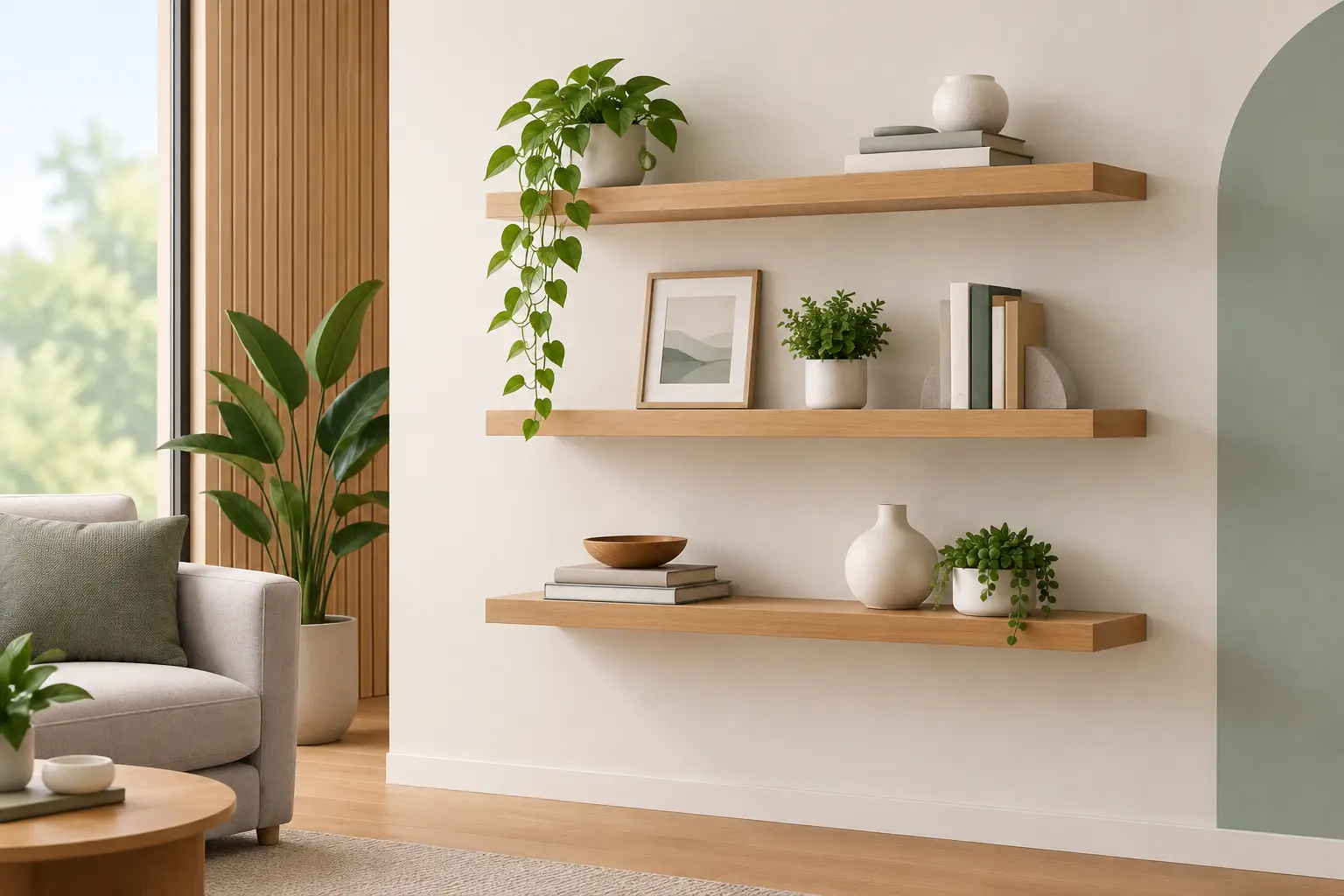
A shelf that stops two inches short of a cabinet, sags under everyday dishes, or clashes with the wood tones already in the room is not a small detail. It is the kind of compromise homeowners notice every day. Well-made floating shelves solve the storage problem while giving a wall the warmth and presence of real wood – especially when they are sized for the space rather than pulled from a standard retail box.
For kitchens, bathrooms, laundry rooms, offices, and living areas, custom wood shelves can make an underused wall feel intentional. The key is choosing the right dimensions, wood species, finish, and mounting plan before the shelf is built.
Why floating shelves work in so many rooms
Floating shelves earn their name because the support hardware is concealed inside the shelf. When installed correctly, the visible result is clean and simple: solid wood appearing to extend directly from the wall. That streamlined look works just as well beside a range as it does above a desk or in a tucked-away powder room.
Their real advantage is flexibility. Upper cabinets can make a small kitchen feel closed in, while open shelves preserve sightlines and keep frequently used pieces within reach. In a bathroom, a pair of shelves can hold folded towels, jars, and a small plant without taking up valuable floor space. In a living room, one long shelf can turn an empty wall into a display for books, framed photos, and collected pieces.
Open storage does ask something of the homeowner: the items on it will be visible. That is a benefit when you want to show off everyday dishes or ceramics, but it may not be right for a wall that needs to hide clutter. Many homes strike the best balance by using floating shelves for the things they reach for often and keeping less attractive storage behind cabinet doors.
Start with the wall, not the shelf
The most successful shelf projects begin with accurate measurements and a clear picture of what the shelf needs to hold. Before deciding on wood or finish, measure the usable wall width, the desired depth, and the available height between nearby cabinets, windows, backsplashes, or fixtures.
A shelf can be made to fit a narrow gap, span an entire wall, or align exactly with the edge of a countertop. Those details matter. A shelf that matches the width of a base cabinet or sits centered over a coffee station looks deliberate. A shelf that is just slightly off can look like an afterthought, even when the wood itself is beautiful.
Depth deserves the same attention. A shallow shelf around 6 to 8 inches deep is often enough for spice jars, small décor, or framed artwork. For dinner plates, bowls, cookbooks, and larger serving pieces, 10 to 12 inches is generally more useful. Going deeper creates more storage, but it also pushes farther into the room and can feel bulky in a narrow kitchen or hallway.
Consider how you move through the room. Shelves near a walkway, seating area, or door swing should not create an obstacle. In kitchens, allow room for appliances, cabinet doors, and the person working at the counter below.
Choosing the right wood for floating shelves
Solid wood brings character that laminate and hollow shelf boards cannot duplicate. Grain variation, natural color shifts, and the weight of a properly built shelf make it feel like a piece of furniture, not temporary wall storage.
The best species depends on the look you want and how the room is used. Maple has a clean, light appearance that suits bright kitchens and modern spaces. Walnut offers deep brown color and dramatic grain for a richer, more tailored look. White oak brings visible texture and a timeless neutral tone that works well with many cabinet colors. Cherry starts warmer and develops more depth over time.
There is no single best wood for every project. A dark walnut shelf can make white tile and light cabinets stand out, but it may feel too heavy in a small room with limited natural light. Maple can keep the same room airy, though it may not provide the contrast some homeowners want. If the goal is coordination, compare the shelf wood against the cabinet finish, flooring, hardware, and countertop instead of trying to match only one element exactly.
Solid wood also responds naturally to changes in humidity. Quality construction, appropriate thickness, and a durable finish help the shelf perform well in a lived-in home. For bathrooms, laundry rooms, or kitchens near a sink, choosing a well-sealed surface is particularly important. Wood can handle these spaces beautifully, but standing water should always be wiped up promptly.
Thickness changes both the look and the capacity
A thicker shelf has more visual weight and often feels more substantial in a large room or above a long countertop. Thinner profiles can look refined and light, especially for shorter shelves carrying smaller items. The right thickness depends on the span, intended load, hidden support system, and the design of the room.
Do not choose thickness based on appearance alone. A shelf meant for heavy stoneware, cookbooks, or countertop appliances needs a different support plan than one meant for a few glasses and decorative objects. Sharing the intended use with the maker helps ensure the finished shelf is built for real life, not just a styled photo.
The hidden support matters most
The clean look of floating shelves depends on hardware you do not see, but the hardware is the part that carries the responsibility. A heavy solid-wood shelf must be anchored securely into suitable wall framing or another properly rated structural backing.
Wall construction determines what is possible. Wood studs provide strong attachment points, while masonry requires the right anchors and fasteners for brick or concrete. Drywall by itself is not a reliable foundation for a heavily loaded shelf. If studs do not fall where the shelf needs support, a professional installer may recommend opening the wall for blocking or using a mounting system designed for the situation.
Long shelves and shelves with significant depth need special care because leverage increases as weight sits farther from the wall. This does not mean a long shelf is a bad idea. It means the support should be designed around the span and expected load from the beginning.
If you are ordering shelves for a renovation, plan the mounting before tile, backsplash, or final paint goes in. It is much easier to add blocking during a remodel than after a finished wall is complete. Keep measurements of stud locations, plumbing, electrical lines, and the exact height you want. Those details prevent costly surprises during installation.
Plan the layout before committing
Painter’s tape is one of the simplest planning tools available. Mark the proposed shelf length and depth on the wall, then step back from several points in the room. You will quickly see whether the shelf is too short, too deep, or mounted too high.
In a kitchen, shelves above a counter often look and function best when they leave enough vertical room for coffee makers, canisters, and food prep. If the shelves will replace upper cabinets, consider the height of everyone who uses them. Everyday glasses placed too high become inconvenient, while shelves mounted too low can crowd the workspace.
For styling, leave some breathing room. Open shelves look better when they hold a practical collection rather than every item that did not fit in a cabinet. Stack a few plates, group glassware, add a cutting board or cookbook, and include one or two personal pieces. The wood itself should remain part of the visual story.
Custom sizing makes the difference
Standard shelves are built around standard assumptions. Custom shelves are built around your wall, your storage needs, and the way the room is already taking shape. That can mean a precise width between two cabinets, a deeper shelf for oversized bowls, a specific thickness to complement a butcher block countertop, or a finish selected to work with existing wood tones.
At Tooill Cabinets, handcrafted wood products are made with the practical details in mind: accurate dimensions, solid materials, and a finish that belongs in a real home. Clear communication matters just as much with shelves as it does with countertops. A few good questions before production can prevent a shelf from arriving beautiful but wrong for the wall.
When requesting a custom quote, provide finished dimensions, preferred wood species, the intended room, what you plan to store, and any nearby cabinets or features the shelf must align with. A simple sketch and a few photos can be helpful too. The more clearly the project is defined, the more confidently it can be built.
Floating shelves should make a room easier to use and better to look at for years. Choose the size with care, respect the mounting requirements, and let solid wood bring the finished space together.